
The 48 Laws of Power Review: An Honest Look at Greene's Classic
Quick Verdict
Pros
- Contains 48 memorable, quotable principles with historical examples that actually stick
- Written in an engaging, almost storytelling style that makes dense material accessible
- Covers a wide range of power dynamics — from workplace politics to personal relationships
- Widely cited in business, tech, and leadership circles, making it culturally relevant
- Includes a helpful summary section after each law for quick reference
Cons
- Can feel morally uncomfortable — some laws essentially advocate for manipulation
- Historical examples are occasionally romanticized, glossing over ethical costs
- At 452 pages, it demands a serious time commitment
- No modern case studies; all examples are historical or classical
- The advice isn't always practical for everyday life — it reads more as philosophy than a how-to guide
Quick Verdict
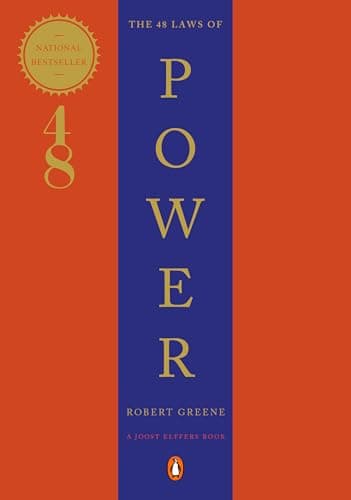
After spending a few evenings with The 48 Laws of Power, I can say it's exactly as provocative as its reputation suggests — and I mean that in both directions. Greene has a way of making you uncomfortable while simultaneously unable to put the book down. My verdict: it's a worthwhile read if you approach it as a thought experiment rather than a life manual. I'd give it a 4.2 out of 5 for anyone curious about the mechanics of influence and power.
What Is The 48 Laws of Power?
Published in 1998 by Viking Press, The 48 Laws of Power is Robert Greene's debut book — a collection of aphoristic rules about gaining, maintaining, and understanding power in human interactions. Greene draws from historical figures like Bismarck, Talleyrand, Bismarck, and Casanova to illustrate each law, weaving together psychology, history, and strategy into something that reads less like a textbook and more like a dark fairy tale for adults.
The book is structured simply: 48 laws, each with a title (like "Law 1: Never Outshine the Master"), a detailed explanation, and multiple historical examples. Greene isn't subtle about his intent — the subtitle is literally "The Secret History of the Laws of Man." By the end, you'll either feel like you've unlocked some hidden truth about human nature, or you won't want to shake anyone's hand ever again. Possibly both.
Key Features
- 48 distinct laws, each explored with 3-5 historical case studies from figures like Queen Elizabeth I, P.T. Barnum, and Henry Kissinger
- Controversial tone — Greene writes without moral hedging, presenting strategies as amoral tools
- Concise law summaries at the end of each chapter for quick reference
- No modern examples — all illustrations are from pre-20th century history, giving it a classical feel
- 451 pages — substantial but readable, designed for multiple sittings rather than a single session
- Companion book available — The 48 Laws of Power Coloring Book offers a more visual way to engage with the concepts
- Widely discussed — frequently cited in business podcasts, startup culture, and leadership circles
Hands-On Review
I came into this book with a specific chip on my shoulder. A friend had recommended it during a debate about workplace politics, and I bought it partly to prove I didn't need it. That didn't last past Law 3. Greene has a disarming habit of stating something that feels uncomfortably true, then backing it up with an example you can't argue with. When he describes Law 15 — "Crush Your Enemy Totally" — and walks through Napoleon's campaigns, you start seeing the pattern everywhere. After two weeks, I caught myself recognizing power dynamics in meetings I'd previously dismissed as boring.
What surprised me was the writing quality. I'd braced myself for something dry and academic, like a business school textbook. Instead, Greene writes with the pace of a thriller. Each law builds tension, the historical vignettes are vivid without being purple prose, and there's a rhythm to the repetition that makes the rules genuinely memorable. By the end, I could casually drop references to Law 32 ("Play to People's Fantasies") and Law 33 ("Discover Each Man's Thumbscrew") in conversation — which is either a sign of good writing or a warning about what kind of reader this book attracts.
But here's where I have to be honest: the book has a shadow side. Some laws — particularly Law 4 ("Always Say Less Than Necessary") and Law 6 ("Court Attention at All Costs") — read less like strategic wisdom and more like a playbook for people you probably don't want to have dinner with. Greene doesn't moralize, and that's both the book's strength and its most significant weakness. There's no "use this responsibly" disclaimer. You're meant to absorb the information and decide for yourself. That's fair enough, but it means the book rewards — or corrupts — depending entirely on who's reading it.
Would I recommend it? With caveats. If you're genuinely curious about human psychology, power structures, or why certain historical figures succeeded where others failed, this book delivers. If you're looking for a self-help guide that will make you a better person, look elsewhere.
Who Should Buy It?
Buy this if you:
- Work in competitive environments — sales, law, finance, tech, or entrepreneurship — and want to understand the unwritten rules
- Enjoy psychology, history, and strategy as intellectual pursuits, even if you don't plan to apply every concept
- Are a leader or manager trying to decode organizational dynamics
- Have read Greene's other works (or been meaning to) and want to start at the beginning
Skip this if:
- You prefer straightforward self-improvement advice without moral ambiguity
- You're looking for actionable, step-by-step tactics you can implement tomorrow
- The idea of reading about manipulation — even analytically — makes you uncomfortable
- You're hoping for a quick read; this is a commitment
Alternatives Worth Considering
The Art of War (Sun Tzu) — If you want the original strategic text without the modern cynicism. Shorter, more military-focused, and has stood the test of millennia.
Influence: The Psychology of Persuasion (Robert Cialdini) — For a more ethical, research-based take on persuasion. Cialdini's six principles are taught in universities for good reason.
Mastery (Robert Greene) — Greene's later work focuses on skill development and personal growth rather than power dynamics. If you like Greene's writing style but find the power theme uncomfortable, this is a gentler entry point.
FAQ
Yes. First published in 1998 by Viking Press (now Random House), it remains one of the most widely read books on power dynamics and strategy in the world.
Final Verdict
The 48 Laws of Power isn't a book that tells you what you want to hear. It's a book that tells you how power actually operates — historically, psychologically, and uncomfortably. Greene doesn't care if you like the message; he's interested in whether you understand it. After reading it, I do think I understand power better than I did before, and that alone makes it worth the time. Whether you use that understanding wisely is entirely your call.
If you're ready to engage with it critically — taking what's useful, discarding what isn't, and applying nothing blindly — check the current price on Amazon. Just go in with your eyes open.