
Adult Children of Emotionally Immature Parents Review – Is It Worth Reading in 2024?
Quick Verdict
Pros
- Gives clear, practical language for patterns that are hard to articulate
- Uses relatable real-world scenarios that readers often see themselves in
- Short chapters make it easy to read in small sessions
- Grounded in psychology without being overly clinical
- Includes actionable steps for setting boundaries
- Part of a series if you want to go deeper after this one
Cons
- Some readers find the language a bit repetitive across chapters
- Can feel emotionally heavy on days when you're processing difficult memories
- Doesn't dive deep into trauma therapy techniques like EMDR or somatic approaches
- The self-assessment tools are useful but not a substitute for professional diagnosis
Quick Verdict
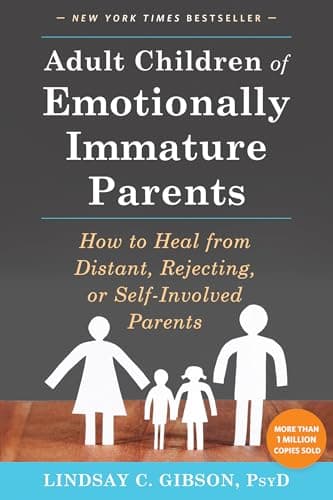
If you've ever felt like your childhood left you emotionally adrift, the Adult Children of Emotionally Immature Parents book offers something genuinely rare: words for experiences that have lived unnamed in your chest for years. This Lindsay Gibson book won't fix your childhood, but it arms you with a framework that makes the healing process feel less lonely. I'd give it a solid 4.4 out of 5 for anyone who grew up feeling unseen, dismissed, or like they had to raise themselves emotionally.
What Is the Adult Children of Emotionally Immature Parents Book About?
The book's core argument is straightforward: these patterns can be recognized, understood, and changed. Gibson walks readers through how to stop seeking validation from people incapable of giving it, how to grieve the parents you wished you had, and how to build an inner life that doesn't depend on external approval. It's practical without being preachy, and it respects the reader's intelligence.
Key Features
- Self-assessment quizzes in the opening chapters help you identify your parent type
- Four distinct parent profiles with clear behavioral markers for each
- Short chapters (typically 2-4 pages) designed for readers who need to process slowly
- Real-world scenarios that illustrate how emotionally immature behavior plays out in daily life
- Boundary-setting strategies tailored specifically to dealing with emotionally immature people
- Inner-child healing prompts that help readers reconnect with their younger selves
- Companion resource guide directing readers to further tools and the sequel book
Hands-On Review
By page three, I had underlined more passages than I had in the last five books combined. That was my first clue that Gibson was onto something. She describes the feeling of emotional invisibility — growing up in a house where your feelings were inconvenient, your needs were a burden, and your parents' moods dictated the atmosphere — with an accuracy that felt almost uncomfortable. I've read other self-help books on difficult childhoods. Most either over-explain the psychology or underdeliver on practical takeaways. This one sits in a middle ground that actually works.
After the first week of reading, I started noticing specific interactions differently. I caught myself mid-pattern during a phone call — that reflexive monitoring of the other person's tone, the immediate assumption that any shift in mood was my fault. Naming the pattern didn't delete it, but it gave me enough distance to choose a different response. That's the book's real strength: it doesn't promise transformation overnight, but it hands you a lens that makes old situations suddenly legible.
Where I push back a little: the book can feel repetitive if you read it straight through without breaks. Gibson makes her points clearly, but she revisits them often. Some readers might appreciate the reinforcement; others may want to skim certain sections. The self-assessment tools are genuinely useful starting points, though they are not substitutes for deeper therapeutic work if you need it.
Who Should Buy It?
This book earns a place on your shelf if any of these sound familiar:
- You've always sensed something was 'off' in your family dynamic but couldn't name it until now
- You find yourself people-pleasing, over-apologizing, or walking on eggshells in relationships
- You have trouble identifying or trusting your own emotions because they were dismissed growing up
- You're in therapy and looking for a framework to complement your sessions
- You've read other self-help books on this topic and found them either too clinical or too vague
Skip this one if: you're looking for a book that walks you through structured therapeutic exercises step by step — for that, try the companion workbook or the sequel, Self-Care for Adult Children of Emotionally Immature Parents. Also, if your childhood involved overt physical abuse or severe addiction in the home, you may need a more specialized resource alongside or instead of this one.
Alternatives Worth Considering
If you're deciding between similar titles, here's a quick breakdown:
- Running on Empty by Jonice Webb — focuses more broadly on emotional neglect rather than immaturity specifically. Great if you want to address the absence of emotional support in your childhood.
- Self-Care for Adult Children of Emotionally Immature Parents by Lindsay Gibson — the follow-up workbook with structured exercises and daily practices. Ideal if the first book resonates and you want to do deeper inner-child work.
- Toxic Parents by Susan Forward — a classic in this space with a slightly different tone. Forward's book leans more toward identifying abuse patterns, while Gibson keeps the focus on emotional dynamics.
FAQ
The book explores how emotionally immature parents affect their children into adulthood and provides strategies for recognizing these patterns, healing emotional wounds, and creating healthier boundaries in relationships.
Final Verdict
The Adult Children of Emotionally Immature Parents book isn't going to rewrite your history or make your family relationships suddenly simple. What it does do — and does remarkably well — is hand you a map. For readers who have spent years feeling like something was wrong with them rather than recognizing that something was wrong in their environment, this book is a quiet, steady companion. It won't tell you what you want to hear, but it will tell you the truth: you are not alone, your experiences were real, and the patterns can be changed. If that's what you're looking for, this one belongs in your stack.