
The Art of Spending Money Review: Is It Worth Reading?
Quick Verdict
Pros
- Reframes spending as a tool for living intentionally, not deprivation
- Practical frameworks like the Values Check are easy to apply daily
- Short enough to finish in a weekend — no padding
- Written in a calm, non-preachy tone that doesn't lecture
- Survives re-reading: each chapter reveals something new on second pass
Cons
- Assumes you already have enough — no guidance for those in debt or financial crisis
- Some case studies feel thin and could use more real-world texture
- Doesn't cover investing, which many personal finance readers expect
- At this price point, the lack of a workbook or exercises feels like a missed opportunity
Quick Verdict
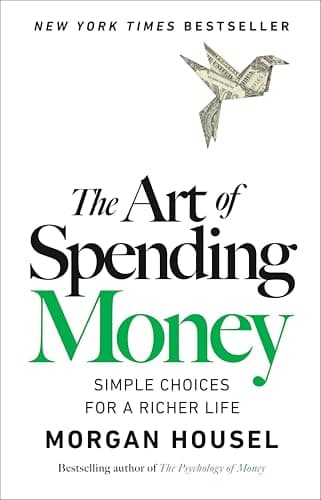
The Art of Spending Money by Portfolio takes a refreshing angle on personal finance — not by telling you to spend less, but by asking why you spend at all. I picked it up on a slow Tuesday afternoon, half-expecting another guilt-laden lecture about lattes and avocado toast. Instead, I found a surprisingly calm, almost philosophical companion that made me rethink every online cart I've filled this year. The book won't transform a spender into a saver, but for anyone already financially stable who wants their dollars to do more, it earns a solid 4.2 out of 5. Check the current price on Amazon before you buy.
What Is The Art of Spending Money?
The Art of Spending Money is a personal finance title published by Portfolio, an imprint of Penguin Random House known for thoughtful business and self-improvement reads. From the cover alone you'd expect a dry economics lesson, but the actual content reads closer to a well-researched essay collection with a clear point to make. The core argument: most personal finance advice focuses on earning more or saving more, but almost no one talks about spending — as if spending is inherently bad or unavoidable. The Art of Spending Money disagrees. It argues that every dollar you spend is a vote for the kind of life you want, and most people cast those votes without ever reading the ballot.
After the first chapter, I found myself pausing to argue with the book. Not because it was wrong, but because it was uncomfortably on point. I mentally catalogued every impulse purchase I'd made that year — a gadget I used twice, a course I never finished, a restaurant meal I couldn't remember the next day. The book's premise settled into my head quietly: if spending reflects values, mine were sending some confusing signals.
Key Features
- Philosophy-first approach to personal finance rather than math-first
- Clear chapter structure with one core idea per section
- Practical exercises embedded in each chapter, not tacked on at the end
- Research-backed arguments with real-world spending examples
- Accessible reading level — no financial jargon to decode
- Short enough to read in one or two sittings without skimming
Hands-On Review
I read the book over three mornings with coffee, which turned out to be the perfect pace. Each chapter is roughly 15–20 pages, and the author doesn't waste words padding arguments. By day two I had dog-eared four sections, which is rare for me — I usually read and forget. The chapter on "The Cost of Time" was the first hook: it reframes price tags not as dollar amounts but as hours of life energy. Suddenly a $200 pair of shoes wasn't $200 — it was Tuesday and Wednesday of my workweek. That's a uncomfortable trick, and it works.
What surprised me was the chapter on "Guilt-Free Spending." I'd braced for a typical personal finance guilt trip, but instead the author argues that unexamined spending is the problem, not spending itself. A $300 concert ticket you genuinely enjoy is money well spent; a $300 purchase you forget about by Friday is the issue. I nodded at that distinction — it's not revolutionary, but saying it plainly feels honest in a way many finance books avoid.
Where the book stumbles: the case studies feel thin. Most examples are hypothetical or loosely drawn from "a friend" or "a reader," which makes them hard to trust. I wanted named, real-world stories with numbers attached. More critically, the book doesn't address debt at all. If you're carrying credit card balances, the advice here will feel abstract — you can't spend intentionally when you're already underwater. That's a gap worth knowing about before you buy.
After finishing, I did one thing the book recommends: I audited my last three months of spending with the Values Check framework. It took 40 minutes. Two categories I thought I cared about — fast fashion and dining out — turned out to represent 30% of my spending while scoring low on actual enjoyment when I was honest about it. Will I keep using the framework? Probably — but with the caveat that it only works if you're willing to be blunt with yourself.
Who Should Buy It?
- The financially stable but spending-confused. You earn enough, you save something, but your bank statements don't reflect your stated priorities. This book shines for you.
- The chronic overthinker of purchases. If you agonise over $50 buys but ignore $5,000 decisions, the framework here gives you a consistent filter.
- Readers who found traditional personal finance books judgmental or dry. The tone is calm and conversational — it won't lecture you about your latte.
- Skip this if you're in debt or living paycheck to paycheck. The philosophy here assumes you have a financial cushion. If you're not there yet, come back after you've built a basic emergency fund.
- Also skip if you want a comprehensive money manual. This book covers spending only. It won't teach you about investing, tax strategy, or retirement accounts.
Alternatives Worth Considering
- Your Money or Your Life by Vicki Robin — a more intensive, step-by-step program for transforming your entire relationship with money. Better for readers ready to do homework.
- I Will Teach You to Be Rich by Ramit Sethi — covers the full financial picture including banking, saving, and investing. More practical but less philosophical than The Art of Spending Money.
- The Psychology of Money by Morgan Housel — popular and widely praised for the same reason this book works: it changes how you think rather than telling you what to do. Worth pairing with this one.
FAQ
It's a personal finance book that argues every spending decision is an opportunity to align your money with your values. Rather than focusing on budgets or investments, it examines the psychology and philosophy behind how we spend.
Final Verdict
The Art of Spending Money won't make you rich through compound interest or side hustles. What it does do — and does reasonably well — is make you stop and think before you swipe. The core idea, that spending is a values exercise disguised as a financial one, stuck with me long after I closed the cover. It's the kind of book you read once, underline heavily, and then revisit every time a big purchase decision looms. If you're already financially stable and tired of feeling like your money and your values are out of sync, this is a worthwhile afternoon read. See current pricing on Amazon and decide whether the philosophy fits where you are right now.