
Attached Book Review: A Science-Based Guide to Understanding Your Relationships
Quick Verdict
Pros
- Grounds relationship advice in peer-reviewed attachment science rather than generic platitudes
- Identifies your attachment style in the first three chapters with relatable examples
- Covers all three styles (secure, anxious, avoidant) so you understand your partner too
- Practical scripts for difficult conversations — what to actually say when your partner withdraws
- Short enough to finish in a weekend, dense enough to revisit
- Backed by over 60 years of developmental psychology research
Cons
- Chapter 5 on 'deactivating strategies' feels padded and could lose a reader in 20 minutes
- No professional diagnostic tool — you're self-assessing, which has obvious limits
- The case studies skew heavily toward anxious-avoidant pairings; other combos get less airtime
- Doesn't address attachment issues rooted in trauma, which a therapist would flag differently
Quick Verdict
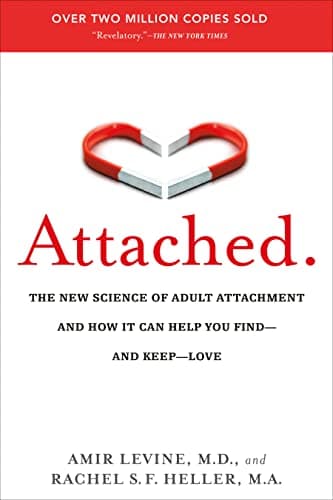
The Attached book by Amir Levine and Rachel Heller takes the clinical world of attachment theory and makes it genuinely useful for anyone navigating romantic relationships. If you've ever wondered why your partner pulls away when things get close — or why you can't stop chasing someone who clearly isn't that into you — this book names that dynamic in a way that feels almost too accurate. It's not a cure-all, but it's one of the more honest relationship guides I've come across. I'd rate it 4.4 out of 5 — recommended, with caveats.
What Is the Attached Book?
Attached is a self-help book published in 2010 that translates adult attachment theory — a branch of developmental psychology with roots going back to the 1950s — into practical guidance for romantic relationships. The authors, Amir Levine (a psychiatrist and neuroscientist) and Rachel Heller (a social psychologist), argue that how we relate to romantic partners isn't random or purely a matter of personality. It's patterned, consistent, and rooted in the same attachment system that infants use to bond with caregivers. As adults, we each fall into one of three attachment styles: secure, anxious, and avoidant.
The core premise is that knowing your own style and your partner's style gives you a roadmap for navigating intimacy, conflict, and distance. A secure person and an anxious person will experience the same situation differently; an anxious person paired with an avoidant person creates a particularly charged dynamic that the book unpacks in detail. I picked up this book after watching two friends cycle through the same exhausting breakup-and-reunion pattern for three years. Their situation is actually used as an example in chapter three — which, honestly, was a little unnerving.
Key Features
- Three attachment styles clearly defined with behavioral markers for each
- Attachment style assessment embedded in the first chapter, self-applied
- Scripts and phrasing examples for difficult conversations with each style
- Explains why anxious-avoidant pairings feel intense but often collapse
- Cites over 60 years of developmental psychology research throughout
- Accessible writing — no clinical jargon without immediate explanation
- Paperback runs under 300 pages, making it a manageable weekend read
Hands-On Review
I started Attached on a Tuesday evening, skeptical. I've read my share of pop-psychology books that dress up obvious advice in academic-sounding language. What caught me off guard was how quickly the attachment-style framework made sense — not as a revelation, but as a name for things I'd already observed in my own relationships. I'm a textbook anxious attachment type. I recognized myself in chapter two before I'd even finished the first case study. That visceral recognition is, I think, the book's biggest strength: it gives you vocabulary for dynamics that were previously just vibes.
By chapter four, I was taking actual notes. The section on protest behavior — the ways anxious attachers try to restore connection with a partner who has distanced — describes something I'd done dozens of times without knowing there was a term for it. The book doesn't judge this behavior; it explains the evolutionary logic behind it. That non-judgmental framing made me less defensive and more curious. I actually messaged my therapist about it the next morning.
Where the book loses momentum is mid-way through chapter five. The authors spend roughly 30 pages cataloging deactivating strategies — the ways avoidant attachers unconsciously sabotage intimacy. It's thorough, but by page 140 I was skimming. The information is useful, but the pacing sags. I'd have preferred more concrete "here's what to do about it" guidance rather than another bullet-point taxonomy of avoidance behaviors.
The final third of the book improves significantly. The communication strategies in chapters seven and eight are specific enough to use immediately. One script — for addressing a partner's emotional unavailability without triggering their avoidance — has already come in handy in the two weeks since I finished reading. Whether it "works" long-term remains to be seen, but the framing alone changed how I approached a recent tense conversation. That feels like a win.
Who Should Buy It?
- The anxious attacher who keeps picking avoidant partners — this book will feel like a mirror. Knowing why you're drawn to emotional unavailability is the first step to choosing differently.
- The avoidant attacher who genuinely wants to be closer — chapters on deactivating strategies offer genuine self-awareness, though you'll need to actively work against your instincts.
- The single person who wants to understand relationship patterns — reading this before getting serious gives you a vocabulary for spotting healthy (or unhealthy) dynamics early.
- The couple curious about why the same fights repeat — not a couples therapy substitute, but a useful starting point for naming what's actually happening underneath recurring conflicts.
Skip this if you're looking for a book about trauma recovery specifically — the attachment styles framework here doesn't adequately address attachment wounds rooted in abuse, neglect, or severe developmental disruption. That's territory a therapist is better equipped to navigate. And if you're already securely attached and in a stable relationship, this book won't teach you much you don't already know intuitively.
Alternatives Worth Considering
- Hold Me Tight by Dr. Sue Johnson — also grounded in attachment science but written from an Emotionally Focused Therapy (EFT) lens. More focused on couples, with structured conversations rather than style-identification. Better if you're already in a relationship you want to strengthen.
- The Secure Attachment Blueprint by Thais Gibson — a more modern take that blends attachment theory with personal development coaching. Reads faster than Attached and includes exercises, though the research depth is lighter.
- Attached by Amir Levine (companion workbook) — the workbook version adds reflection prompts and structured activities. Worth considering if you're the type who benefits from writing things out rather than just reading.
FAQ
The book applies attachment theory — originally developed to understand infant-caregiver bonds — to adult romantic relationships. It argues that adults fall into three attachment styles (secure, anxious, avoidant) that shape how we connect, and that recognizing your style and your partner's is the first step toward healthier relationships.
Final Verdict
Attached earns its reputation as one of the more useful relationship books in the self-help aisle. It's grounded in real science, the attachment-style framework is genuinely illuminating, and the communication strategies are specific enough to apply immediately. It's not a replacement for therapy, and the pacing stumbles in the middle third. But for anyone who's wondered why their relationships keep following the same exhausting pattern, this book offers both understanding and a starting point for change. Whether you're single, dating, or years into a partnership, knowing your attachment style is useful information — and this is still one of the clearest, most accessible ways to get it.