
The Body Keeps the Score Review: Is This Trauma Healing Guide Worth Reading?
Quick Verdict
Pros
- Deeply researched with decades of clinical evidence behind every claim
- Explains why traditional talk therapy often fails trauma survivors
- Covers a wide range of therapeutic approaches: neurofeedback, EMDR, yoga, theater
- Accessible writing for a scientific book — van der Kolk can really tell a story
- Honest about the limitations of what we currently know
Cons
- At 400+ pages, it demands real time and emotional energy to finish
- Can be triggering for readers still in early stages of trauma recovery
- Some readers find the middle section repetitive — case studies pile up
- Rarely gives quick takeaways; it's more about understanding than a step-by-step plan
Quick Verdict
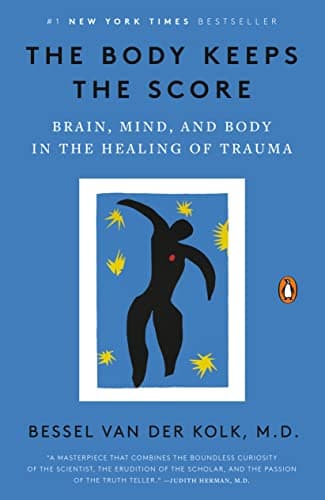
The Body Keeps the Score by Bessel van der Kolk is a landmark book that changed how I think about trauma — not as a problem of faulty thoughts, but as a problem written into the nervous system. If you have ever felt stuck in therapy, or if you want to understand why some wounds do not heal with talking alone, this book is worth your time. It is demanding, honest, and occasionally brutal in what it asks of the reader. Our rating: 4.6 out of 5.
What Is The Body Keeps the Score?
First published in 2014 and reissued several times since, The Body Keeps the Score is Dr. Bessel van der Kolk's synthesis of over three decades of clinical research and practice in trauma treatment. Van der Kolk, a Dutch-born psychiatrist, founded the Trauma Center in Boston and has been at the forefront of trauma science since the 1970s. The book traces his journey from early experiments with Prozac on traumatized veterans to his eventual embrace of body-based therapies.
The core argument is deceptively simple: trauma is not just an experience you had — it is an experience your body still holds. The amygdala, the prefrontal cortex, the vagus nerve — van der Kolk maps how traumatic events can essentially rewire the alarm system of the brain, leaving survivors stuck in hypervigilance, dissociation, or emotional flooding long after the danger has passed.
Key Features
- Deeply researched overview of how trauma reshapes brain structure and function
- Detailed case studies from veterans, abuse survivors, and accident victims spanning decades
- Explores multiple therapeutic modalities beyond traditional psychotherapy
- Accessible prose that balances scientific rigor with narrative storytelling
- More than 400 pages of substantive content — not a weekend read
- Honest about the limits of current research and treatment options
- Workbook companion available separately for hands-on readers
Hands-On Review
I picked up my copy on a recommendation from a therapist friend who was herself mid-read when she pressed it into my hands. "You need to understand this," she said, which is a dangerous thing to say to a reviewer. Expectations spiked. What followed was three weeks of reading that felt less like homework and more like a series of small revelations.
The opening chapters lay the groundwork with vivid case studies. I found myself genuinely moved by the descriptions of patients — especially the child abuse cases — and van der Kolk does not soften these accounts. They are there to illustrate a point, but they land hard. What surprised me was how patiently van der Kolk builds his argument: trauma is not about the event, it is about the body's response to it. Two people can survive the same accident and come out neurologically different because their nervous systems processed the threat differently.
The middle section — the one some readers call repetitive — is where van der Kolk gets into the specific therapies. Here is where the book shifts from diagnosis to prescription. He walks through neurofeedback, EMDR, yoga, and what he calls "the talking cure" with enough detail to understand the mechanism but not so much that you need a neuroscience degree. I appreciated that he does not play favorites: he acknowledges that no single modality works for everyone, and that the field still has enormous gaps.
By the final chapters, the book becomes something closer to a manifesto. Van der Kolk argues — forcefully but with evidence — that mental health systems have been treating the wrong end of the problem for decades. He is calling for a fundamental shift toward body-based trauma treatment, and reading it in 2024, it is striking how much of what he predicted has already begun to happen in clinical practice.
Is it perfect? No. The length will test your patience, and there were moments I wished for a TL;DR chapter. But as a full picture of where trauma science was and where it needs to go, it remains without a clear peer.
Who Should Buy It?
- Therapists and mental health professionals — this is arguably essential reading for anyone working with trauma survivors in a clinical setting.
- Trauma survivors who are ready — if you have done talk therapy and felt like something was still stuck, this book can help you understand what that "something" is. Do not read it alone if you are in acute crisis.
- Partners, parents, and caregivers — if someone in your life is working through trauma, this book will give you a window into what they are actually dealing with.
- Anyone interested in neuroscience or psychology — it is one of the most readable bridges between clinical research and general audience in this space.
Skip this book if you are currently in a fragile mental state, if you need actionable steps rather than frameworks, or if reading detailed trauma case studies is likely to destabilize you. This is not a failure of the book — it is the nature of the material. And if your therapist has not read it, gently suggest they do.
Alternatives Worth Considering
- Running on Empty by Jonice Webb — a gentler entry point into the idea that childhood emotional neglect leaves lasting imprints. Better for readers who want a less clinical tone.
- Adult Children of Emotionally Immature Parents by Lindsay Gibson — narrower scope but deeply practical for a specific subset of trauma survivors.
- In an Unspoken Voice by Peter Levine — if you finish The Body Keeps the Score and want to go deeper on somatic approaches, Levine is one of the pioneers van der Kolk cites most frequently.
FAQ
For anyone dealing with trauma — personally or professionally — it is. The book reshaped how the mental health field understands trauma, and many readers report breakthroughs. That said, it is not a casual read and can be emotionally heavy.
Final Verdict
The Body Keeps the Score earns its status as a modern classic not by being easy, but by being accurate. Van der Kolk has written a book that treats trauma survivors as whole people — not as collections of symptoms to be medicated or talked away. Whether you are a professional, a reader on a personal healing journey, or simply someone who wants to understand the science of stress and recovery, this book delivers.
It is not a quick fix, and it is not a comfortable read. But for the right reader at the right time, it can be genuinely transformative. Check the current price on Amazon below.