The Cafe on the Edge of the World Review – Is It Worth Reading?
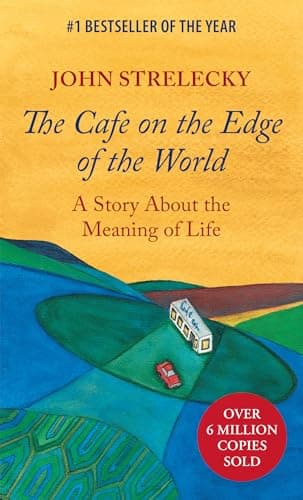
Quick Verdict
Pros
- Short and punchy — you can read it in one sitting, then think about it for months
- The three questions at the cafe's heart are genuinely thought-provoking and sticky
- Light, parable-style prose makes heavy philosophical territory easy to absorb
- No religious or cultural baggage — works for nearly any reader looking for perspective
- The core message about presence and legacy lands without feeling preachy
- Affordable paperback, also widely available as an ebook
Cons
- At roughly 130 pages, some readers will want much more depth than the book offers
- The fable format means characters stay thin — there's not a lot of emotional texture
- Some passages can feel repetitive if you're the type who re-reads the same chapter
- The simple prose style won't satisfy readers who prefer literary fiction or rigorous philosophy
Quick Verdict
The Cafe on the Edge of the World is a short parable by John Strelecky that wraps three genuinely important life questions into a pocket-sized fable. It's not going to rewire your brain, and it's not trying to. What it does do is hand you a mirror at exactly the right moment — if you're ready to look. Rating: 4.4/5.
What Is The Cafe on the Edge of the World?
On the surface, this is the story of a lost traveler who wanders into a peculiar cafe in the middle of nowhere. The cafe is clean, quiet, and staffed by a woman who hands him a menu. On it are three questions printed in simple ink:
- Why are you here?
- Do you fear death?
- Are you fulfilled?
That's the entire engine of the book. The rest unfolds as a conversation — part philosophy seminar, part warm advice from someone who clearly understands how people get stuck. John Strelecky doesn't overcomplicate it. The prose is direct, almost sparse, which works in its favour because the ideas need room to breathe. The book's slimness (around 130 pages) is a feature, not a flaw. It reads like a handwritten note someone left on your windshield — brief, pointed, hard to shake off.
Key Features
- Approximately 130 pages of short-form philosophical narrative
- Three central questions form the entire thematic backbone
- Parable / fable structure — accessible to all ages and backgrounds
- First-person protagonist whose restlessness will feel familiar to many readers
- No religious, political, or cultural affiliations required to engage with the message
- Widely available in paperback, ebook, and audiobook formats
- Often sold alongside The Big Five for Life as a companion volume
Hands-On Review
I picked this up on a Tuesday evening after a week that had felt like a blur of meetings and obligations. I'd been meaning to read it for a couple of years — it kept surfacing in podcast recommendations and gift lists — and honestly I expected something a little saccharine. A motivational fable about finding yourself in a desert cafe? The premise almost feels like a greeting card inside a greeting card.
But here's what surprised me: Strelecky doesn't sentimentalize the experience. The protagonist doesn't have a dramatic epiphany. He sits with the questions, answers them honestly — haltingly — and then has to sit with what he discovers about himself. The cafe staff don't rescue him. They just hand him the menu and wait. That's quietly powerful in a way I didn't anticipate.
By page 40 I was pausing to actually answer the questions for myself. Not because the book told me to, but because the framing is so clean that your own life starts filling in the gaps. I won't share my answers here — that would feel like cheating — but I'll say that I finished the book at midnight, sitting on my kitchen floor with a cold cup of tea, and didn't immediately pick up my phone. That hasn't happened in a while.
The audiobook narration is calm and unhurried, which suits the material well. If you commute, it's a reasonable one-trip listen. The paperback fits in a jacket pocket, which feels intentional — Strelecky clearly wrote this to be carried around and dipped into, not bulldozed in a single sitting.
Who Should Buy It?
Career-reflectors who sense a gap between their activity level and their sense of purpose will likely find this the most resonant. The book's core audience skews toward professionals in their late twenties to early forties who are deep enough into adult life to feel the questions but not so settled that they've stopped asking them.
Gift-buyers love this for graduates, friends going through a transition, or anyone starting a new chapter. It's less threatening than a dense self-help tome and far more memorable than a generic greeting card.
Slow readers — people who want something meaningful but don't have bandwidth for 400-page dense narratives will find this perfectly proportioned. You can finish it before bed and still have time to think.
Skip this if you prefer your philosophy rigorous and sourced, your fiction complex, or your self-help books backed by clinical research. The Cafe on the Edge of the World is a gentle conversation, not a textbook. If you need structure and data, look at the alternatives below.
Alternatives Worth Considering
Man's Search for Meaning by Viktor Frankl — If the idea of grappling with purpose in the face of existential hardship resonates, Frankl's autobiographical/philosophical work goes significantly deeper. It's denser and more demanding, but the payoff is substantial. Better for readers who want academic rigour alongside emotional weight.
The Alchemist by Paulo Coelho — Another slim fable about following your personal legend. Coelho's version is more literary and arguably more poetic, though some readers find the prose style divisive. If you bounced off The Alchemist, this cafe might land better for you.
The Power of Now by Eckhart Tolle — If Strelecky's emphasis on presence and being fully alive in the moment strikes you as important, Tolle's spiritual manual takes the idea much further — and much more eccentrically. It's a very different experience but serves a related audience.
FAQ
It's a short parable about a man who finds himself lost in a desert and stumbles into a strange cafe. There he encounters a waitress and menu that ask three life-defining questions: Why are you here? Do you fear death? Are you fulfilled? The answers you give yourself reveal the state of your life's purpose.
Final Verdict
The Cafe on the Edge of the World won't transform you overnight, and that's the point. What it does is plant three questions in your head and trust you to answer them honestly. Strelecky is smart enough to know that the transformation, if it comes, has to be yours — the book is just the match, not the fire. If you've been running on empty and sense that your busyness might be a form of hiding, this small book might be exactly the quiet interruption you need. Pick up a copy, find a cafe of your own, and sit with it.