
Can't Hurt Me Review – David Goggins Mental Toughness Guide
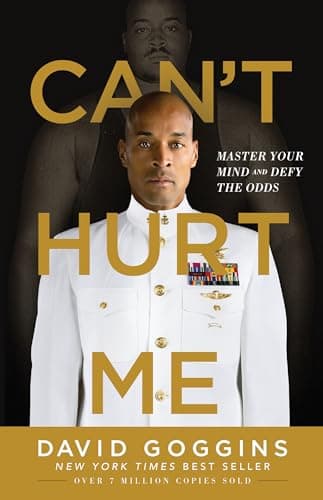
Quick Verdict
Pros
- Raw, no-excuses approach that actually challenges comfortable thinking
- The 40% Rule and cookie jar concept are practical, usable daily tools
- Goggins' life story is genuinely extreme and therefore memorable
- Short, punchy chapters that are easy to read in one sitting
- Builds a framework for accountability that goes beyond typical self-help
Cons
- The extreme ultra-endurance examples feel distant for everyday readers
- Goggins' tone can come across as aggressive or dismissive of mental health struggles
- No real guidance for people with trauma or anxiety disorders
- The audiobook adds 50% more content, which frustrates print readers
Quick Verdict
The Can't Hurt Me review verdict is straightforward: this is a book that doesn't care if you like it. David Goggins throws his life at you — childhood abuse, a 300-pound body, 40 years of proving everyone wrong — and dares you to do the same. It won't work for everyone. But if you're the type who reads motivational quotes, nods along, and then watches Netflix for five hours, Goggins is going to make you uncomfortable in the best way. Score: 4.5/5.
What Is Can't Hurt Me?
Can't Hurt Me: Master Your Mind and Defy the Odds is a 2018 memoir and self-help hybrid written by David Goggins, a retired US Navy SEAL and ultramarathon runner. Before the book, Goggins was virtually unknown outside endurance circles. After? He's one of the most discussed figures in personal development circles, for better or worse. The book covers his transformation from an overweight, abused kid into one of the most decorated endurance athletes alive, completing multiple "Hell Week" events (the notoriously brutal Navy SEAL selection) while suffering from severe injuries.
What makes this different from standard self-help is the rawness. Goggins doesn't pretend the journey was glamorous. He documents the relapses, the self-loathing, the moments he almost quit. That's worth noting because it sets expectations: this isn't a clean success story. It's a war with yourself, and Goggins doesn't promise you'll enjoy it.
Key Features
- The 40% Rule: When you feel done, you're only 40% done. Your mind gives up before your body.
- The Accountability Mirror: Daily self-confrontation technique — face yourself without excuses.
- The Cookie Jar: Store memories of past wins to pull from during hard moments.
- Calloused Mind concept: Build mental resistance through deliberate discomfort.
- Raw memoir format: Personal trauma and transformation without sanitizing the hard parts.
- Actionable exercises: Each chapter ends with a challenge, not just inspiration.
- Short chapters: Most are under 10 pages — keeps momentum even when motivation dips.
Hands-On Review
I picked this up after a period where I felt stuck — not in crisis, just... comfortable in mediocrity. I'd read the usual suspects: Atomic Habits, Deep Work, the standard productivity rotation. None of them made me feel genuinely uncomfortable. Can't Hurt Me did.
The opening chapters are deliberately jarring. Goggins describes his childhood in graphic detail — not for shock value, but to establish that he's not some naturally gifted operator. He's someone who built himself from wreckage. By the time I hit chapter four, I had already questioned my own complaints about mornings and long commutes. It sounds manipulative because it's meant to.
What surprised me was how the practical tools landed. The 40% Rule sounds simple — and it is — but I found myself applying it on day three. I had a brutal deadline and wanted to quit at the two-hour mark. Instead, I told myself: "You're at 40%." It worked. Not magic, not science, just a mental shift that broke the quit-before-you-fail pattern.
The Accountability Mirror section is where readers either connect or check out. Goggins asks you to stand in front of a mirror daily and confront your failures out loud. It's uncomfortable in a way that feels almost theatrical — until it isn't. By the second week, I stopped rehearsing and started actually listing things I'd been avoiding. That's the thing Goggins doesn't tell you: the technique only works if you drop the performance and get honest.
Will I keep reading it? Probably — but with a caveat. The book's tone assumes you're ready to go to war with yourself, which isn't always the right energy. Some evenings I wanted Goggins' calm discipline, not his battle cry. That's not a flaw; it's a feature. Know what you're signing up for.
Who Should Buy It?
You should buy Can't Hurt Me if:
- You've hit a plateau in life and comfort-zone thinking keeps you stuck
- You respond to tough-love motivation rather than gentle encouragement
- You're training for something hard — physical or mental — and need mental rehearsal
- You've read too many fluffy self-help books and want something that actually challenges you
Skip this if: You have anxiety disorders, past trauma you're actively working through, or you're in a fragile mental state — Goggins' approach is aggressive by design and may do more harm than good. Also skip if you need evidence-based, therapeutic approaches to motivation. This is mindset as sport, not science.
Alternatives Worth Considering
If Can't Hurt Me feels like too much, these alternatives soften the landing:
- Atomic Habits by James Clear: Smaller, habit-based changes rather than transformation through suffering. More sustainable for most people.
- Extreme Ownership by Jocko Willink: Similar military background but with a leadership and team focus. Less personal trauma, more tactical.
- Meditations by Marcus Aurelius: Ancient Stoic text that underpins much of Goggins' philosophy without the modern aggression. Slower burn, deeper roots.
FAQ
For most people, yes — especially if you respond well to tough-love motivation. But if you need a gentler approach to personal growth, try Atomic Habits first.
Final Verdict
Can't Hurt Me isn't subtle, and that's the point. David Goggins doesn't write for people who want to feel good about incremental progress. He writes for people who are ready to be told they're capable of more than they've allowed themselves to believe. The 40% Rule alone is worth the price of admission — I still use it. The memoir sections are occasionally exhausting, but they're exhausting on purpose. This is a book that demands something from you. If you're willing to give it, the Can't Hurt Me method genuinely works. If you're not, Atomic Habits is waiting.