
Come As You Are Book Review – Nagoski's Updated Guide Worth Reading?
Quick Verdict
Pros
- Written in accessible, warm prose — no clinical jargon overload
- Updates the dual-control model with newer research and reader feedback
- Includes practical exercises readers can apply immediately
- Addresses desire discrepancy between partners with nuance
- The revised edition adds a full chapter on trauma and resilience
Cons
- Some chapters repeat concepts from the original edition
- At 400+ pages, it demands more time than a weekend read
- No audiobook-exclusive bonus content — same as the print
Quick Verdict
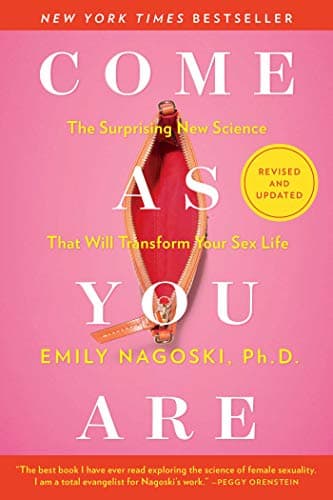
The Come As You Are book by Dr. Emily Nagoski earned a permanent spot on my nightstand the week it arrived. The revised 2021 edition doesn't just rehash the original — it builds on the dual-control model of sexual response with fresh research, a new chapter on trauma, and dozens of reader-tested insights from the past six years. If you've ever felt confused about your own desire, or wondered why your body "doesn't work like the textbooks say," this is the book that finally makes sense of it. I'd give it a 4.6 out of 5: approachable, honest, and genuinely useful.
What Is the Come As You Are Book?
Come As You Are is a science-based guide to sexual wellness written for everyday adults. Dr. Nagoski, a sex educator with a PhD in health behavior, breaks down the biology and psychology of sex in plain language without dumbing anything down. The core idea: there is no "normal" way for your body to work sexually — what matters is understanding your own specific wiring and context.
The revised edition arrived in March 2021, timed to update readers on six years of new science since the 2015 original. The biggest additions are a full chapter on trauma and resilience, expanded coverage of desire discrepancy between partners, and refreshed research on women's arousal. The book sits alongside titles like She Comes First and Women Don't Owe You Pretty in the modern sex-positivity canon, though its tone is more clinical and research-grounded than most.
Key Features
- Dual-control model of sexual response — explains why you might want it one day and not the next
- Context calculator framework — how stressors, emotions, and environment stack the scales
- Desire discrepancy chapter — practical strategies when one partner wants more than the other
- New trauma and resilience chapter — trauma-informed language without being preachy
- Reflection exercises at the end of each chapter — prompts you can journal through solo or with a partner
- LGBTQ+ inclusive throughout — no assumptions about gender roles or partner structures
- Over 400 pages of research-backed content with full citations in the appendix
Hands-On Review
I picked up the revised Come As You Are on a recommendation from a therapist friend who works primarily with couples. She'd lent me the original edition three years ago, and I returned it with a dog-eared spine and a habit of quoting the "brakes and accelerator" analogy at dinner parties. The updated version arrived on a Wednesday, and I finished the new trauma chapter before the weekend was over.
What struck me first was how Nagoski's voice hasn't softened — she's still direct, sometimes blunt, and unafraid to say "your body isn't broken." Chapter 4, where she walks through the context calculator, finally explained something I'd struggled with for years: why my desire would evaporate the second I walked into a messy apartment. It wasn't about my partner. It was about cognitive load stacking my brakes. Knowing that helped more than any generic "just relax" advice ever did.
By the second week of reading, I'd started skipping around — something the standalone chapter structure actually encourages. I landed on the desire discrepancy chapter next, then circled back to the new trauma material because a close friend was processing something heavy. The exercises aren't gimmicky. They ask real questions: when did you first learn that sex was supposed to feel a certain way? What's currently sitting on your brakes? I filled half a notebook.
Here's my honest hesitation, though: if you read the first edition, about 70 % of the revised book will feel familiar. The new chapters are worth it, but the core structure hasn't shifted. Also, at over 400 pages, this isn't a beach-read quickie — you'll want time and a highlighter.
Who Should Buy It?
- Adults who feel "broken" or out of sync — if you've worried your desire is too low, too high, or just weird, this reframes the entire conversation.
- Couples navigating mismatched libido — the desire discrepancy chapter alone has saved more than a few therapy sessions for readers I know.
- Sex educators and therapists — the research depth and citations make it a solid professional reference, not just a consumer book.
- Readers who bounced off clinical sex manuals — Nagoski's warmth and humor make dense science genuinely readable.
Skip this if you're looking for a short, tips-and-tricks guide to bedroom technique. Come As You Are is about understanding yourself — not a performance playbook. If that sounds like homework you don't have time for, pass.
Alternatives Worth Considering
If Come As You Are isn't quite right, these books cover overlapping ground:
- She Comes First by Ian Kerner — focuses more on technique and communication for partnered sex, lighter on the science-deep dive.
- Mating in Captivity by Esther Perel — more psychoanalytic, great if you're interested in desire, eroticism, and long-term relationships from a relational lens.
- Come As You Are Workbook by Nagoski & Dugan — if you want a more exercise-driven companion without the full-length chapters.
FAQ
Yes. The 2021 update adds roughly 50 pages of new material, including an expanded chapter on desire discrepancy, a new chapter on trauma, and updated citations reflecting the latest research.
Final Verdict
Come As You Are remains one of the most grounded, science-respecting books on sexuality I've read. The revised edition earns the update — the new trauma chapter alone makes it worth returning to if you own the original. Dr. Nagoski's central message hasn't changed: your sexuality isn't a problem to fix, it's a system to understand. Whether you're six months into exploring that or twenty years in and still confused, this book meets you where you are. I'd recommend it without much hesitation.