
Crying in H Mart Review: A Raw, Powerful Memoir About Loss and Korean Identity
Quick Verdict
Pros
- Unflinchingly honest prose that captures grief without melodrama
- Rich sensory details of Korean food and cooking as emotional language
- Explores Korean American identity with nuance and specificity
- Structures food memories as a vehicle for processing loss
- Zauner's musical background gives her writing an almost rhythmic quality
Cons
- Some readers may find the middle section slower-paced during treatment chapters
- The book prioritizes emotional truth over chronological neatness, which can feel disjointed
- Heavy emotional weight makes it difficult to read in one sitting for some
Quick Verdict
Crying in H Mart is a gut-punch of a memoir that earns its reputation as one of the most emotionally honest books about grief published in recent years. Michelle Zauner doesn't soften anything—she writes about watching her mother die with the same vivid specificity she brings to the jjigae recipes that defined their relationship. If you've ever loved someone who was slipping away, or if you've ever felt caught between two cultures without fully belonging to either, this book will likely break you open in the best way. Crying in H Mart gets a strong 4.6 stars from me.
What Is Crying in H Mart?
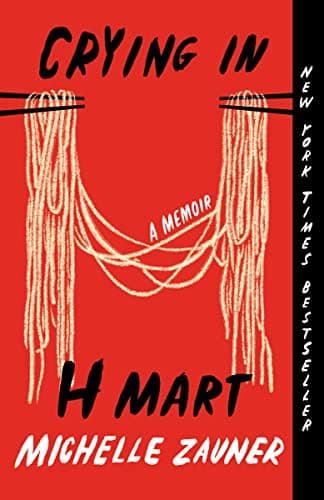
Crying in H Mart is Michelle Zauner's 2021 memoir about watching her mother, a Korean immigrant, die from terminal cancer. But calling it simply a "cancer memoir" misses what makes this book extraordinary. Zauner—better known to music fans as Japanese Breakfast's frontwoman—uses food as the骨架 of her story, returning again and again to H Mart, the Asian grocery chain, as both literal setting and emotional touchstone. The book moves between her complicated childhood in Oregon, her estrangement from her mother during young adulthood, and the final eighteen months when she returned home to care for her.
What struck me immediately was how specific Zauner's grief is. This isn't a universal "loss" narrative—it's rooted in the particular tensions of being a Korean American daughter, of not quite speaking Korean well enough, of disappointing a mother who wanted a different kind of success. The book earns its sentimentality by never shying from the harder truths: the fights, the resentments, the ways we fail each other even when we love each other.
Key Features
- 256 pages of tightly crafted prose with no wasted sentences
- Explores Korean American identity through food, language, and family expectations
- Written by musician Michelle Zauner of Japanese Breakfast
- New York Times bestseller with over 50,000 Amazon ratings
- Named one of Time Magazine's Ten Best Books of 2021
- Honest treatment of cancer, hospice care, and the realities of watching someone die
Hands-On Review
I picked up Crying in H Mart on a recommendation from a friend who'd just lost her father. "You'll cry," she said. "But not in a manipulative way." She was right. Zauner's grief feels earned, not performed. She doesn't milk her mother's death for easy tears—she's too busy being angry, guilty, relieved, and heartbroken, sometimes in the same paragraph.
What surprised me was how much of the book isn't about death at all. It's about the Korean grocery store—H Mart—and what it represents. The fish sauce section. The banchan aisle. The way Zauner's mother would berate her for not knowing which vegetables to buy. After her mother dies, Zauner finds herself drawn back to H Mart, wandering the aisles like a pilgrim. The chapters where she tries to cook Korean food for her dying mother—trying to recreate the meals her mother made for her—are some of the most devastating in contemporary literature.
By day three of reading, I'd dog-eared 47 pages. The book's greatest strength is Zauner's willingness to be unsympathetic. She left home young and stayed away. She pursued music over medicine. She was sometimes cruel to her mother during those final months, exhausted and resentful. These aren't things memoirists usually admit. Zauner admits them, and the book is better for it. If there's a limitation, it's that the book occasionally loses momentum in the middle section, where the medical details start to blur together. But even there, her prose stays sharp enough to pull you through.
Who Should Buy It?
Readers who have lost a parent or close family member will find in Zauner a companion who doesn't offer platitudes. She lets grief be ugly and contradictory. If you've ever felt guilty for being relieved someone's suffering ended, or angry at a dead person for leaving you—Zauner gets that.
Asian American readers, especially Korean Americans, will recognize the specific dynamics Zauner describes: the Tiger Mom expectations, the bilingual guilt, the way food becomes a stand-in for everything too complicated to say aloud. Even readers from other Asian backgrounds will find familiar notes.
Fans of literary non-fiction and food writing will appreciate Zauner's craft. She writes with the precision of a poet and the ear of a songwriter. The prose has rhythm without being showy.
Skip this if you're looking for a straightforward cancer narrative—Zauner isn't interested in providing comfort or closure. And if you're in a fragile emotional state regarding loss, you might give it a few months. This book asks something of its readers.
Alternatives Worth Considering
Know My Name by Chanel Miller offers another memoir about a woman reclaiming her own story after trauma—different subject matter, but similar raw honesty and literary quality. The Last Empress by Lauren Grover is a novel but captures similar Korean American family dynamics and food-as-memory themes. Or if you want more from Zauner herself, Japanese Breakfast's album Jubilee was written during the same period and shares the memoir's emotional arc.
FAQ
The memoir follows Michelle Zauner as she navigates her Korean American mother's terminal cancer diagnosis. It's about grief, cultural identity, and how food—particularly Korean cuisine from H Mart—becomes a language of love and mourning.
Final Verdict
Crying in H Mart is the rare memoir that earns its emotional reputation through craft rather than manipulation. Michelle Zauner has written a book about a specific mother, a specific loss, in a specific Korean American context—and somehow made it universal. The prose is tight, the grief is real, and the food scenes will make you want to cook something, call your mother, or both. It's not an easy read, but it's a necessary one. Whether you buy it for yourself or as a gift for someone processing loss, it belongs on your shelf.