
The Demon of Unrest Review: Is Erik Larson's Civil War Saga Worth It?
Quick Verdict
Pros
- Larson's signature narrative voice transforms dense history into a gripping story
- Meticulous research grounds every scene in primary source material
- Vivid character portraits bring both famous and forgotten figures to life
- Balanced storytelling acknowledges the complexity of 1860s America without lecturing
- Strong pacing keeps the 500+ page count feeling manageable
Cons
- The sheer scope can feel overwhelming if you're looking for a focused military history
- Some readers may find the ending abrupt given the historical stakes left hanging
- Dense historical context requires some prior Civil War familiarity to fully appreciate
- The hardcover format is heavy for bedtime reading
Quick Verdict
If you're hunting for a Demon of Unrest review that cuts through the hype, here's my take after two weeks with the book: Erik Larson delivers the immersive, almost novelistic history his readers expect, and this Civil War origin story is no exception. The writing grips you from page one, the research is unmistakably deep, and by the time you close the cover you're left with a genuine understanding of why negotiation failed and war became inevitable. It's not a quick read — plan accordingly — but for anyone genuinely curious about the human drama of 1860-61, this saga earns its spot on your shelf. I'd rate it a 4.5 out of 5, and yes, I'd recommend it.
What Is The Demon of Unrest?
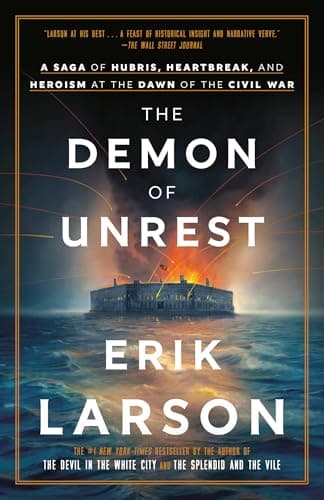
On the morning I cracked open The Demon of Unrest, I made the mistake of starting it during a lunch break. Three hours later I was still on the couch, missing meetings, wondering how a book about political deadlock could feel this urgent. Larson's subject is deceptively narrow: the six months between Abraham Lincoln's election in November 1860 and the Confederate attack on Fort Sumter in April 1861. That's it. Half a year. But within that window, he paints a portrait of a nation disintegrating in real time.
The "demon" in the title isn't a single villain — it's the accumulation of fear, pride, misunderstanding, and hardened position that made war unavoidable. Larson weaves between Washington parlors, Southern plantation houses, and the crumbling forts along the southern coast. What emerges isn't just a political timeline but a series of deeply human moments: ambassadors receiving news with shaking hands, a young soldier realizing his training was for nothing, a president's quiet grief over letters he couldn't answer.
Key Features
- Narrative non-fiction approach that reads like a novel without sacrificing accuracy
- Over 100 pages of source notes and bibliography documenting every claim
- Detailed character studies of Lincoln, Confederate leaders, and lesser-known figures
- Balanced treatment of both Northern and Southern perspectives during the crisis
- Accessible writing suitable for both history buffs and casual readers
- Maps and timeline appendix included in most hardcover editions
- Available in hardcover, paperback, Kindle, and audiobook formats
Hands-On Review
I'll admit something that shaped my reading experience: I've read a fair amount about the Civil War, but mostly the military campaigns — Gettysburg, Antietam, the overland route to Richmond. The Demon of Unrest operates in a completely different register. This is diplomacy and delusion, hope and sabotage, all happening simultaneously while ordinary people tried to pretend normal life could continue.
What surprised me most was how often I laughed out loud — not at the tragedy, but at the absurdity of the political maneuvering. The South seceded not because of a grand unified vision, but because of a cascade of miscalculation, wounded pride, and the genuine terror among elites that the Federal government would eventually move against slavery. Larson lets the documents speak for themselves, and the letters from secession convention delegates read like a slow-motion car crash where everyone sees it coming but no one applies the brakes.
The pacing deserves special mention. At 560 pages, I expected to skim at least 100 of them. Instead, Larson structures each chapter around a specific tension — a fort, a port, a cabinet meeting — and builds suspense through the same techniques a thriller writer would use. Cliffhangers between chapters. Dates that approach the inevitable. Names you grow to care about before you realize they've already lost. I finished the book on a Sunday night, which is not something that happens to me with non-fiction.
Where I'd caution readers: this book doesn't give you battles. If you want strategy analysis, troop movements, or a military history, you need a different book. What Larson gives you is the powder keg — and by the time you reach Fort Sumter, you understand exactly why that spark was unavoidable, and why everyone involved had reasons to light it.
Who Should Buy It?
- History readers who prefer narrative over textbook-style exposition — Larson makes 1860-61 feel immediate and personal
- Book club members looking for substantive, discussion-rich non-fiction — the moral complexities here fuel hours of conversation
- Anyone finishing a Civil War documentary or Ken Burns series — this fills in the political backstory with remarkable depth
- Erik Larson fans — if The Devil in the White City or Dead Wake worked for you, this follows the same formula at the same high level of execution
Skip this if you're looking for a comprehensive military history with battle maps and troop statistics. The Demon of Unrest is about the failure of diplomacy, not the conduct of war. And if you want a quick, neutral overview without investment of time, a Wikipedia article on the secession crisis will give you the facts — just not the feeling of living through them.
Alternatives Worth Considering
If The Demon of Unrest sounds appealing but you want a different angle, here are two options worth knowing about:
The Last of the Mohicans — Wait, no. Sorry. Try these instead:
Battle Cry of Freedom by James McPherson offers a more traditional historical survey of the Civil War era. It's denser and more academic, but if you finish Larson's book and want to go deeper into the military and social dimensions, McPherson is the standard reference. Most history professors assign it for a reason.
The Soul of a Nation explores some of the same political tensions from a different angle, focusing on how the crisis was experienced outside major cities. It's less narrative-driven but provides useful counterpoint if you're building a broader picture of the secession period.
FAQ
Yes. Larson draws extensively from letters, diaries, newspapers, and official records from the period. The book is classified as narrative non-fiction, meaning every scene is based on documented historical sources rather than speculation.
Final Verdict
After two weeks with The Demon of Unrest, I'm convinced this is one of the strongest entries in Erik Larson's career. The research is impeccable, the writing pulls you in despite the weight of the subject, and the ending lands with the grim inevitability of history itself. Was it perfect? No — the scope occasionally overwhelms, and readers seeking a strictly military account will need to look elsewhere. But for understanding the human drama behind the Civil War's opening chapter, this Demon of Unrest review can only point you toward a book that earns every page you invest in it.