
Die With Zero Book Review: Is Perkins' Plan Actually Smart?
Quick Verdict
Pros
- Challenges conventional wisdom in a fresh, thought-provoking way
- Uses relatable examples and simple math to explain complex ideas
- Promotes intentional living and prioritization of meaningful experiences
- Easy-to-read prose that makes financial concepts accessible
- Encourages actionable mindset shifts about money and time
Cons
- Some recommendations feel risky without solid financial cushion
- Borrowing against future money won't suit most people's situations
- Skeptics may find the thesis oversimplified or impractical
- Requires significant mindset adjustment for traditional savers
Quick Verdict
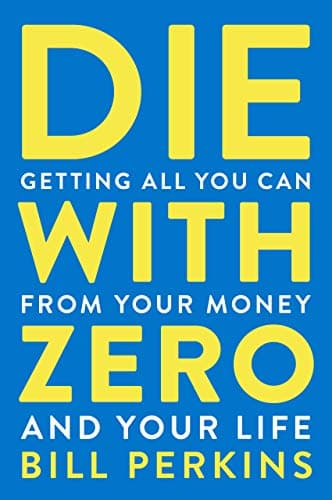
The Die With Zero book presents a genuinely contrarian take on money and life: stop deferring experiences until retirement and start spending intentionally now. It's provocative, sometimes reckless in its suggestions, and yet oddly liberating. I'd give it a 4.2 out of 5 for readers ready to question the "save everything" mantra.
What Is the Die With Zero Book?
I kept seeing Die With Zero pop up in Reddit threads and finance podcasts, usually followed by heated debates. That alone made me curious. The core premise is simple: you should aim to spend all your money on experiences by the time you die rather than leaving a massive inheritance. Bill Perkins, a hedge fund manager with poker-player logic, argues that most people over-save and under-experience — dying with millions while missing out on adventures that money could have bought.
The book isn't anti-saving. It's anti-stupid-saving. Perkins wants you to think about money as a tool for living, not a scoreboard number that climbs forever. He introduces concepts like "time-bucketing" your finances and calculating your "life points" to figure out when peak experience years actually happen.
Key Features
- Contrarian philosophy that challenges conventional retirement-first thinking
- Simple math framework for calculating when to spend versus save
- Focus on life experiences over asset accumulation
- Relatable examples ranging from vacations to career choices
- Emphasis on intentionality in every financial decision
- Discussion of the "net zero" concept for timing wealth depletion
- Accessible writing style that avoids dense financial jargon
Hands-On Review
Let me be honest — I approached this book thinking I'd find it arrogant or out-of-touch. A hedge fund guy telling regular people to spend more? Easy to dismiss. But Perkins isn't talking to people living paycheck to paycheck. He's addressing the middle-class professional who saves religiously but feels vaguely unfulfilled.
By chapter three, I found myself nodding along. His "die with zero" concept isn't about dying broke. It's about matching your spending to your life phases. Your 30s might be ideal for adventure travel. Your 50s might be when you finally launch that creative project. Perkins asks: why save everything for a retirement that might include health problems and limited mobility?
What surprised me was the specificity. He walks through actual calculations — not just vague encouragement to "live more." There's a whole section on borrowing against your future self's earnings to fund experiences that compound in value over time. That part made me uncomfortable, honestly. But I kept reading.
The book's weakness is that some recommendations feel dangerous if you don't have financial cushion. Perkins seems to assume a certain income level and stability. For someone living on a fixed salary, his suggestions require serious adaptation. Still, the underlying philosophy — spend money on things that genuinely matter, stop saving for a number — stuck with me long after I finished.
Who Should Buy It?
- The comfortable saver — someone with a healthy 401k who feels something's missing despite doing everything "right"
- The experience seeker — a traveler or adventurer who's been delaying dreams for a future that keeps getting pushed back
- The philosophy reader — anyone interested in how money intersects with meaning and purpose
- Skip this if — you're still paying off debt, living paycheck to paycheck, or genuinely need every dollar for security. This book is for people with choices, not constraints.
Alternatives Worth Considering
- Your Money or Your Life by Vicki Robin — A more gradual, step-by-step approach to aligning spending with values. Better for people who want a structured process rather than a philosophical punch.
- The Psychology of Money by Morgan Housel — Explores the emotional side of finance with multiple short stories. More conservative but extremely readable for almost any financial situation.
- Early Retirement Extreme by Jacob Fisker — For readers who want the opposite extreme — aggressive saving and radical lifestyle design. Useful contrast to Perkins' spend-more philosophy.
FAQ
The book argues that you should spend your money on life experiences before you die rather than leaving large inheritances. Perkins presents a framework for maximizing experiences while you're alive by spending strategically across different life phases.
Final Verdict
Die With Zero won't work for everyone, and Bill Perkins knows it. The book's strength lies in its willingness to ask uncomfortable questions about why we save, what we're saving for, and whether the tradeoff is actually worth it. I came away questioning my own assumptions — and that's exactly what a good book should do. If you're financially stable and wondering whether there's more to life than compound interest, pick up the Die With Zero book and see if it shifts your perspective.