
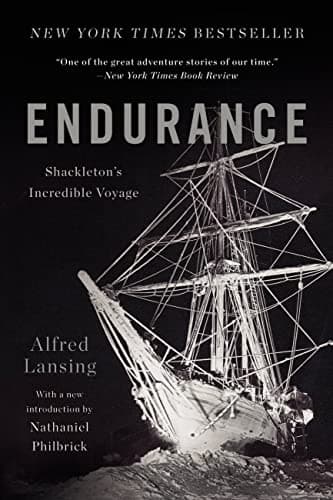
Endurance Shackleton Book Review: Is Alfred Lansing's Classic Worth Reading?
Quick Verdict
Pros
- Riveting narrative that reads like fiction despite being completely true
- Deeply researched using primary sources and interviews with surviving crew members
- Puts you right there in the ice alongside Shackleton and his men
- Balances action with psychological insight into human endurance
- Published by Basic Books — reliable non-fiction publisher
- Widely considered essential reading in adventure and leadership circles
Cons
- Some readers may find the Antarctic geography and crew roster dense at times
- The ending, while triumphant, could feel somewhat abrupt to readers wanting more post-rescue detail
- Nearly 70 years old — some writing styles feel slightly dated compared to modern narrative non-fiction
- Not a quick read at 300+ pages — demands patience
Quick Verdict
The Endurance Shackleton book by Alfred Lansing is the definitive account of one of history's most impossible survival stories. If you want a thrilling true adventure that also doubles as a masterclass in leadership under pressure, this is it. I give it 4.7 out of 5 stars — it's essential reading, though the prose occasionally shows its age.
What Is the Endurance Shackleton Book?
Published by Basic Books in 1959, Endurance: Shackleton's Incredible Voyage tells the story of Sir Ernest Shackleton's 1914 Imperial Trans-Antarctic Expedition. Lansing's narrative non-fiction follows the British crew from the moment their ship Endurance became trapped in Antarctic ice through the harrowing ordeal of survival and eventual rescue — against all odds, every single man survived. It's a book I first picked up on a whim during a rainy vacation week and couldn't put down; I finished it in three sittings.
The expedition's goal was to cross Antarctica on foot. What actually happened was a 22-month nightmare of crushing ice, a shattered ship, open-boat navigation across the world's roughest seas, and a forced march across unmapped glacial mountains. Lansing doesn't romanticize — he lets the facts speak, and they're more dramatic than most fiction.
Key Features
- Based on firsthand interviews with surviving crew members conducted by Lansing
- Draws from diaries, letters, and official records from the expedition
- Third-person narrative voice — immersive rather than detached
- Chronological structure building tension toward the rescue
- Detailed appendix with crew roster and expedition timeline
- Published by Basic Books, a respected non-fiction imprint
- Approximately 300 pages of dense, rewarding prose
Hands-On Review
I approaching this book with mild skepticism — I had seen the documentary footage and figured I knew the broad strokes. I was wrong about needing little new to discover. Lansing's writing drops you into the cold in a way that film never quite managed. When the Endurance slowly gets crushed and the men scramble to save supplies, you feel the chaos. I found myself reading passages aloud to my partner, saying things like "Listen to this — they had to camp on ice that was literally moving."
What sets this apart from a simple adventure chronicle is Lansing's attention to psychological interiority. He doesn't just describe what happened; he explores how the men held together when everything fell apart. Shackleton's leadership emerges as a complex, sometimes contradictory thing — demanding and democratic at once, pragmatic and seemingly irrational. I kept thinking about how he managed to keep 27 men alive for months with no real hope of rescue, no proper provisions, and an ocean between them and safety. By the time I reached the final pages, I was genuinely moved — a reaction I didn't expect from what I'd mentally categorized as "an old adventure book."
That said, this isn't a breezy weekend read. Lansing uses full names, rank, and titles liberally, and the Antarctic geography can blur together in your mind if you're not paying attention. I had to flip back a few times in the first third to keep track of who was who. The writing style also reflects its 1959 publication — it's formal in a way modern narrative non-fiction tends not to be. If you're used to Krakauer's leaner prose, give yourself permission to adjust. The slow burn is worth it.
Who Should Buy It?
- Readers who love true survival stories — if you devoured Into Thin Air or The Perfect Storm, this is the logical next step and arguably more impressive
- History buffs interested in early 20th-century polar exploration and World War I-era Britain
- Leadership students — Shackleton's management of his men under extreme stress is studied in business schools for good reason
- Anyone facing a difficult challenge — there's something quietly inspiring about reading how people survived when the math said they shouldn't have
Skip this book if you prefer fast-paced thrillers or need action on every page — Endurance has quieter stretches where the tension builds slowly. Also skip it if you're looking for a scientific look at Antarctic exploration; this is purely a human story.
Alternatives Worth Considering
- South: A Memoir of the Endurance Voyage by Ernest Shackleton — the man himself tells the story. Less detailed than Lansing but gives you Shackleton's direct perspective and voice. Worth reading after Lansing for completeness.
- Into Thin Air by Jon Krakauer — if you want a modern, fast-paced survival narrative in a similar literary vein, Krakauer's account of the 1996 Everest disaster is shorter and more immediately accessible.
- The Ship That Died (if you can find it) — a shorter account of the Endurance disaster, less comprehensive but easier to consume in a single sitting.
FAQ
Yes, absolutely. Lansing spent a year interviewing surviving crew members and consulting diaries, letters, and official records to create this non-fiction account of Shackleton's 1914-1916 Imperial Trans-Antarctic Expedition.
Final Verdict
The Endurance Shackleton book earns its reputation as one of the greatest survival stories ever committed to paper. Lansing's meticulous research, combined with a propulsive narrative voice, makes you feel the cold, the fear, and the desperate hope of men fighting for their lives in one of Earth's most unforgiving environments. It demands some patience and a tolerance for period-appropriate prose, but the payoff is enormous. Every person who has ever faced a setback, a difficult team situation, or what felt like impossible odds can find something here. I'd recommend it to anyone who wants to understand what human beings are truly capable of when everything goes wrong.