
Good Inside Book Review: Resilient Parenting Guide Tested
Quick Verdict
Pros
- Rooted in neuroscience and child development research, not just opinion
- Practical scripts for real scenarios (tantrums, bedtime, sibling fights)
- Encourages self-compassion for parents, not just kids
- Readable and warm tone — doesn't lecture or shame
- Addresses a wide age range from toddlers to preteens
- Workbook-style prompts make it actionable
Cons
- Some scenarios skew toward households with two present parents — less applicable for solo caregivers
- The audio version occasionally loses the nuance of italicized emphasis that the print version uses
- A few techniques require significant emotional regulation from the parent first, which is hard when you're already depleted
Quick Verdict
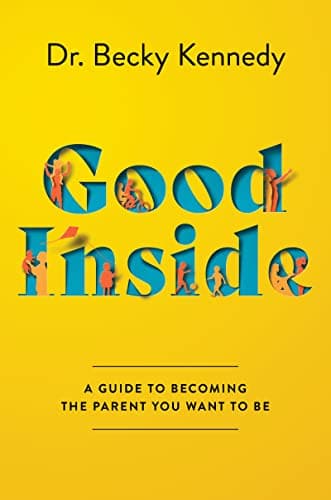
The Good Inside book by Dr. Becky Kennedy earns its spot on the shelf. It won't fix every meltdown, but it gives you a reliable framework for staying connected even when your patience is fraying. I'd rate it 4.4 out of 5 — solid for most parents, essential if you're exhausted by the punish-or-yield loop.
What Is the Good Inside Book?
The moment I opened Good Inside, I noticed it didn't open with a chapter-long lecture. It opened with a scene — a parent mid-tantrum at the grocery store, feeling like a failure. That framing told me something important: Dr. Becky Kennedy gets it. She isn't writing from an ivory tower. She's a clinical psychologist and mother who has sat across from hundreds of families, and she translates that experience into language any parent can use.
At its core, the book rests on a simple but powerful idea: every child is already on the right track internally. Behavior that looks defiance or regression is, more often than not, an outward signal of an unmet need. The parent's job isn't to fix the child — it's to connect with the child and co-regulate until the child develops the internal tools to do it alone. That's the "Good Inside" philosophy in a nutshell.
Key Features
- Built on attachment theory and developmental neuroscience, not parenting trends
- Includes real-world scripts and phrases you can use in the heat of the moment
- Workbook-style reflection prompts at the end of each chapter
- Addresses specific challenges: tantrums, sibling conflict, sleep battles, picky eating, screen time
- Chapters on parental self-compassion and managing your own big emotions
- Short, digestible sections ideal for reading in stolen minutes
- Relevant across a broad age range from toddler years through preteen
Hands-On Review
I've read my share of parenting books. Most of them tell you what to do, and then leave you hanging when reality doesn't match the ideal scenario. Good Inside is different in that it meets you in the gap. Chapter four — the one about tantrums — genuinely changed how I handled my five-year-old's evening blow-ups for about three days before I backslid. That's normal. Dr. Becky explicitly acknowledges that regulation is a practice, not a switch you flip.
What surprised me was how much the book focused on the parent's inner state. There's a chapter called something like "You're Not Broken" that I'd mentally skipped on first read. Then, a particularly rough week made me flip back to it. The message — that your reactivity is information, not failure — landed differently when I needed it. That's the mark of a book that works on reread value.
The scripts are genuinely useful. When my daughter refused to put on shoes for preschool, I didn't handle it well the first time. But I tried the phrase from the book: "You want to keep playing. That makes total sense. Shoes go on so we can get to the fun part." It didn't work immediately, but it changed the temperature in the room. That's the real test — not a magic fix, but a small de-escalation that compounds over time.
The audiobook narration is warm and clear. My one gripe is that some of the italicized emphasis in the print version — which signals which words to stress in spoken scripts — doesn't translate as well in audio. Worth knowing if you're an audiobook-first household.
Who Should Buy It?
Buy it if: You find yourself defaulting to threats, bribes, or yelling and you want a more sustainable alternative. If you've read Positive Parenting or The Whole-Brain Child and wanted something with more specific, ready-to-use language, Good Inside fills that gap.
Buy it if: You're a new parent who wants to build a foundation before things get hard. Getting this framework early is genuinely easier than retrofitting it during a crisis.
Buy it if: You're a caregiver who struggles with your own regulation. The chapters on parental self-compassion are underrated — I wish they'd been printed as a standalone mini-book.
Skip it if: You prefer strict, behaviorist methods with clear reward-and-consequence charts. Good Inside intentionally avoids that framework, and if it clashes with your values, no amount of gentle language will change that.
Skip it if: You're a solo caregiver in a high-stress environment with limited time and support. The book assumes you have at least some bandwidth for reflection, and some scenarios feel geared toward households with more than one adult present.
Alternatives Worth Considering
The Whole-Brain Child by Siegel and Bryson is a stronger choice if you want the neuroscience laid out in more detail. It's more academic, but the brain-based framework is incredibly durable. Many readers read both and use them together.
How to Talk So Kids Will Listen by Adele Faber and Elaine Mazlish remains the gold standard for conversational scripts with children. It's older (1980s), but its specificity is still unmatched. If you want a book that's almost entirely scripts, this is the one.
No-Drama Discipline by Siegel and Bryson is essentially Good Inside's academic cousin — same research foundation, slightly more clinical tone. Good Inside is more personal; No-Drama Discipline is more clinical. Pick based on which voice resonates with you.
FAQ
Good Inside, by Dr. Becky Kennedy, is a parenting guide that reframes difficult child behavior as an expression of unmet needs. It teaches parents to respond with connection rather than correction, drawing on neuroscience and attachment theory.
Final Verdict
Good Inside isn't a miracle cure for every parenting challenge — no book is. What it is, is a reliable compass when you're lost in the chaos of the moment. Dr. Becky Kennedy's framework won't make you the perfect parent, but it will make you a more connected one, and that's what most of us are actually reaching for. The scripts, the self-compassion chapters, and the realistic tone set it apart from much of the parenting aisle. If you're intrigued by the connection-over-correction approach, this is a solid starting point.