
Harry Potter and the Goblet of Fire Review – Is It Worth Reading in 2025?
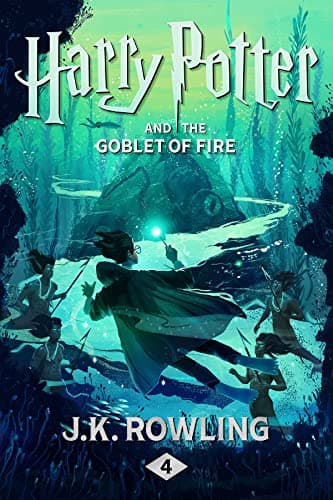
Quick Verdict
Pros
- The Triwizard Tournament plot is genuinely gripping and raises the stakes for the whole series
- Character development deepens significantly — Harry faces peer pressure, jealousy and loss all at once
- The mystery element is well-constructed; the reveal rewards attentive readers
- Themes of prejudice, loyalty and choices are handled with surprising nuance for a YA book
- The pacing is tighter than Prisoner of Azkaban despite being a longer book
Cons
- At 734 pages it requires a real time commitment that younger readers may struggle with
- The middle section drags somewhat between the tournament tasks
- Lupin's departure is glossed over too quickly after the emotional build-up in book 3
- Violence and death are more prominent than earlier entries — not for very sensitive younger readers
Quick Verdict
I picked up my copy of Harry Potter and the Goblet of Fire on a rainy Saturday with zero intention of putting it down before the final page — and I didn't. J.K. Rowling's fourth entry in the wizarding series is genuinely the one where things change permanently. The Triwizard Tournament gives the plot genuine stakes, the cast expands in smart ways, and the ending hits harder than anything in the first three books. My score: 4.8 out of 5.
What Is Harry Potter and the Goblet of Fire?
Harry Potter and the Goblet of Fire is the fourth novel in J.K. Rowling's globally beloved fantasy series, first published in the UK in July 2000. In it, Hogwarts plays host to two other magical schools for the first time as students compete in the Triwizard Tournament — a dangerous three-task contest previously banned due to the high number of fatalities. When Harry's name is mysteriously pulled from the Goblet of Fire, he's forced to compete despite being underage and the youngest champion in over a century.
At roughly 734 pages (US paperback), it's a significant step up in length from Prisoner of Azkaban. Rowling uses that space to open the wizarding world outward — the Quidditch World Cup sequence alone spans dozens of pages and immerses you in a broader magical culture beyond Hogwarts' walls. By the time you reach the final task, the book's tonal shift from adventure to genuine peril feels earned rather than forced.
Key Features
- Triwizard Tournament with three high-stakes tasks set across land, water and air
- Introduction of Beauxbatons and Durmstrang — two rival European wizarding schools
- Expanded cast including Viktor Krum, Fleur Delacour and Cedric Diggory
- First full return of Lord Voldemort in the series; a pivotal turning point
- Deeper exploration of house-elf rights (SPEW), pure-blood ideology and prejudice
- The Yule Ball sequence — a rare moment of social drama and teenage awkwardness
- Over 50 named characters and multiple interwoven plot threads
Hands-On Review
I won't pretend I approached this with fresh eyes — I'd read Goblet of Fire twice before, once as a teenager and once in my twenties. But even knowing exactly where the plot goes, I found myself turning pages faster in the middle section than I expected. The first task in particular lands viscerally. Rowling builds to it across dozens of pages of tension, and when Harry mounts his Firebolt and faces the Hungarian Horntail, the scene has real cinematic weight.
What surprised me this time around was how much Cedric Diggory's presence matters — he's not a throwaway rival character. His decency, his fairness in the tournament, his quiet competence; it all makes the third task hit much harder than it would on a first read. You can't help but feel the loss because Rowling took the time to make him someone worth knowing.
The Yule Ball is the section most readers cite as filler, and I won't fully disagree — it's slower than the tasks. But I think it does important structural work. This is the book where Harry transitions from a boy in a boarding school adventure series to a teenager navigating complex social hierarchies, jealousy and first impressions of the opposite sex. The awkwardness of Ron's reaction to Hermione arriving with Krum is, frankly, painfully accurate.
The final twist — that Moody was Barty Crouch Jr. all along, that the tournament was engineered to get Harry to Voldemort — recontextualizes everything. On my first teenage read I didn't catch a single clue. Rereading as an adult, the breadcrumbs are there and they're laid carefully. That's a mark of confident plotting. The cemetery scene that follows is genuinely unsettling. Rowling doesn't flinch from what Voldemort's return means, and the dead are named one by one.
Who Should Buy It?
- Existing Harry Potter fans who are working through the series or revisiting it — this is the essential turning point of the entire saga
- Fantasy readers new to the series willing to commit 700+ pages — start from Book 1, but know this is where the series levels up
- Parents reading alongside children aged 10+ — the darker tone and death of a main character warrant conversation, but the book handles these themes responsibly
- Adults rediscovering YA fantasy — Goblet of Fire holds up remarkably well; themes of institutional failure and propaganda connect directly to the later books
Skip this if you bounced off the first book or two — Goblet of Fire is not a standalone entry and it assumes you care deeply about the Harry-Voldemort arc already. Also skip it if you're looking for a quick read; this is a weekend-to-week commitment at minimum.
Alternatives Worth Considering
Harry Potter and the Prisoner of Azkaban — shorter, lighter, with a tighter plot and the beloved introduction of Sirius Black. A better entry point if Goblet of Fire feels like too much commitment to start with.
The Lord of the Rings by J.R.R. Tolkien — if it's the epic fantasy scope and worldbuilding you want rather than the school-based coming-of-age story, Tolkien's trilogy offers unparalleled depth of lore and a complete arc.
A Court of Thorns and Roses by Sarah J. Maas — for newer YA fantasy readers who want a similarly addictive series with romantic subplots woven through a tournament-structured story.
FAQ
The US paperback is approximately 734 pages. The UK edition runs slightly shorter at around 637 pages due to different formatting.
Final Verdict
Harry Potter and the Goblet of Fire earns its reputation as the point where the series stops being about school adventures and starts being about a war. The Triwizard Tournament plot is propulsive, the character work is sharper than people give it credit for, and the climax still carries weight even knowing what's coming. It's not perfect — the middle sags and a few subplots feel underdeveloped on reflection — but these are minor complaints against a book that genuinely advances everything Rowling was building. Whether you're reading it for the first time or the fourth, Harry Potter and the Goblet of Fire is worth every page.