
The Hunger Code by Dr. Jason Fung – Honest Review 2024
Quick Verdict
Pros
- Builds on the foundational science from The Obesity Code with deeper hormonal insights
- Focuses specifically on ultra-processed foods and their effect on hunger hormones
- Practical fasting protocols that are clearly explained for beginners
- Addresses the root cause of weight gain rather than just symptoms
- Written in an accessible, conversational style despite complex medical topics
Cons
- Dense scientific chapters may challenge readers without a health background
- Requires significant lifestyle commitment beyond just reading
- Some concepts repeat material from The Obesity Code for series readers
- Price point may be higher than typical self-help nutrition books
Quick Verdict
After spending two weeks with The Hunger Code, I can say this: Dr. Jason Fung has written a book that challenges everything you thought you knew about hunger, willpower, and why diets fail. It's a worthy sequel to The Obesity Code that digs deeper into the hormonal side of weight management. I'd give it a 4.3 out of 5 — solid science, occasionally dense prose, but ultimately a book that could genuinely change how you think about food. Check the current price on Amazon below.
What Is The Hunger Code?
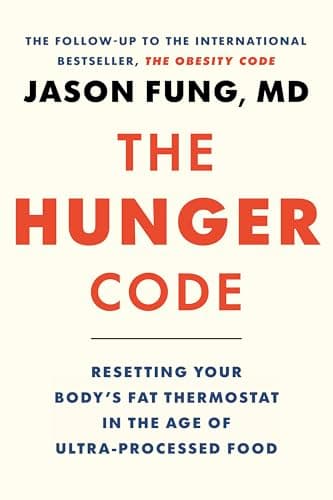
The moment I picked up The Hunger Code, I noticed something the subtitle doesn't fully capture: this isn't just another diet book. Dr. Jason Fung, a nephrologist and fasting expert, argues that your body has a 'fat thermostat' — a hormonal set point that determines how much fat you store — and that ultra-processed foods have essentially broken that thermostat for millions of people. The book is the second installment in The Obesity Code series, building directly on the framework Fung established in the first book.
I approached this one with some hesitation, honestly. Sequels to popular health books often feel like cash-grabs, rehashing the same ideas with a fresh coat of paint. The Hunger Code surprised me, though. It's not just a rehash. Where The Obesity Code zeroed in on insulin as the primary driver of obesity, this book widens the lens to examine the entire orchestra of hunger hormones — ghrelin, leptin, cortisol, and others — and how they conspire (or cooperate) in regulating your body weight. The result is a more nuanced, more complete picture of why conventional calorie-counting approaches so consistently fail.
Key Features
- Explains the 'fat thermostat' concept and how hormones control your body's set point for fat storage
- Detailed analysis of how ultra-processed foods disrupt normal hunger signaling
- Multiple fasting protocols with step-by-step guidance for beginners and experienced fasters
- Research-backed explanations of ghrelin, leptin, and other hunger hormones
- Practical strategies for resetting your metabolic response to food
- Addresses the psychological and emotional components of overeating
- Includes real-world case studies from Fung's clinical practice
Hands-On Review
Let me be straight with you: the first three chapters are dense. Fung doesn't waste time with motivational fluff or elaborate stories. By page 12, you're already neck-deep in hormone pathways and insulin signaling cascades. I read a chapter on a Tuesday evening with a cup of tea, took a break, then came back Wednesday morning to finish it. That rhythm worked better for me — this isn't a book you binge-read in a single sitting.
What impressed me most was the specificity. Fung doesn't just say 'ultra-processed foods are bad.' He walks you through the exact mechanisms: how these foods trigger disproportionate insulin responses, how they override leptin's satiety signals, how the combinations of fat, sugar, and salt create a neurological reward response that mimics addiction. There's a passage about how high-fructose corn syrup specifically interferes with ghrelin suppression that I found genuinely eye-opening. I found myself texting a friend who struggles with nighttime snacking — this book gave me vocabulary to explain what might actually be happening in his body.
The fasting protocols section is where The Hunger Code earns its practical stripes. Fung presents several approaches — from gentle time-restricted eating windows to full 24-hour fasts to longer multi-day protocols — and crucially, he explains the rationale behind each. I appreciated that he acknowledges not everyone will jump straight to 24-hour fasts. There's a graduated approach that feels realistic rather than aspirational. By the end of the week, I had experimented with a 16:8 window myself. Was it transformative? Not immediately, but I noticed the mental clarity mid-fast and the absence of that afternoon energy slump I've struggled with for years.
What surprised me was the chapter on stress and cortisol. I expected a book about hunger to focus exclusively on food, but Fung makes a compelling case that chronic stress is a silent saboteur of any metabolic healing. That connection — stress to cortisol to insulin resistance to increased hunger — wasn't entirely new to me, but seeing it laid out in clinical detail gave me a new urgency to address the sleep and anxiety issues I've been half-ignoring.
Who Should Buy It?
I'd point you toward The Hunger Code if any of these sound familiar:
- You've tried counting calories and failed repeatedly — and you're starting to suspect willpower isn't the real issue
- You read The Obesity Code and wanted more — more depth, more protocols, more 'what do I actually do on a Tuesday'
- You suspect your relationship with food has a hormonal component — persistent hunger despite adequate eating, difficulty maintaining weight loss, energy swings
- You're interested in fasting but don't know where to start — Fung's graduated approach is genuinely beginner-friendly
Skip this if you're looking for a quick-start crash diet with meal plans and shopping lists. This book won't give you a 30-day transformation blueprint. It will, however, give you a deep understanding of why your body works the way it does — and for some readers, that understanding is worth more than any meal plan.
Alternatives Worth Considering
If The Hunger Code doesn't feel like the right fit, here are two directions you might consider instead:
- Fast. Feast. Repeat by Gin Stephens — A more accessible, less clinically dense introduction to intermittent fasting with a focus on the 'why' behind extended fasts. Better for readers who want practical advice without the heavy science.
- Why We Get Sick by Benjamin Bikman — Dives deep into insulin resistance as the root cause of chronic disease. Pairs well with The Obesity Code series and shares Fung's metabolic focus but from a different angle.
FAQ
The Hunger Code explores the hormonal and metabolic factors that control your body's fat storage, arguing that obesity stems from a broken 'fat thermostat' regulated by insulin and other hunger hormones rather than simple calorie imbalance.
Final Verdict
The Hunger Code isn't a light weekend read, and that's intentional. Dr. Fung wants you to understand your body, not just follow a plan, and that requires engaging with some genuinely complex biology. The payoff is real, though: by the end, you'll have a working model of how hunger actually works, which makes every food decision feel less arbitrary and more intentional. Whether you're a serial dieter looking for answers or a health-curious reader who wants to understand the science behind the headlines, this book delivers. Add it to your cart if you're ready to move beyond 'eat less, move more' once and for all.