
Influence by Robert Cialdini Review: Is This Psychology Classic Worth It?
Quick Verdict
Pros
- Clear, research-backed framework with 7 actionable persuasion principles
- Expanded edition includes new studies and updated examples from the digital age
- Readable prose that makes complex psychology accessible
- Applicable to business, relationships, and everyday negotiations
- Influential classic with decades of real-world validation
Cons
- Some examples feel dated despite the expansion
- At 400+ pages, it could be tighter in sections
- Lacks hands-on exercises or worksheets
- Highly ethical reader may question manipulation concerns
Quick Verdict
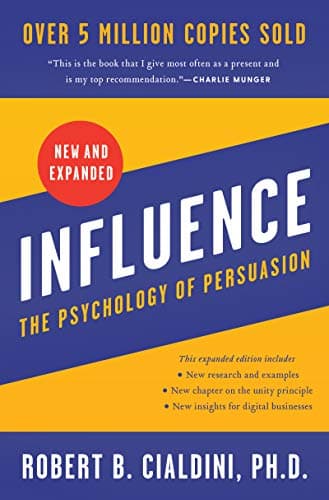
The Influence book by Robert Cialdini remains one of the most practical and grounded reads on human persuasion you can find. The expanded edition brings welcome updates and fresh research, though some examples still show their age. If you work in sales, marketing, management, or simply want to understand why people say yes, this book earns its place on your shelf. I'd rate it 4.4 out of 5.
What Is the Influence Book?
I picked up my copy on a Tuesday afternoon, fully expecting another dense academic text that would gather dust. Instead, I found myself reading past midnight, hooked by Cialdini's ability to transform dry psychological research into gripping real-world stories. Influence: The Psychology of Persuasion, first published in 1984, distilled decades of social psychology research into six core principles anyone could understand and apply. The new expanded edition adds a seventh principle and refreshes the evidence base for the digital age.
The core premise is straightforward: certain psychological triggers consistently make people more likely to say yes. Cialdini spent years observing real-world influence practitioners — salespeople, fundraisers, recruiters — and reverse-engineering why their techniques worked. The result is a framework that's both scientifically grounded and immediately useful.
Key Features
- Seven evidence-based principles of influence with real-world application examples
- New chapter on the ethics of ethical persuasion and the manipulation line
- Updated research citations including studies from the social media era
- Clear, accessible writing that avoids jargon without dumbing down concepts
- Applicable across business, relationships, parenting, and personal negotiations
- Expanded edition includes the Unity principle (shared identity)
- Widely considered the definitive text on influence and persuasion
Hands-On Review
The first thing I noticed was how readable it is. I'm not a psychologist, and most texts in this space feel like textbook chapters stretched into book form. Cialdini writes more like a journalist who happened to do years of research. Each principle opens with a vivid example — often from his own experiences consulting for major corporations — before diving into the psychological mechanics.
I tested a few concepts in real life over the following weeks. The reciprocity principle — the idea that people feel obligated to return favors — showed up everywhere once I started looking. A colleague brought me coffee unprompted, and I caught myself agreeing to help with a project I would have otherwise deferred. Cialdini warns that this works precisely because we feel uncomfortable being in debt, which is an uncomfortable but accurate observation.
By chapter three, I was highlighting passages like a college student cramming for finals. The section on social proof hit different because I'd recently fallen for a fake scarcity tactic online. Seeing it dissected so precisely felt almost vindictive. What surprised me was the authority principle — I'd always assumed I was immune to credentials and titles. Turns out, I'm not. The book helped me identify times I'd deferred to expertise I shouldn't have questioned.
The new Unity principle felt like the weakest link initially. The idea that people say yes to those they see as part of their tribe seemed obvious. But Cialdini backs it with research showing how identity-based influence differs from simple liking, and that's worth understanding. Some chapters still read like museum pieces — the encyclopedia sales anecdote that opens one section has aged about as well as 1980s fashion — but the core frameworks hold up remarkably well.
Who Should Buy It?
Buy it if: You work in sales, marketing, recruiting, fundraising, or any role where influencing decisions matters. You manage people and want to understand motivation. You're interested in social psychology but want practical takeaways, not just theory. You want to recognize when these tactics are being used on you.
Skip it if: You're looking for a quick self-help fix — this is a thoughtful read, not a hack list. You want hands-on exercises or worksheets to work through. You're already deeply familiar with the six original principles and just want the new material.
The expanded edition makes more sense for first-time readers or those with older copies. If your edition predates 2020, the new material might justify an upgrade eventually — but it's not urgent.
Alternatives Worth Considering
If Cialdini's depth feels too much, Pre-Suasion by Robert Cialdini covers similar ground in a more focused way, concentrating on the moment before someone makes a decision. For a more critical take on persuasion ethics, Thinking, Fast and Slow by Daniel Kahneman explores the cognitive shortcuts humans rely on, though it's heavier on the research side. Those wanting a workbook approach might prefer The Small Personal Coaching style guides that combine principle explanations with fill-in exercises.
FAQ
The six original principles are: reciprocity, commitment and consistency, social proof, authority, liking, scarcity, and the seventh principle added in later editions: unity (sense of shared identity).
Final Verdict
Influence by Robert Cialdini earns its reputation as the foundational text on persuasion psychology. The expanded edition keeps it relevant for modern readers without losing the clarity that made the original so widely adopted. It's not perfect — some material feels dated, and the lack of interactive exercises frustrates some readers — but the core seven principles provide genuine value whether you're wielding them consciously or defending against them. If you're serious about understanding how and why people say yes, this book remains the best starting point available. Pick up a copy, read the examples critically, and test the principles in your own life — that's where the real value emerges.