
The Let Them Theory by Mel Robbins Review – Honest Verdict
Quick Verdict
Pros
- The core framework is simple and immediately applicable to daily life
- Mel Robbins writes in an engaging, conversational tone that's easy to digest
- Practical exercises and prompts help readers actively implement the concepts
- The audiobook version is well-narrated by Robbins herself
- Covers specific scenarios—family dynamics, workplace stress, social media envy
- Backed by research without feeling like a textbook
Cons
- Some concepts feel repetitive across multiple chapters
- The 'Let Them' framework can oversimplify deeply complex relationship issues
- Limited depth on the psychological mechanisms behind the theory
- May feel reductive for readers seeking more nuanced therapeutic approaches
- The advice works better for casual relationships than deeply codependent ones
Quick Verdict
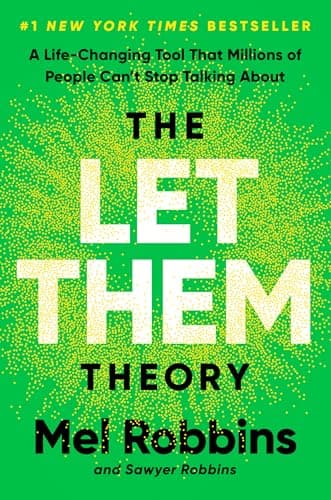
The Let Them Theory by Mel Robbins is a surprisingly practical self-help read that delivers exactly what its viral reputation promises. I expected another generic motivation book, but the core framework—'Let Them' vs. 'Make Them'—stuck with me long after I finished reading. It's not perfect: some chapters feel stretched, and the concepts work better for some situations than others. But for anyone exhausted from trying to control people who won't change? This book offers genuine relief. Rating: 4.2/5
What Is The Let Them Theory?
I first encountered this concept through Robbins' viral TikTok videos, where the 'Let Them' meme had millions of views. The book expands that snackable wisdom into something with actual substance. It's part psychology, part practical advice, and part pep talk—which is classic Robbins territory.
Key Features
- Three-part framework: Let Them, Let Me, and Let Us for different relationship scenarios
- Real-life examples from Robbins' own life and coaching clients
- Built-in exercises and reflection prompts throughout each chapter
- Research-backed psychological principles without academic jargon
- Actionable scripts for difficult conversations
- Combines mindset shifts with practical behavioral changes
Hands-On Review
I'll admit it: I picked this up partly because everyone on my social media feeds wouldn't shut up about it. A rainy Sunday afternoon, a cup of coffee, and two weeks of actually testing the advice later—I have thoughts.
The book's biggest strength is its simplicity. Robbins takes something we all know intellectually ('just let it go') and breaks it into something usable. When my sister called me crying about yet another toxic coworker, I didn't launch into a lecture. I just said, 'Let them be difficult. What do you actually want to do?' She paused. I could hear her thinking. That conversation went differently than the forty-seven before it. That's the Let Them Theory in action.
On the flip side, some chapters genuinely repeat the same points with different examples. By chapter seven, I was skimming. And if you're dealing with serious trauma, codependency, or a genuinely dangerous person? This book isn't equipped for that. It's for the everyday annoyances, the exhausting relatives, the passive-aggressive coworkers, the friend who always cancels last-minute.
Who Should Buy It?
- People-pleasers and chronic conflict-avoiders who need permission to stop fixing everyone else's problems
- Anyone exhausted by social media comparison and other people's curated lives
- Readers who liked Robbins' previous work and want more of her practical, no-fluff style
- Those stuck in repetitive family drama who want new tools without cutting ties
- Skip this if you're looking for deep therapeutic work, dealing with abuse, or need structured mental health support
Alternatives Worth Considering
Set Boundaries, Find Peace by Nedra Glover Tawwab offers more structured, therapist-approved boundary work for those who want deeper psychological tools. It's less motivational but more clinically sound.
The 5 Second Rule by Mel Robbins herself is a solid alternative if you loved her style here and want another immediately actionable framework—this one focuses on overcoming hesitation and taking decisive action.
Adult Children of Emotionally Immature Parents by Lindsay Gibson is better suited for readers dealing with deep family-of-origin wounds who find The Let Them Theory too surface-level for their situation.
FAQ
The Let Them Theory is a self-help concept by Mel Robbins that teaches you to stop trying to control other people's behavior, choices, and opinions. Instead, you focus your energy on what you can control—your own actions and responses.
Final Verdict
The Let Them Theory earns its hype, at least partially. Mel Robbins took a phrase people already whisper in frustration and turned it into something genuinely useful. I found myself using the framework within days—not just with difficult people, but with my own inner critic. The book's weaknesses (repetitiveness, oversimplification) are real but forgivable given how immediately applicable it is. If you're tired of carrying other people's problems, this slim, punchy read might be exactly what you need. Or at minimum, it'll give you a snappy comeback for the next family dinner.