
Loveless by Alice Oseman Review: An Honest Look at This YA Novel
Quick Verdict
Pros
- Authentic and nuanced aro ace representation that feels lived-in rather than performative
- Strong character voice that carries the entire narrative with warmth and wit
- Thoughtful exploration of platonic relationships and the value of friendship
- Balances heavier themes with genuine humor and lighthearted moments
- Accessible entry point for readers new to aromantic and asexual experiences
Cons
- Pacing can feel slow during the middle sections when Georgia over-analyses situations
- The British university setting may feel unfamiliar to American readers
- Some readers may want more romantic payoff than the book intends to deliver
- At 400+ pages, it requires more time commitment than typical YA
Quick Verdict
Loveless by Alice Oseman is a quiet revolutionary book. It doesn't shout its importance — it simply tells the truth about what it feels like to exist outside the scripts we're all handed about love and romance. If you're looking for representation that educates without lecturing, and a story that validates the experience of never falling in love the way everyone else seems to, this book earns its place on your shelf. Rating: 4.5 out of 5 stars.
What Is Loveless?
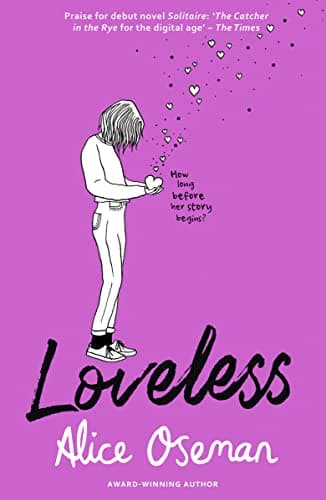
Loveless follows Georgia Warrenger, a studious, theater-averse student who arrives at Durham University expecting to finally experience her first kiss, her first romance — all the firsts that YA novels promised were waiting. Except that the expectations collide with reality, and reality doesn't quite match the script. Through a relationships lecture that starts as an academic exercise, a theater society that requires her to fake emotions, and friendships that turn out to matter more than she anticipated, Georgia begins to understand something fundamental about herself.
Alice Oseman, the British author behind Solitaire and the graphic novel phenomenon Heartstopper, wrote Loveless as a love letter to anyone who's ever felt outside the expected timeline of romance. Published by HarperCollins Children's Books, it explores what it means to be aromantic and asexual in a world obsessed with couples. The book was years in the making — Oseman has spoken openly about writing it partly to work through their own experiences, and that authenticity bleeds through every chapter.
Key Features
- First-person narrative from Georgia's perspective with an immediately recognizable voice
- Explicit and respectful exploration of both aromantic and asexual identities
- British university setting providing a distinct cultural backdrop
- Strong supporting cast of friends who challenge and support Georgia
- Intersection of academic stress, identity crisis, and found family dynamics
- Balances serious themes with genuine comedic moments throughout
- Over 400 pages giving the story room to breathe and develop naturally
Hands-On Review
I sat down with Loveless on a rainy Thursday evening, fully expecting to read a chapter or two before giving up. I finished it three days later, which is fast for me with anything over 300 pages. What pulled me in wasn't the plot — honestly, not much "happens" in the traditional sense. What kept me reading was Georgia's voice. She's the kind of narrator who feels like she's sitting across from you, processing her own thoughts in real time.
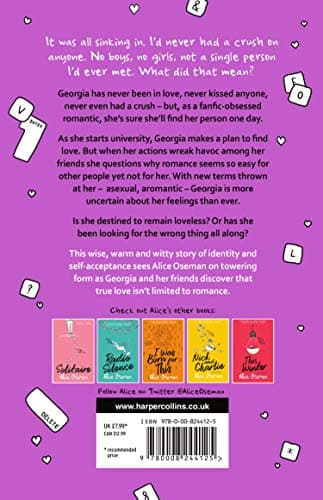
The first thing I noticed was how specific the asexual representation feels. I've read books that include ace characters as afterthoughts or plot devices. Oseman gives Georgia the space to actually work through what asexuality means for her, including the confusion, the relief of finding the word, and the ongoing process of understanding herself. There's a scene in chapter seven — I won't spoil it — where Georgia describes the moment she realizes she's not broken. That hit me harder than I expected.
The aromantic piece is handled equally carefully. Georgia doesn't hate romance or dismiss it for others. She simply doesn't feel it, and watching her navigate friendships, a fake relationship, and a complicated almost-something with a theater friend named Rooney feels frustrating and real in equal measure. I wanted her to just figure it out already by page 200. By page 300, I understood why Oseman took her time.

What surprised me was how much I cared about the friendship dynamics. Georgia's roommate Pip and their friend group become genuinely central to the story. The book makes an argument — quietly, without preaching — that romantic love isn't the only, or even the primary, form of meaningful connection. That felt radical in a genre where almost every YA book centers on romance in some way.
Who Should Buy It?
Loveless is essential reading for anyone who identifies as aromantic, asexual, or anywhere on the aro-ace spectrum who has felt alone in their experiences. Seeing yourself reflected in a protagonist who struggles and grows and eventually accepts herself is genuinely powerful.
The book is also valuable for allies — friends, family members, partners — who want to understand what aromanticism and asexuality actually feel like from the inside. Georgia's internal narration makes an abstract concept tangible and human.
If you're a fan of Alice Oseman's other work, you'll find the same warmth and observational humor here, just applied to different themes. Heartstopper readers may need to adjust expectations — this is less romantic, more reflective.
Skip this if you're looking for a fast-paced plot with constant action. Loveless is a character study. The pacing is deliberate and introspective. Also skip if you're unwilling to sit with uncomfortable feelings — Georgia's journey includes moments of genuine embarrassment, confusion, and social awkwardness that aren't always comfortable to witness.
Alternatives Worth Considering
If you want more from Alice Oseman, Heartstopper (the graphic novel series) offers a lighter, more visually-driven exploration of teen identity, this time focused on gay romance. It's more traditional in structure but carries similar warmth.
For similar aro-ace representation in a different format, The Lady's Guide to Celestial Mechanics by Olivia Waite offers an adult romance featuring an asexual protagonist, though it's historical fiction rather than contemporary YA.
If you enjoyed the British university setting but want a different tone, Emergency Contact by Mary H.K. Choi explores friendship and identity in a college setting, though without the explicit ace representation.
FAQ
Loveless follows Georgia, a first-year university student who has never experienced romantic attraction or crushes. Through university experiences including a relationships lecture, joining a theater society, and friendships, she begins to understand and embrace being aromantic and asexual.
Final Verdict
Loveless by Alice Oseman does something rare in young adult fiction: it tells a story where romance isn't the point. For readers who have spent their whole lives waiting for feelings that never came, or feeling like something was wrong with them, this book offers validation wrapped in an engaging, funny, occasionally frustrating, ultimately hopeful narrative. Georgia's voice carries the weight of an experience that's rarely given this much space on the page.
Is it perfect? No. The middle section drags a little, and some readers will crave more dramatic stakes. But the things Loveless gets right — the representation, the voice, the quiet argument that love comes in many forms — make it a significant book in the YA landscape. Whether you're buying for yourself or as a gift for someone questioning their own experiences, it's worth your time.