
Marcus Aurelius Meditations Review: Is This the Best Translation?
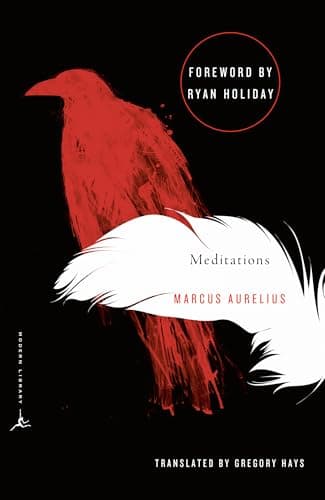
Quick Verdict
Pros
- Gregory Hays provides a clear, contemporary translation that feels relevant today
- The introduction gives valuable historical context without overwhelming newcomers
- Compact format makes it easy to read one passage daily as intended
- Reflective questions after each section encourage deeper engagement
- High-quality paperback binding that survives daily handling
- Affordable price point for a classic philosophy text
Cons
- Some of the more repetitive passages feel less impactful without surrounding context
- Gregory Hays's interpretation occasionally prioritizes modern readability over literal accuracy
- No margin notes space if you prefer annotating directly in the book
- The lack of chapter titles makes navigation slightly inconvenient
Quick Verdict
If you've been eyeing Marcus Aurelius Meditations but keep putting it off, this Modern Library edition by Gregory Hays is exactly where you should start. It strips away the dusty academic language that bogs down older translations and delivers Marcus's Stoic wisdom in plain, usable English. The book isn't perfect — some purists will quibble with Hays's interpretive choices, and the lack of navigational aids frustrates occasional re-readers — but for most people buying their first Meditations, these are minor complaints. I'd score this at 4.5 out of 5 stars and confidently say yes, it's worth your money and your time. Check current price on Amazon
What Is the Meditations by Marcus Aurelius?
Marcus Aurelius wrote Meditations over roughly a decade, somewhere between 170 and 180 AD, while he was Emperor of Rome — holding the most powerful position in the known world. He never intended it for publication. It was his personal notebook, a set of reminders to himself about how to live virtuously according to Stoic principles when the weight of empire was crushing him. That's the first thing that hits you when you actually sit with the text: this isn't philosophy from an armchair. It's battlefield philosophy, from someone who had every reason to be corrupted by power and actively resisted it.
The Gregory Hays translation for Modern Library appeared in 2003 and quickly became one of the most recommended modern editions. Hays, a classicist, explicitly chose to prioritize clarity and readability over literal word-for-word accuracy. He argues — persuasively — that Marcus wrote in plain Greek for practical use, not ornate prose, so a translation should reflect that. The result reads less like ancient scripture and more like a thoughtful mentor leaving you notes. Shorter sentences. Fewer archaic constructions. More impact.
Key Features
- Gregory Hays translation — modern, clear, accessible prose
- Helpful 30-page introduction setting historical and philosophical context
- Reflective questions after each book to prompt personal application
- Organized by Marcus's original 12 "books" (chapters)
- Compact paperback format — fits in a jacket pocket for daily reading
- No extensive footnotes — lets you focus on the text without scholarly interruption
- Modern Library prestige — quality paper and durable binding
Hands-On Review
I picked up this edition on a Sunday afternoon after a particularly brutal week at work. Deadlines piling up, a difficult conversation with a colleague I kept replaying, the whole thing feeling heavier than it should have. Not my finest moment. I opened to Book Two on a whim, where Marcus writes about how external things don't touch the soul — the mind is where we find our peace, not in circumstances. I won't pretend it magically fixed everything. But I read it twice, slowly, and something shifted. That's really the test of this book.
Over the next three weeks, I made Meditations my morning ritual. One book per day, usually with coffee, sometimes on the subway. The format genuinely works for that purpose — it's not a book you race through in one sitting (though you could). Each section is self-contained enough to stand alone, which Marcus clearly intended. By the end of week two, I had my copy dog-eared and underlined in ways my college philosophy textbooks never earned.
Where I hesitated: Book Seven gets repetitive. Marcus circles back to the same themes — the transience of life, the importance of reason, accepting what we cannot control — and after a while, you feel the weight of his own anxiety bleeding through. Which, honestly, makes him more human and relatable. But it also makes the prose feel circular at points. Hays's decision to keep things lean helps enormously; older translations can make the same passages feel twice as tedious.
What surprised me was how often I found myself mentally referencing Marcus during ordinary moments — a frustrating email, an unfair critique, a moment of petty jealousy. The book doesn't teach you techniques in the way modern self-help does. Instead, it rearranges how you think about things. There's a difference, and it's important.
Who Should Buy It?
This book earns a place on your shelf if:
- You're new to Stoicism and want a readable entry point that doesn't dumb things down
- You're dealing with stress, anxiety, or a major life transition and want philosophical tools that actually work
- You're a longtime fan of ancient philosophy and want a fresh translation to revisit familiar passages
- You read Meditations years ago from a stuffier translation and found it hard to connect with
Skip this edition if:
- You want extensive academic footnotes and scholarly apparatus — look for the Robin Hard translation instead
- You're strictly religious and uncomfortable with explicitly philosophical frameworks
- You need structured "how-to" exercises rather than philosophical reflection prompts
- You prefer annotated journals with space for personal notes built into the book
Alternatives Worth Considering
If this edition doesn't quite fit, here are two others worth knowing about:
Meditations: A New Translation (Penguin Classics) — Robin Hard offers a more scholarly translation with extensive notes and a full glossary. Better if you're reading Marcus for academic purposes or want deeper context for each passage. Less ideal for casual daily reading.
The Daily Stoic: 366 Meditations on Wisdom, Perseverance, and the Art of Living — Ryan Holiday and Stephen Hanselman compiled a modern devotional format with one passage per day plus brief commentary. Excellent for beginners who want more hand-holding. It's not Marcus's original text but draws heavily from it.
FAQ
Gregory Hays's Modern Library translation strikes the best balance between accessibility and scholarly accuracy for most readers. Hays deliberately modernized the language while preserving Marcus's philosophical intent, making it ideal if you're new to Stoicism.
Final Verdict
Marcus Aurelius Meditations remains one of the most honest, practical philosophy books ever written, and Gregory Hays's translation gives it the accessibility it deserves for modern readers. It won't solve your problems — no book does — but it will give you a framework for handling them with more grace and less noise. The Modern Library edition is the one I'd hand to a friend who wants to start reading Stoicism but doesn't know where to begin. Just know going in: this is a book you return to, not a book you finish and forget. Marcus wrote it as daily practice, and it rewards the same treatment.