
The Midnight Library Review: A Thoughtful Journey Through Parallel Lives
Quick Verdict
Pros
- Explores deep philosophical questions about regret, choice, and what makes a meaningful life
- Accessible literary prose that balances heavy themes with genuine warmth and humor
- Quick pacing that makes it hard to put down despite its intellectual weight
- Relatable protagonist whose struggles feel authentic and grounding
- Short chapters that work well for busy readers
- Emotional payoff that feels earned, not manipulative
Cons
- The fantasy premise sometimes feels like a convenient plot device rather than a fully developed world
- Some readers may find the philosophical musings oversimplified
- Secondary characters beyond Nora don't get as much development as they could
- The ending, while satisfying, wraps up perhaps a bit too neatly
Quick Verdict
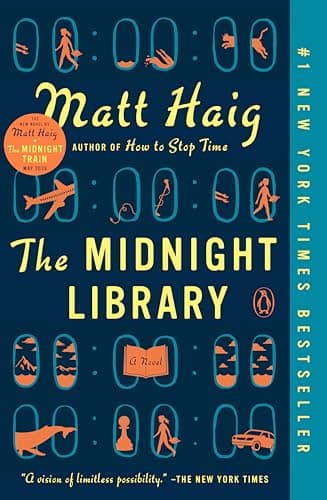
I'd been eyeing The Midnight Library by Matt Haig for months before finally picking it up on a grey Tuesday afternoon, half-expecting another forgettable self-help novel dressed up in fiction. Two chapters in, I was wrong. This is something rarer — a book about regret that manages to be genuinely life-affirming without tipping into cloying positivity. The Midnight Library earns its emotional punches through Nora Seed, a protagonist so believably stuck in her own head that you'll recognize yourself in her spiraling. If you've ever wondered "what if," this book essentially lives in that question. It's not perfect — the library's mechanics stay conveniently vague, and the ending is almost aggressively tidy — but those are forgivable quibbles. Rating: 4.5/5.
What Is The Midnight Library?
The Midnight Library opens with Nora Seed on the worst day of her life. Cat died. She's about to lose her job at the music store. Her brother won't speak to her. The rain is doing that thing where it feels personal. She walks into a mysterious library at midnight, and that's when things get interesting — because in this library, each book contains a version of the life she could have lived if she'd made one different choice.
What follows is part philosophical thought experiment, part life-crisis narrative, and part gentle reminder that we're often worst judges of our own happiness. Matt Haig writes with the warmth of someone who's been through the dark and came out the other side still believing words can help. The result is a novel that feels like both a cautionary tale and a hug.
Key Features
- Short chapters (usually 2-4 pages) that make it easy to read in small chunks
- Multiple "lives" Nora explores, each with its own mini-narrative arc
- Honest depiction of depression and suicidal ideation without being triggering
- Warm, accessible prose that never talks down to the reader
- Surprisingly funny moments that balance the heavier material
- Themes of gratitude, regret, and finding meaning in ordinary life
- Book club-friendly discussion questions baked into its structure
Hands-On Review
The first life Nora tries on is the one where she stayed in her band, Volt. It's glamorous and successful and everything she thought she wanted. Three pages in, I found myself relieved when she realized it wasn't all she'd imagined. That's the trick Haig pulls off — he doesn't let either extreme win. Neither the "grass is always greener" nihilism nor the "everything happens for a reason" platitude.
What surprised me most was how the book handles the Australian life. In that version, Nora has a swimming pool and a dog and a husband who seems decent enough. She should be happy. The problem is, she's still Nora — still plagued by the same internal voice that made her unhappy everywhere else. Haig makes the point quietly but clearly: location and circumstance don't automatically equal contentment.
By the third or fourth life, I was reading faster. Not because the prose gets exciting in a conventional sense, but because I genuinely wanted to see what she'd discover next. The lives aren't dramatically different — no zombie apocalypses or fantasy kingdoms — but the variations reveal something new about Nora each time. There's a life where she became a glaciologist, a mother, an Olympic swimmer. Each one comes with its own trade-offs, and Haig doesn't let her (or us) off easy.
I'll admit I got a little impatient with the philosophy by the final act. Haig's thesis — that ordinary life contains extraordinary richness, if we're willing to see it — lands clearly enough that the last few pages feel slightly redundant. But when a book's central message is "your current life is worth living," redundancy isn't the worst sin.
Who Should Buy It?
Buy it if: You're a fan of philosophical fiction that doesn't feel academic. You enjoy character-driven stories with emotional depth. You're going through a difficult time and want something that won't make you feel worse. You love book club picks with discussion-worthy themes.
Skip it if: You need tight plotting and constant action. Fantasy world-building is essential for your enjoyment. You prefer ambiguity in your endings. You don't connect with first-person narrators who spend significant time in their own heads.
Alternatives Worth Considering
If you want more magical realism, The House in the Cerulean Sea by TJ Klune offers warmth and whimsy with a different kind of found-family angle. For books that tackle depression and meaning head-on without the fantasy wrapper, Reasons to Stay Alive (also by Matt Haig, his nonfiction memoir) provides rawer, more direct insight. And if the parallel-lives concept appeals but you want something more intellectually demanding, Life A User's Manual by Georges Perec offers richer puzzle-box storytelling, though it's a much longer commitment.
FAQ
The novel follows Nora Seed, a woman stuck in an infinite library where each book represents a life she could have lived if she'd made different choices. She can enter any of these lives to see what would have happened if she'd stayed in her band, moved to Australia, or made other pivotal decisions.
Final Verdict
The Midnight Library won't rewrite your worldview, and it probably won't make your top ten list of all-time favorites. But it might make you pause before dismissing your current life as insufficient — and that's a modest magic worth having. Haig writes with genuine empathy, and Nora's journey feels earned even when the mechanics are convenient. If you're looking for a thoughtful, accessible novel about second chances that won't demand much from you in return, this one delivers. Check current pricing on Amazon below.