
The Mountain Is You Review: Does It Actually Help With Self-Sabotage?
Quick Verdict
Pros
- Framework feels fresh compared to typical self-help — reframes self-sabotage as a protective mechanism, not a character flaw
- Writing is genuinely thoughtful — not preachy or guilt-inducing, which is rare in this genre
- Each chapter stands alone so you can dip in and out without losing the thread
- Practical enough to apply — the "coinciding emotions" exercise gave me vocabulary for patterns I'd never named before
- Short enough to actually finish — no padding, no 400-page lectures on ancient Stoics
Cons
- At times it leans philosophical when you want concrete steps — some readers will want more actionable homework
- The concept can feel a bit circular if you read it fast — slow readers will get more out of it
- Some chapters repeat the core idea so many times it starts to feel like filler
- Won't replace actual therapy if you need it — and the book occasionally flirts with that territory
Quick Verdict
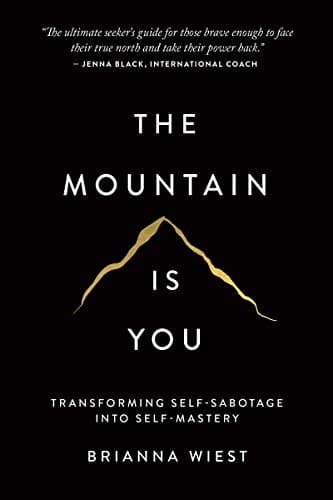
The Mountain Is You makes a strong case for rethinking everything you assume about your worst habits. Brianna Wiest's core argument — that self-sabotage is a misguided protection mechanism, not a moral failing — genuinely shifted how I think about my own patterns. It's not perfect: some chapters could be tighter, and if you're hunting for a strict step-by-step system, you'll leave unsatisfied. But for a book that sits somewhere between philosophy and practical guidance, it earns its space on the shelf. You can find The Mountain Is You on Amazon here. I'd give it a solid 4.6 out of 5 — well above average for the self-help genre.
What Is The Mountain Is You?
Published by Thought Catalog, The Mountain Is You arrived in 2020 and quickly carved out a reputation in the crowded self-help aisle. The premise sounds simple at first: self-sabotage isn't your enemy. It's your nervous system's overzealous attempt to keep you safe — just operating on outdated data. Wiest's job, across roughly 250 pages, is to walk you through how to recognize those patterns, understand why they formed, and — crucially — start rerouting them.
The book is structured around short chapters, each tackling a specific emotional pattern — procrastination, people-pleasing, emotional avoidance, the urge to self-destruct when things go well. That last one surprised me. I'd never seen that impulse named so directly before: why things falling apart can feel strangely comfortable when success feels terrifying. Wiest calls it "destroying your reality so you don't have to face what building it requires." That line stopped me for a full minute.
Key Features
- Reframes self-sabotage as a protective response, not a personal weakness or character flaw
- Short standalone chapters — easy to read one chapter per sitting without losing thread
- Draws on psychological concepts (Maslow, shadow work, emotional regulation) without getting clinical
- Includes reflective prompts at the end of each chapter for personal journaling
- Accessible tone — supportive rather than guilt-inducing, which sets it apart from harsher self-help voices
- Written in plain language — no background in psychology required
- Compact format — roughly 250 pages, no obvious padding
Hands-On Review
I want to be straight with you: I picked this up with moderate skepticism. I've read enough self-help to develop a mild allergy to books that tell me I'm "blocking my own abundance" or some variation of that phrase. The Mountain Is You avoids most of those traps. Wiest writes with more nuance — she doesn't moralize the reader into compliance. She explains.
By chapter four, I found myself scribbling in the margins more than I had in years. Not because Wiest was revealing some hidden truth, but because she was naming patterns I'd been living inside without ever having vocabulary for them. The concept of "coinciding emotions" — the idea that two opposing feelings can exist simultaneously and that's not a sign of madness, just complexity — genuinely helped me stop fighting myself so hard when I felt ambivalent about something.
What surprised me was the chapter on self-sabotage in success. I expected it to be preachy. Instead, Wiest describes the specific terror of outgrowing your environment, of being good at something and then unconsciously dismantling it because competence feels lonelier than failure. I've done that. Not obviously — but I recognized it in the small ways, the projects I didn't submit, the opportunities I half-closed before anyone else could.
The drawback: some chapters repeat the core premise in slightly different words. By page 180 I was mentally shouting "okay, I get it — my brain is trying to protect me." That's my impatience talking, probably, but it's worth noting for readers who want concrete next steps rather than philosophical groundwork. The book builds the foundation well; the actual construction work is left largely to you.
Will I keep using it? Probably — but with a caveat. I already have a therapist and some basic emotional-regulation tools. For someone starting from scratch, this could be revelatory. For someone deeper into personal work, it might feel like reinforcement more than discovery.
Who Should Buy It?
- If you feel stuck but can't pinpoint why — especially if you've tried productivity hacks and they keep failing — this gives you a different lens: maybe the problem isn't discipline, it's an unresolved emotional conflict
- If traditional self-help feels too harsh or shame-based — Wiest's tone is warm without being saccharine, and the book never lectures you about discipline
- If you want something you can read slowly — the chapter format supports picking it up for 15 minutes at a time and letting ideas settle between sessions
- If you have anxious or avoidant patterns — the framework around emotional avoidance is particularly well-handled and won't make you feel broken for having these responses
Skip this one if you're looking for a strict behavioral program with daily exercises and measurable goals — The Mountain Is You doesn't operate that way. It's more philosophy than protocol. Also skip it if you need trauma processing from a licensed professional — Wiest acknowledges this boundary, but the book's occasional intimacy can blur the line.
Alternatives Worth Considering
Depending on what you're after, these might serve you better:
Atomic Habits by James Clear — if you want a more systematic, action-oriented approach to behavior change. Less theory, more mechanics. The two books actually pair well together.
The Body Keeps the Score by Bessel van der Kolk — if your self-sabotage runs deep into trauma or nervous system territory, this one goes further clinically. It's heavier and longer, but it's the real thing.
Stop Self-Sabotage by Dr. Julie Smith — a more structured six-step framework for people who want clear tools rather than conceptual reframe. Good middle ground between Wiest and a clinical approach.
FAQ
The book explores self-sabotage as a coping mechanism — your brain's misguided attempt to protect you from emotional overwhelm. Brianna Wiest offers a framework to identify these patterns and reroute them toward genuine self-mastery.
Final Verdict
The Mountain Is You earns its reputation — not by being revolutionary, but by being honest about the complex, contradictory machinery behind self-sabotage. Wiest doesn't promise a fix. She promises understanding, and she delivers on that. The book won't work if you read it passively and expect the patterns to dissolve on their own. But if you're willing to sit with the ideas, journal through the prompts, and notice where your own protection mechanisms have been overperforming — it can genuinely shift something. Check the current price for The Mountain Is You on Amazon — it's typically priced in the $12-16 range for paperback, which is fair for the value you get. A recommended read for anyone who's done the work but keeps hitting the same wall.