
No Bad Parts Book Review – Is Richard Schwartz's IFS Guide Worth It?
Quick Verdict
Pros
- Accessible writing that makes complex therapy concepts feel approachable for everyday readers
- Practical exercises and techniques you can apply immediately without a therapist
- Addresses the root cause of emotional patterns rather than just managing symptoms
- Validation of inner conflict – helps reframe 'negative' thoughts as protective parts
- Grounded in decades of clinical research and real client outcomes
Cons
- Can feel repetitive for readers already familiar with IFS concepts
- Some exercises require significant self-reflection time that busy people may not prioritize
- The framework may feel too structured for readers who prefer less prescriptive self-help
- Doesn't replace professional therapy for severe trauma cases
Quick Verdict
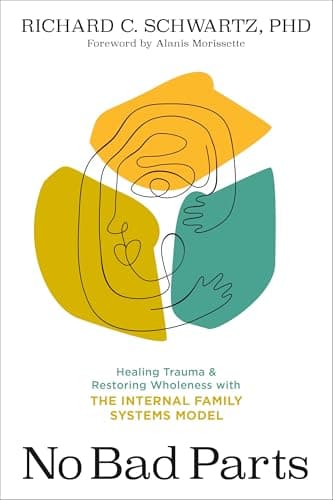
No Bad Parts by Richard Schwartz is a genuinely useful guide to understanding and healing your internal world through the Internal Family Systems model. I came in skeptical—I've read too many self-help books that sound profound but deliver platitudes—and I left with actual tools I use weekly. The No Bad Parts book earns its place on my shelf and probably yours if you've ever felt like you're fighting yourself. Score: 4.4/5
What Is the No Bad Parts Book About?
On a rainy Tuesday evening, I cracked open No Bad Parts expecting another dense psychology text. Instead, I found Richard Schwartz writing like someone who actually talks to patients—warm, patient, occasionally wry. The book introduces the Internal Family Systems model, which proposes that our minds naturally contain multiple 'parts' or sub-personalities, each with legitimate roles. Some are wounded firefighters who react to emotional triggers; others are managers trying to keep us safe; and at the center sits the Self—capable, calm, whole.
Schwartz developed IFS over decades of family therapy work, and what strikes me is how respectfully he treats the complexity of human psychology. He doesn't pathologize your inner critic or dismiss your anxiety as 'just' something to overcome. Instead, he offers a framework for listening to these parts, understanding their protective intent, and gently helping them release their extreme roles. By the time I finished chapter four, I had my first real conversation with a part of myself I'd been trying to silence for years.
Key Features
- Accessible introduction to Internal Family Systems therapy for non-therapists
- Practical exercises for identifying and communicating with your parts
- Real client case studies that illustrate the IFS process in action
- Clear distinction between Self and parts—helps readers recognize their core identity
- Step-by-step guidance for unburdening wounded parts carrying extreme beliefs
- Techniques for reducing inner conflict and emotional reactivity
- Foundation for deeper therapeutic work with an IFS-trained professional
Hands-On Review
Let me be honest about my experience. I started No Bad Parts during a period of significant personal turbulence—relationship stress, work burnout, the usual. By chapter two, I was already finding myself pausing and doing the exercises Schwartz suggests rather than just reading. The 'parts mapping' exercise took me about forty minutes on a Sunday afternoon, and I'll admit I cried a bit when I finally understood why one particular part of me had been so loud lately.
What works beautifully here is Schwartz's insistence that there's no such thing as a 'bad' part. Even the parts that seem destructive—your inner critic, your impulse to people-please, your anger—had a protective function at some point. Reading that perspective didn't magically fix anything, but it shifted something fundamental in how I relate to my own internal chaos. I stopped fighting myself and started asking questions instead.
The exercises progress logically, though I'll note that later chapters demand more emotional heavy lifting. If you're looking for a book to read passively, this isn't it. Schwartz asks you to show up and do the work—which, honestly, is probably why it might actually help. After six weeks of consistent practice, I noticed I was reacting less impulsively in triggering situations. What surprised me was how subtle the shift felt. It wasn't dramatic; I didn't have some cathartic breakthrough. It was more like the volume knob on my anxiety got turned down a few notches.
Who Should Buy It?
- The chronic self-critic who is exhausted from waging war against their own thoughts and feelings
- The therapy-curious who wants to understand how internal family systems works before committing to sessions
- The self-help skeptic looking for a structured, research-backed approach rather than motivational fluff
- Anyone in therapy who wants to supplement their sessions with tools they can use independently
Skip this if you're looking for quick fixes or expecting step-by-step instructions that require no introspection. Also, if you're currently in crisis or dealing with severe trauma, this book works better alongside professional support—not as a replacement for it. No Bad Parts is a guide, not emergency care.
Alternatives Worth Considering
If No Bad Parts resonates with you but you want more options:
- Self-Therapy by Jay Earley – More detailed exercises and a workbook-style approach if you prefer structured practice over narrative explanation
- Running on Empty by Jonice Webb – Focuses specifically on childhood emotional neglect, offering a complementary angle on trauma healing
- The Body Keeps the Score by Bessel van der Kolk – Broader trauma overview with more emphasis on somatic (body-based) approaches if IFS doesn't fully address your needs
FAQ
IFS is a psychotherapy model developed by Richard Schwartz that views the mind as composed of different 'parts' or sub-personalities. The goal is to help these parts work in harmony rather than conflict, healing trauma by addressing wounded inner roles.
Final Verdict
No Bad Parts isn't a magic solution—Schwartz is clear that healing takes time and genuine engagement with the material. But for anyone who feels fragmented, at war with themselves, or stuck in repetitive emotional patterns, this book offers a compassionate framework that actually makes sense. I found myself dog-earing pages and returning to earlier chapters, which is my real test for whether a self-help book earns its space. The Internal Family Systems model Schwartz outlines here has genuinely changed how I understand my own mind, and I suspect it might do the same for you.