The Personal Librarian Review: GMA Book Club Pick Worth Reading?
Quick Verdict
Pros
- Richly researched historical setting that immerses readers in early 1900s New York
- Compelling dual-perspective narrative voice exploring identity and belonging
- Thought-provoking themes that spark reflection on race, privilege, and authenticity
- Well-paced storytelling that balances personal drama with historical events
- Accessible prose that makes dense historical material engaging and readable
Cons
- Pacing slows noticeably in the middle third of the book
- Some readers may find the ending too neat given the complex moral questions raised
- Secondary characters occasionally feel underdeveloped compared to Belle
- The romantic subplot, while historically accurate, can feel tangential to the main narrative
Quick Verdict
The Personal Librarian delivers a thoughtful examination of identity and sacrifice through the lens of Belle da Costa Greene, the real-life librarian who managed J.P. Morgan's legendary book collection while concealing her Black heritage. This GMA Book Club pick succeeds more often than it stumbles, though it loses some momentum in its middle act. I'd recommend it to readers who enjoy historical fiction that challenges comfortable narratives about American history.
What Is The Personal Librarian?
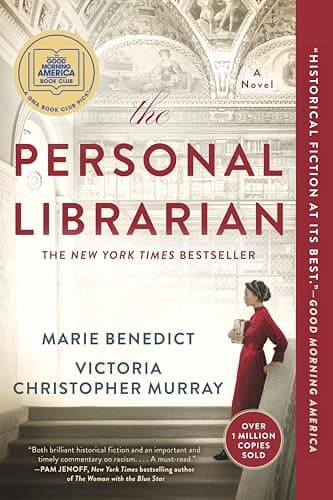
The Personal Librarian follows Belle da Costa Greene, a woman who was born into a Black family but passed as white to secure a position as J.P. Morgan's personal librarian in early 20th century New York. The novel, co-authored by Marie Benedict and Victoria Christopher Murray, imagines Belle's internal struggle as she navigates high society while keeping her true identity secret. It was published by Berkley and selected as a GMA Book Club pick, bringing significant attention to this remarkable true story.
I picked this up on a recommendation from a friend who'd just finished her book club discussion. She described it as "uncomfortable in the best way," which turned out to be exactly right. The premise alone—that someone could pass as white in plain sight while working in one of the most elite circles in America—demands your attention from page one.
Key Features
- Co-authored by bestselling historical fiction writers Marie Benedict and Victoria Christopher Murray
- Based on the true story of Belle da Costa Greene, J.P. Morgan's personal librarian
- Explores themes of racial passing, identity, and the cost of secrets
- GMA Book Club selection with official reading group guide included
- New York Times bestseller with strong reader reviews
- Accessible prose style suitable for diverse reading levels
- Provides glimpse into early 1900s rare book collection world
Hands-On Review
The book opens with Belle as a young woman in Washington D.C., already living as white but aware of the precariousness of her position. Benedict and Murray build tension slowly, letting readers understand what Belle stands to lose with each honest word. By the time she lands the Morgan job, you understand the machinery of her secret life.
What I appreciated most was the authors' refusal to make Belle either heroic or villainous. She makes compromises that are hard to defend, yet you understand them. There's a scene late in the book—she's attending a Morgan family dinner where racial epithets are casually dropped—where her silence speaks volumes. I found myself putting the book down, needing a moment.
The collaboration between Benedict and Murray adds a layer of meaning to the project itself. Two authors, one white and one Black, writing together about racial passing feels almost meta. Their voices blend well, though occasionally I sensed the transition point between authors, particularly in how different sections handle Belle's internal thoughts.
Two weeks after finishing it, I still think about Belle's final choice—which I won't spoil—and whether it was liberation or another form of cage. That's the mark of fiction that works: it stays with you.
Who Should Buy It?
- Book club readers will find rich material for discussion, particularly around identity, legacy, and the stories we tell ourselves about the past
- History enthusiasts interested in early 20th century New York, rare books, and the hidden histories of American institutions will enjoy the detailed setting
- Readers exploring themes of identity will find the exploration of passing and its psychological costs both challenging and compassionate
- Fans of literary historical fiction who appreciated books like The Vanishing Half or The Help will likely connect with this narrative approach
Skip this one if you're looking for a light, escapist read—the book asks genuine questions that don't have easy answers. Also skip if rapid pacing is essential; this is a contemplative novel that rewards patience over plot momentum.
Alternatives Worth Considering
If The Personal Librarian resonates with you, consider these similar reads:
- The Vanishing Half by Brit Bennett — Another masterful exploration of racial passing, though with a more contemporary lens and multiple narrative perspectives
- The Other Black Girl by Zakiya Dalilla Harris — For readers who want to explore identity themes in a modern publishing industry context with thriller elements
- Yellow Wife by Sadeqa Curry — If you're drawn to stories of Black women navigating systems designed to suppress them, this historical novel about a Virginia enslaved woman offers another perspective on similar themes
FAQ
The book was co-written by Marie Benedict and Victoria Christopher Murray, two accomplished authors of historical fiction who collaborated for the first time on this project.
Final Verdict
The Personal Librarian succeeds by treating its complex subject matter with nuance and refusing to offer easy moral conclusions. Belle da Costa Greene's story remains relevant today—a meditation on the masks we wear and what we sacrifice to survive in systems not built for us. While the middle sections could tighten, the beginning and ending carry the book home powerfully. This GMA Book Club pick earns its recommendation, particularly for readers who appreciate historical fiction that challenges rather than comfort. Would I keep it on my shelf? Yes—and I've already passed my copy to two friends.