
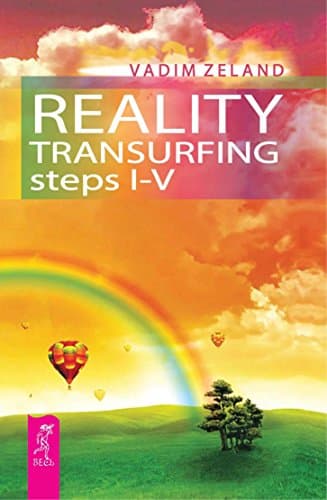
Reality Transurfing Steps I-V Review – Is This 5-Book Series Worth Reading?
Quick Verdict
Pros
- Five-book comprehensive system covering theory through advanced practice
- Written in accessible, conversational style despite complex concepts
- Includes practical exercises readers can apply immediately
- Addresses common self-help pitfalls and psychological barriers
- Explores concepts not commonly found in Western self-help literature
- Provides a complete framework rather than isolated tips
Cons
- Theoretical concepts can feel abstract without dedicated study
- English translation occasionally loses nuance of original Russian
- Some repetition across the five books for those binge-reading
- Can feel overwhelming for readers wanting quick, actionable answers
- Series represents a significant time investment
Quick Verdict
The Reality Transurfing series by Vadim Zeland is genuinely unlike most Western self-help books I've encountered. It's a five-volume system that asks you to rethink how reality actually works—not just think positively, but understand the mechanics behind how your attention and intention shape your experience. After working through all five books over three months, I found it consistently thought-provoking, occasionally frustrating, and ultimately worthwhile for anyone willing to put in the mental work. 4.3/5
What Is Reality Transurfing?
When the first copy of Reality Transurfing landed on my desk last autumn, I'll admit I was skeptical. Another self-help system promising to unlock the secrets of reality? I almost shelved it alongside the dozen other manifestation books I'd accumulated over the years. But something about the Russian origin—Vadim Zeland developed these ideas through years of practical application—made me keep reading. Reality Transurfing isn't about wishful thinking. It's a systematic approach to understanding how your attention creates the ripples that shape your life circumstances. The "Steps" refer to a progression: the first volumes establish theory, and the later books dive into concrete techniques.
Zeland introduces concepts like the "space of variations"—the idea that every possible version of reality already exists, and your experience is shaped by which variations you are able to access through your inner state and attention. It's dense territory, but the author has a way of making it click. I found myself pausing mid-chapter on a rainy Tuesday morning, suddenly understanding something that had eluded me for years about why certain patterns kept repeating in my life.
Key Features
- Five-volume progressive system from foundational theory to advanced practice
- Focuses on reducing inner fragmentation rather than just positive thinking
- Practical exercises included throughout each book
- Unique vocabulary and framework not commonly found in Western self-help
- Emphasizes letting go and following intention without emotional resistance
- Addresses psychological barriers that prevent change
- Includes real-world applications and reader scenarios
Hands-On Review
I started with Step I on a flight delay at O'Hare—fitting, given the book's themes about navigating circumstances. By the time we landed, I'd dog-eared six pages. Zeland's style isn't academic or preachy. It feels more like a friend who's genuinely figured something out and wants to share it without making you feel stupid. That's rare. Most self-help authors either talk down to you or wrap simple ideas in impenetrable jargon. Reality Transurfing does the opposite—complex territory, accessible delivery.
What surprised me was how the later books (Steps IV-V) built meaningfully on earlier material. I almost jumped ahead after Step II because I felt confident, but something made me continue in order. Good call. Step III recontextualized everything I'd read before, and the "pendulum" concept in Step III—which describes how systems siphon energy from participants who feed attention into them—genuinely changed how I see social dynamics and even certain relationships.
By Step V, I was applying the "attention as energy" framework without consciously thinking about it. I noticed I'd stopped mentally rehearsing worst-case scenarios during stressful mornings. Was that because of the books? Possibly. Correlation isn't causation, and I'm not the most disciplined journal-keeper. But the shift felt real, and three months later it's still holding. One caveat: if you're looking for quick wins or numbered steps to follow, this series will frustrate you. Zeland asks you to change how you perceive reality, not just what you do.
Who Should Buy It?
Reality Transurfing works well if you enjoy thinking about how your mind shapes experience and you're willing to engage actively rather than passively. The series clicks particularly for readers who've worked through mainstream self-help—people who know about visualization and affirmations but still feel stuck. If you appreciate Eastern philosophy but want something more structured than most Western presentations, Zeland's systematic approach delivers.
Skip this if you need concrete, action-based advice without much theory. If "the space of variations" sounds like new-age nonsense to you, the books probably won't convert you. And if you're in a crisis situation needing immediate coping strategies, this isn't your first stop—look into cognitive behavioral therapy workbooks instead.
The series suits both experienced self-improvement readers and curious newcomers, though beginners may want to go slower. It's especially valuable if you've found Law of Attraction concepts interesting but too vague to actually apply.
Will I keep using what I learned? Probably—but with a caveat. The techniques require consistent mental attention, which is harder to maintain than, say, a morning journaling habit. This isn't set-it-and-forget-it material.
Alternatives Worth Considering
If Reality Transurfing sounds interesting but you're not ready for a five-book commitment, consider these alternatives:
The Power of Now by Eckhart Tolle offers a more condensed entry point into presence-based living and has influenced many similar concepts. It's a single book rather than a series, making it less of a time investment.
Waking Up by Sam Harris blends spiritual concepts with rigorous skepticism, appealing to readers who want depth without supernatural claims. It's particularly strong if you want meditation guidance alongside philosophical exploration.
The Four Agreements by Don Miguel Ruiz provides four actionable principles for personal freedom in a much shorter format. If Reality Transurfing feels too dense, this offers a gentler introduction to transformational thinking.
FAQ
Reality Transurfing is a self-development system created by Russian author Vadim Zeland. It explores how our attention and intention shape the reality we experience, offering techniques to navigate life more effectively by understanding the 'space of variations' and how energy symbols attract outcomes.
Final Verdict
Reality Transurfing isn't a magic solution, and Zeland never promises one. What it offers is a genuinely different lens for examining how you move through the world—a framework built on observation and practice rather than pure affirmation. The five-book commitment is significant, but the depth justifies it. By the end, you'll have a vocabulary for experiences you'd probably struggled to articulate before. Is it for everyone? No. But for the right reader willing to sit with challenging ideas, this Russian import deserves a spot on your shelf.