
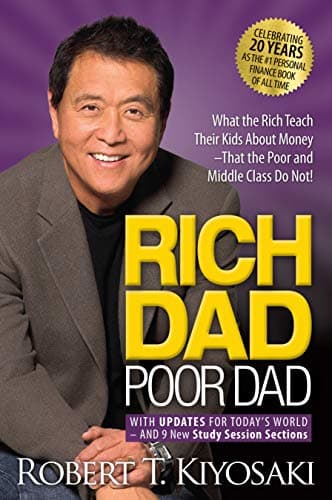
Rich Dad Poor Dad Book Review 2025: Still Worth Reading After 25 Years?
Quick Verdict
Pros
- Simple, accessible language makes financial concepts easy to grasp for beginners
- Challenges conventional wisdom about working for money vs. building assets
- Two contrasting father figures provide clear mental models for financial decisions
- Short enough to finish in a single weekend
- Has motivated many readers to take their finances seriously
- Practical thought experiments applicable to real financial planning
Cons
- Overly simplistic in places — real estate investing isn't as easy as the book implies
- Promotes assets that may not fit everyone's risk tolerance or lifestyle
- Some financial advice contradicts established best practices (like paying off debt aggressively)
- Lacks specific, actionable steps for implementation
- Has been criticized for sharing tactics that benefit Kiyosaki more than readers
Quick Verdict
If you're new to personal finance and looking for a mindset shift, this Rich Dad Poor Dad review gets to the point: the book delivers on making you think differently about money. It's not a comprehensive financial guide, and some of its advice borders on reckless. But as a catalyst for reconsidering your relationship with money? It works. I'd rate it 4.2 out of 5 stars — essential for beginners, outdated for seasoned investors.
What Is Rich Dad Poor Dad?
I picked up Rich Dad Poor Dad at an airport kiosk two years ago, half-expecting another dry financial textbook. What I got instead was a memoir disguised as a manifesto. Robert Kiyosaki grew up in Hawaii with two father figures: his biological dad, a highly educated educator who struggled financially, and his best friend's dad, a grade-school dropout who became one of Hawaii's richest men.
The book contrasts their approaches to money through a series of conversations and lessons Kiyosaki absorbed as a kid working in their businesses. Published in 1997, it has since sold over 40 million copies worldwide and spawned an entire empire of seminars, games, and follow-up books. That's worth knowing upfront — Kiyosaki isn't just an author, he's running a business, and that shapes what ends up on these pages.
Key Features
- 247 pages of short, digestible chapters — most are under five pages
- Written in conversational prose, no financial jargon or spreadsheets
- Centers on a simple framework: assets vs. liabilities
- Contrasts two opposing money philosophies through vivid storytelling
- Ends each chapter with a question or challenge for reflection
- Includes the CASHFLOW board game as a companion tool
Hands-On Review
The opening chapters hooked me immediately. Kiyosaki describes being asked by his rich dad to work for free at his grocery store, learning the difference between working for money and having money work for you through painful, hands-on lessons. I found myself nodding along during my commute, which doesn't happen with most finance books.
By chapter five, though, my enthusiasm cooled. Kiyosaki's blanket dismissal of traditional employment as a sucker's game felt reductive. I'm not alone in this — financial educators often point out that his "job is a trap" messaging can be dangerous for people who don't have the capital or risk tolerance to start businesses. The book's advice to "pay yourself first" is solid, but the specific tactics he recommends gloss over risk, taxes, and market realities that real investors face daily.
What surprised me was how the book's age shows. The 1997 economic landscape differs drastically from 2025 — student loan crises, housing market volatility, and gig economy economics didn't exist in the same form. Reading Rich Dad Poor Dad today requires translation. The spirit of his arguments holds, but the specific vehicles he champions (buy rental properties, start a business) aren't universally accessible solutions.
Still, I'd be lying if I said it didn't change how I think. After reading it, I audited my spending with fresh eyes and realized I'd been treating my car as an asset when it's really a liability. That's a small shift, but it rippled into bigger conversations with my partner about what we're actually building. Whether that transformation was worth the $7.99 price tag? Unquestionably.
Who Should Buy It?
- Financial beginners who feel overwhelmed by investing terminology and need a conceptual foundation
- Readers stuck in the earn-spend-repeat cycle who want a framework for breaking out
- People tired of conventional advice to "save more, spend less" without explanation of the bigger picture
- Anyone curious about the asset vs. liability distinction as a starting point for deeper financial education
Skip this if you're a seasoned investor with a diversified portfolio and clear financial plan already in place — you won't find new strategies here. Also skip it if you're looking for step-by-step investment guidance with specific numbers, risk assessments, or portfolio allocations. Rich Dad Poor Dad is a mindset book, not a how-to manual.
Alternatives Worth Considering
If the core idea resonates but you want more depth, consider The Psychology of Money by Morgan Housel. It shares the accessible, story-driven approach but grounds its lessons in behavioral science rather than personal anecdote. You'll finish with fewer concrete "rich dad" tactics but a richer understanding of why we make financially self-destructive choices.
For readers who want actionable investment guidance, The Little Book of Common Sense Investing by John Bogle offers a evidence-based alternative focused on low-cost index funds — the opposite end of the risk spectrum from Kiyosaki's entrepreneurial recommendations.
Those who found the cashflow game concept engaging might also explore The Millionaire Fastlane by MJ DeMarco, which takes Kiyosaki's anti-employee philosophy further with more skeptical analysis of traditional wealth-building advice.
FAQ
It's Robert Kiyosaki's memoir comparing the financial philosophies of his biological father (poor dad) and his best friend's father (rich dad). The core message: the rich build assets while the poor and middle class accumulate liabilities.
Final Verdict
Rich Dad Poor Dad isn't a perfect book, and anyone telling you it contains definitive financial wisdom is overselling it. What it does well — reframing how you think about money, assets, and your relationship with work — still matters in 2025. The book's limitations are real: it's light on specifics, its author's conflicts of interest are worth considering, and some advice won't age well for every reader's situation. Still, I keep it on my shelf and recommend it to friends who are starting from zero. For the price of a coffee, the mental shift it offers is a fair trade.