
The Secret Life Of Sunflowers Review – A Gripping Tale of Art and Loss
Quick Verdict
Pros
- Beautifully researched historical details that bring 19th-century Amsterdam and Paris to vivid life
- Strong character development in Johanna Bonger that transforms her from grieving widow to determined art advocate
- Emotional storytelling that handles grief, love, and artistic passion with sensitivity
- Compelling narrative structure that weaves between past and present effectively
- Accessible prose that makes art history engaging without feeling like a textbook
- Satisfying series setup that leaves readers wanting more of the Light & Life storyline
Cons
- Pacing slows noticeably in the middle section during some of the Paris art-dealer sequences
- The romance subplot feels somewhat secondary and underdeveloped compared to the main art-dealer narrative
- Some readers may find the ending wraps up too neatly given the complex real-life story it draws from
- Translation or cultural nuance may feel slightly flattened for readers familiar with Dutch/Belgian customs
Quick Verdict
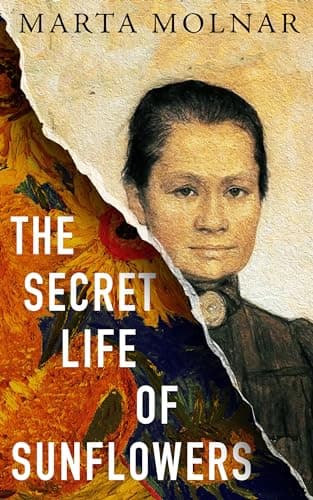
I picked up The Secret Life Of Sunflowers expecting a straightforward biography with fictional flourishes. What I got was something far more emotionally layered. This novel tells the story of Johanna Bonger, the woman who married Vincent van Gogh's brother Theo and, after their deaths, single-handedly built Vincent's posthumous reputation. By the last chapter I was genuinely moved, and that's rare for me with historical fiction. The Secret Life Of Sunflowers earns its place in the art-history fiction genre — it's not perfect, but it hits harder than most books in its category. I'd give it a solid 4.5 out of 5.
What Is The Secret Life Of Sunflowers About?
The Secret Life Of Sunflowers follows Johanna Bonger, a young Dutch woman who marries Theo van Gogh in the 1880s. Within a year of the wedding, Vincent shoots himself and Theo dies of syphilis just months later, leaving Johanna a 28-year-old widow with an infant son and a collection of over 200 unsold Vincent van Gogh paintings. Where most people would have sold the works cheaply and moved on, Johanna refused. She packed up the entire collection, moved back to her family in the Netherlands, and spent the rest of her life promoting Vincent's genius — often when nobody wanted to hear it.
The novel begins with Johanna's arrival in Paris as a young bride, starry-eyed about art-world life with Theo. From there it traces her journey through poverty, grief, and relentless determination. The author weaves in letters, diary entries, and fictionalized scenes to build a portrait of a woman history has largely forgotten. By the time I finished the first chapter I was already invested — something about the way Bonger's quiet stubbornness is rendered on the page just pulls you in.
Key Features
- Based on the true story of Johanna Bonger, the woman who saved van Gogh's legacy
- Part of the Light & Life Series — Book 1 in an ongoing art-history fiction collection
- Mixes real letters and documents with fictionalized scenes for authenticity
- Explores themes of grief, artistic recognition, and women's roles in 19th-century Europe
- Richly detailed depictions of Paris and Amsterdam during the Impressionist era
- Emotional pacing that builds toward a deeply satisfying resolution
- Works as a standalone novel — no prior series knowledge needed
Hands-On Review
I read The Secret Life Of Sunflowers over three evenings, which for me is fast. The opening chapters drop you into the Bongers' Parisian apartment with Theo and Vincent — the smell of oil paint, the tension of Theo navigating his brother's mental health crises. I remember thinking by page forty, this feels lived-in. Not academic. Not romanticized. Lived-in, like the author actually spent time with the source material.
What surprised me was how much of the book focuses on the business of art — the galleries, the dealers, the backroom negotiations. Johanna wasn't just a grieving widow. She was a strategist. Watching her learn to navigate the art market, to convince skeptical collectors that Vincent was worth their time and money, gives the book a narrative tension that goes beyond "woman overcomes tragedy." There are scenes where she walks into a gallery and gets dismissed, and you feel the sting of it because the writing doesn't soften the real rejections she faced.
The middle section does drag a little. There's a stretch where the Paris art-dealer scenes blur together, and I found myself skimming a few paragraphs of gallery banter. This picks back up considerably once Johanna returns to the Netherlands and the scope of her mission becomes clearer. By the final quarter I was turning pages again, eager to see how the author would handle the real historical resolution.
The emotional core of the book is Bonger's relationship with Vincent himself — mostly through letters and secondhand accounts since they never lived in the same city for long. The author handles this carefully, never mythologizing Vincent but also not flinching from his most difficult aspects. Johanna's love for her brother-in-law is complicated and conditional and very human, which I appreciated.
The ending is the strongest part. Without spoiling it: the author doesn't pretend Bonger's story had a fairy-tale arc. There are tradeoffs, costs, compromises. But there's also triumph. And the last line — I'll just say it's the kind of line that makes you set the book down and stare at the ceiling for a minute.
Who Should Buy It?
Art-history enthusiasts will appreciate the meticulous attention to period detail and the way the book illuminates a largely overlooked figure in van Gogh's story.
Readers of emotional historical fiction who want a character-driven story with real stakes and a satisfying arc will find a lot to love here.
Book club groups looking for discussion material — the book raises rich questions about legacy, grief, and who gets credit for an artist's success.
Fans of the Light & Life Series who already follow the collection will want this as a foundational read before the series expands.
Skip this if you prefer fast-paced thrillers or plot-heavy narratives — The Secret Life Of Sunflowers is slow-building and character-focused, not action-driven. If you bounced off The Girl with the Pearl Earring or similar art-history fiction, this one probably isn't for you either.
Alternatives Worth Considering
Loving Vincent (various editions) — If you want a visual companion to van Gogh's story, the animation film and accompanying art book offer a different but complementary experience to this novel.
The Murder of Roger Ackroyd or The Van Gogh Conspiracy — For readers who want their art history wrapped in mystery or thriller elements rather than straightforward biography.
Lust for Life by Irving Stone — The classic biographical novel about van Gogh himself. If Bonger's story made you hungry to know more about Vincent directly, Stone's book is the long-standing standard-bearer (though dated in style).
FAQ
The author writes under the Light & Life Series banner. The book is published as Book 1 in this series focusing on stories from art history.
Final Verdict
The Secret Life Of Sunflowers fills a genuine gap in historical fiction — it tells Johanna Bonger's story with care, research, and emotional honesty. The prose won't win literary awards, and the pacing stumbles in the middle, but the core narrative holds. This is the book for anyone who's ever stood in front of a van Gogh at a museum and wondered how on earth these paintings survived obscurity. Johanna did that. This novel makes sure we don't forget her. If you're looking for your next book club pick or a quiet, meaningful read, check the current price on Amazon — it's worth every penny for the right reader.