
The Subtle Art of Not Giving a F*ck Review – Is It Worth Your Time?
Quick Verdict
Pros
- Takes a refreshingly honest stance against toxic positivity and endless optimism
- Practical framework for choosing what to care about based on personal values
- Short and punchy — you can finish it in a weekend
- Backed by real-life anecdotes, not just theory
- Challenges you to stop avoiding discomfort
- Readable tone that doesn't talk down to the reader
Cons
- Profanity can feel gratuitous rather than purposeful in places
- Some concepts feel oversimplified for readers already familiar with Stoicism
- The 'don't give a f*ck' framing can come off as dismissive rather than liberating
- Won't satisfy readers looking for structured, academic self-improvement
Quick Verdict
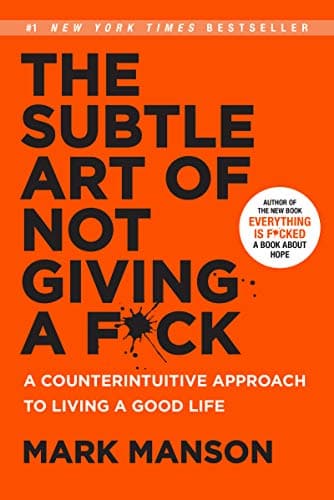
If you've spent any time on self-help Twitter or have seen this book repeatedly surface in recommendation threads, you've probably wondered whether The Subtle Art of Not Giving a F*ck review buzz is earned or just hype. Here's my honest take after reading it cover to cover: the core ideas land harder than most books in this space, the writing is refreshingly blunt, and it genuinely made me reconsider a few things I thought I knew about motivation. That said, the coarse language isn't for everyone, and a couple of chapters feel like filler. I'd give it a 4.4 out of 5 — solid, but not the universal miracle some readers claim. Check current price on Amazon using the link below.
What Is The Subtle Art of Not Giving a F*ck?
Mark Manson's The Subtle Art of Not Giving a F*ck dropped in 2016 and quickly became one of the best-selling self-help books of the decade. The core premise is deliberately provocative: most of us are told to "give more f*cks" — care more, want more, strive more. Manson argues that's precisely backwards. The path to a good life isn't about caring about everything. It's about caring deeply about the right things while refusing to waste energy on nonsense.
The book is structured around several "subtleties" — essentially counterintuitive principles that challenge conventional self-improvement wisdom. Manson draws from Stoic philosophy, psychology, and his own experience running one of the internet's most popular self-improvement blogs. What makes it distinct from drier self-help fare is the voice: this reads less like a lecture and more like a blunt conversation with a friend who's read too many self-help books and is tired of their contradictions.
Key Features
- Counterintuitive framework — argues for strategic indifference rather than relentless positivity
- Values-based decision making — helps readers identify what genuinely matters versus what's noise
- Real-world anecdotes — Manson's own failures, setbacks, and hard-won lessons
- Short, scannable chapters — each under 10 pages, making it easy to read in bursts
- Actionable takeaways — ends most chapters with a concrete reflection or practice
- Honest tone — no empty affirmations, no promises of overnight transformation
- Accessible writing — conversational and direct, no jargon or academic density
Hands-On Review
I picked this up on a recommendation from a coworker who described it as "the anti-typical self-help book." That phrasing planted a seed of skepticism — I've read enough Power of Now and 7 Habits clones to be wary of books that promise to fix your life in 200 pages. So I kept my expectations measured as I cracked it open on a slow Sunday afternoon.
By page three, Manson had already said something that stopped me: "The desire for more positive experience is itself a negative experience. And, paradoxically, the acceptance of one's negative experience is itself a positive experience." I sat with that for a minute. It sounds like a riddle, but it clicked — we spend so much energy chasing good feelings that we create a feedback loop of dissatisfaction. That's not a new idea, exactly, but Manson states it with enough directness that it landed.
What surprised me was the chapter on failure. Manson doesn't just pay lip service to "fail forward" — he breaks down why failure is structurally necessary for growth and then walks through how to redefine your relationship with it. I found myself dog-earing pages, which I rarely do. There are a few spots where the profanity felt like it was doing heavy lifting it hadn't earned — moments where the word choice seemed to shout "edgy!" rather than genuinely contribute to the point. But these were minor distractions in a book that otherwise stays remarkably focused.
Two weeks later, I still remember the core framework: choose your struggles. Life is going to hand you problems regardless — why not pick which ones you're willing to grapple with? That reframe sounds simple, but applying it to a specific decision I was wrestling with made it feel less like a platitude and more like a tool. Will I keep using it? Probably — but with a caveat that it works best as a starting point for deeper reflection, not a standalone solution.
Who Should Buy It?
- Readers burned out on toxic positivity — if constant "you can do it!" messaging feels hollow, Manson's more grounded approach may land better
- People in transition — navigating a career change, loss, or reevaluation of life priorities? The values-first framework is particularly useful here
- Fans of blunt, no-fluff non-fiction — if you appreciate writers like Tim Ferriss or Ryan Holiday, Manson fits that same niche
- Skimmers and busy readers — short chapters and direct takeaways make this a realistic weekend read
Skip this if you need structured, evidence-based psychological frameworks — Manson draws connections but doesn't cite peer-reviewed studies. And if profanity in non-fiction reads is a dealbreaker for you, this won't change your mind. It's not gratuitously crude, but it's woven into the voice throughout.
Alternatives Worth Considering
Looking at other options before committing? Here are a couple of directions you might go:
- Meditations by Marcus Aurelius — the original Stoic text that influenced Manson's approach. Denser and more philosophical, but far more durable as a reference
- Everything Is F*cked by Mark Manson — the direct sequel, which tackles the concept of hope and whether modern life is making us more miserable. Worth reading if this first book resonates with you
- Atomic Habits by James Clear — if what you're really after is a practical, systems-based approach to building better habits, Clear's book offers more concrete "what to do Monday morning" guidance
FAQ
The book argues that meaningful life improvement comes not from positive thinking or chasing constant happiness, but from choosing the right problems to solve, embracing failure, and caring about fewer — but more important — things.
Final Verdict
The Subtle Art of Not Giving a F*ck earns its bestseller status — not by saying something entirely new, but by saying familiar things in a way that actually cuts through the noise. The counterintuitive framing, Manson's willingness to be blunt about discomfort and failure, and the short format make it a rare self-help book that people finish. It's not perfect: the prose can feel self-indulgent in places, and readers wanting rigorous methodology will need to look elsewhere. But for a weekend read that leaves you with at least two or three genuinely useful mental models? This one's worth your time.