
The Alchemist by Paulo Coelho Review – Worth the Hype?
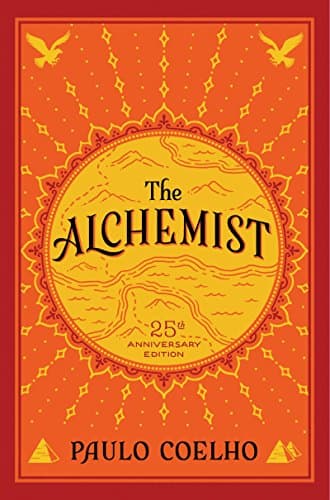
Quick Verdict
Pros
- Short, digestible chapters that make it easy to read in one sitting
- Timeless allegorical story with layers of meaning on repeat reads
- Written in accessible, simple prose suitable for all ages
- Encourages reflection on personal dreams and purpose
- Lightweight paperback format, perfect for travel reading
Cons
- Some readers find the prose too simple or repetitive
- The spiritual allegory won't resonate with everyone
- Preachy tone in places, especially in the first act
- Predictable ending for those who prefer plot twists
- A few dated references that haven't aged perfectly
Quick Verdict
The Alchemist by Paulo Coelho is a short allegorical fable about following your dreams—and yes, it largely delivers on that promise. I picked it up on a rainy Sunday afternoon and finished it before dinner, which says something about how compulsively readable it is. If you're looking for intricate plotting or literary prose, look elsewhere. But if you want a book that quietly insists you pay attention to your own life, this one earns its reputation. Check current price on Amazon
What Is The Alchemist?
Published by HarperOne and first released in 1988, The Alchemist tells the story of Santiago, a young shepherd in Andalusia, Spain, who abandons his predictable life after dreaming repeatedly of a hidden treasure near the Egyptian pyramids. What follows is part adventure story, part philosophical meditation. Santiago travels across the Sahara, meets a king who introduces him to the concept of a "Personal Legend," studies with an Englishman obsessed with alchemy, and eventually learns from a true alchemist who teaches him to listen to his heart.
The book is technically a novel, but it reads more like an extended fable or parable. Coelho isn't interested in character development in the traditional sense—Santiago is a vessel for the message rather than a fully rounded person. That's by design. The Alchemist wants to be absorbed in a single sitting, and it achieves that goal.
Key Features
- Short, chapter-based structure—most chapters are 1-3 pages, perfect for busy readers
- Allegorical storytelling that rewards rereading as you gain life experience
- Universal spiritual themes that transcend specific religions or philosophies
- Written in accessible, direct prose—no literary jargon or complex syntax
- Explores the concept of "Personal Legend"—your unique purpose in life
- Features recurring motifs: omens, the Soul of the World, listening to the heart
- Under 30,000 words—can realistically be read in one afternoon
Hands-On Review
I'll be honest: I almost didn't read The Alchemist. By the time I got around to it, the book had become so ubiquitous—the kind of thing your well-meaning coworker recommends via sticky note—that I assumed it was overrated. A book about "following your dreams" sounded like a greeting card. I was wrong, at least partially.
What surprised me was how much restraint Coelho shows. The book isn't preachy in the way self-help often is. Instead, it embeds its philosophy inside a journey, so you arrive at the insights alongside Santiago rather than being lectured at. By page 50, when Santiago meets the old king Melchizedek, I was genuinely engaged. The line about "when you want something, all the universe conspires in helping you to achieve it" is quoted endlessly, but in context it lands differently—it's less about magical thinking and more about recognizing opportunity when it appears.
The weakest stretch for me was the middle section, roughly when Santiago reaches the oasis. There's a romantic subplot and some political intrigue that feels obligatory, like Coelho needed to pad the story to justify a full book. The alchemist himself is a strong character, though. His dialogue with Santiago about fear versus desire cuts deeper than expected, and it's the section I find myself thinking about weeks later.
My copy (the standard HarperOne edition) has a clean layout and comfortable margins. The font is readable and the pages turn easily. No complaints about the physical book itself—it's exactly what you want from a book you might reread on a long flight.
Who Should Buy It?
- The undecided or stuck reader—if you're at a crossroads and wondering whether to take a leap, this book's message lands differently than a podcast or TED talk
- The gift buyer—The Alchemist makes a meaningful graduation, new job, or life-transition gift for almost any adult
- The reluctant reader—if you haven't finished a book in years, this is short and undemanding enough to rebuild your confidence
- The spiritually curious—readers who enjoy accessible explorations of purpose and meaning, even without religious commitment
Skip this if you prefer novels with complex characters, intricate plots, or morally ambiguous protagonists. Santiago is a good person on a clear journey—there are no real villains, no surprising betrayals. If ambiguity and literary complexity are what you want from fiction, The Alchemist will frustrate you.
Alternatives Worth Considering
If you're drawn to the self-discovery fiction space, a few other titles merit your attention:
- The Four Agreements by Don Miguel Ruiz – More practical and grounded than The Alchemist, with a Toltec framework for personal freedom. Less narrative, more actionable.
- Man's Search for Meaning by Viktor Frankl – A denser, more psychologically rigorous exploration of finding purpose even in the worst circumstances. Not a fable; a memoir and philosophical treatise.
- The Midnight Library by Matt Haig – A recent bestselling novel with similar themes about regret and possibility, but wrapped in a more conventional (and longer) narrative structure.
FAQ
The Alchemist follows Santiago, a young Andalusian shepherd who dreams of finding a worldly treasure buried near the Egyptian pyramids. Through encounters with a king, an Englishman, and ultimately an alchemist, he learns that the treasure he seeks was hidden where his journey began—and that listening to your heart reveals your Personal Legend.
Final Verdict
The Alchemist is exactly what it promises to be: a short, accessible, gently spiritual fable about listening to your own heart. It won't challenge you intellectually, and if you're deeply cynical, its optimism might feel naive. But there's genuine wisdom packed into those 200 pages, and the book's simplicity is a feature, not a bug. Coelho trusts his readers to extract meaning without being hit over the head with it.
Is it the greatest book ever written? No. But it might be the right book for you at the right moment. I finished it feeling oddly lighter, which is more than most books accomplish. That's worth something. See pricing and options on Amazon