
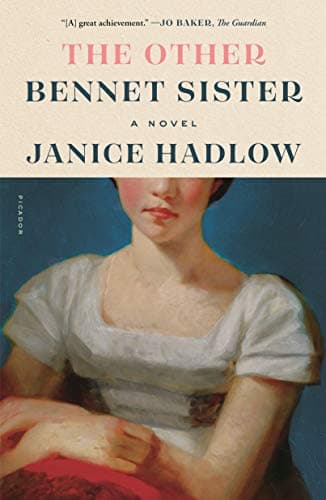
The Other Bennet Sister Review: Finally, Mary Bennet Gets Her Due
Quick Verdict
Pros
- Mary Bennet finally receives the full, sympathetic interior life she was denied in Austen's original
- Rich Regency atmosphere with vivid period detail — social customs, dress, domestic life all feel lived-in
- Warm, dry humor that echoes Austen's wit without imitating it
- Unexpectedly moving emotional arc — Mary transforms without losing her essential self
- A satisfying standalone read that enriches rather than requires Pride and Prejudice knowledge
Cons
- Middle section sags under a pace that feels leisurely to a fault — patience required
- The ending arrives quickly after a key turning point, leaving some threads underexplored
- At nearly 500 pages it could have been tighter — a slower reader might lose momentum
- Some secondary characters feel more functional than fully realised
Quick Verdict
I've been a Pride and Prejudice obsessive since my mid-teens, and Mary Bennet never once registered as a character worth caring about — she's the sister with no wit, no beauty, and no storyline worth remembering. Janice Hadlow's The Other Bennet Sister dismantles that indifference with quiet, relentless patience. By page 100 I was genuinely invested. By the end I was blinking back waterworks in a way I did not anticipate. This is a novel about being overlooked and learning that your own company might be enough — and it earns every emotional beat. 4.2 / 5.
What Is The Other Bennet Sister?
The Other Bennet Sister is Janice Hadlow's 2019 debut novel and a reimagining of Jane Austen's Pride and Prejudice from the perspective of Mary Bennet, the middle sister who is, in Austen's original, neither as clever as Elizabeth nor as pretty as Jane. She plays the pianoforte badly and lectures her family on morality when she'd rather be noticed at all. In Hadlow's telling, the story begins shortly after the events of Pride and Prejudice — Elizabeth is married to Darcy, Jane is bound for Bingley, and Mary is left at home in Longbourn, the spinster-in-waiting no one is quite paying attention to.
Hadlow isn't writing fan fiction. She rewrites familiar scenes from Mary's point of view, reframing events we think we understand, and then pushes the narrative forward into entirely new territory — London, a period of genuine hardship, and a love story that earns its ending through restraint rather than fireworks. The result is a standalone novel that both honors Austen's world and thoroughly inhabits its own.
Key Features
- Retells Pride and Prejudice from Mary Bennet's perspective, then continues the story beyond Austen's ending
- Full third-person narration into Mary's interior life — thoughts, insecurities, small joys
- Regency setting with meticulous attention to period social customs, dress, and domestic detail
- Warm, observant humor that sits comfortably alongside Austen's wit
- Approximately 480 pages — a substantial, immersive read
- Published by Henry Holt; debut novel by former BBC executive Janice Hadlow
- Winner of the 2020 Historical Writers' Association Gold Crown
Hands-On Review
I picked up The Other Bennet Sister on a rainy Saturday with low expectations. Mary Bennet is not, on the surface, an obviously compelling protagonist — Austen herself used her largely for comic effect. But Hadlow has done something genuinely clever: she takes Mary's very ordinariness and makes it the engine of the novel. Without Elizabeth's wit or Jane's beauty, Mary has no armor against the world. Every social awkwardness, every failed attempt to be noticed, every moment of loneliness in a noisy house full of sisters — it all lands with real weight because there's nowhere for the reader to hide from it.
What surprised me most was the quality of Hadlow's prose. I expected serviceable storytelling — competent, perhaps, but not stylish. Instead I found sentences that genuinely breathe. Mary's narration has a Regency cadence without feeling stilted or affectatiously antique. There's a passage around the midpoint — I'll avoid specifics to keep this spoiler-free — where Mary confronts something she'd rather not see about herself. The emotional honesty there stopped me for a moment. It's not dramatic prose. It's just true, and that's harder to pull off.
The pacing is the book's most significant flaw. The opening third is genuinely gripping — Hadlow reimagines the Netherfield ball and the proposal scenes so effectively that I found myself re-reading passages with fresh eyes. But somewhere around the London section, the story loses momentum. Hadlow is clearly more interested in Mary's inner life than in plot mechanics, and I respect that choice. But after 350 pages of emotional accumulation, a few scenes begin to feel like they are earning emotional beats that could have been earned a little faster. By the final fifty pages I'd adjusted my reading pace accordingly, and the ending — when it arrives — lands well. Just not quite as hard as it might have if the final act were a touch more taut.
Who Should Buy It?
If you've ever quietly related to the person in the room who isn't the favorite, this novel will get under your skin. Hadlow writes about invisibility and the slow work of self-regard with real compassion — and without turning Mary into a martyr. She's prickly, sometimes tedious, occasionally sanctimonious. She's human. That makes her arc genuinely moving.
Buy it if: you're a Pride and Prejudice fan who's always wondered about the sisters on the periphery. You enjoy character-driven historical fiction with a literary edge. You liked Rebecca Skloot's patience with her subject matter — you're the kind of reader who trusts a slow build.
Skip it if: you want tight, event-driven plotting and lose patience with interior narration. At nearly 500 pages, this novel asks for a significant time investment, and it repays it — but not quickly. Also: if you've never read Pride and Prejudice and have zero interest in doing so, some of the reimagined scenes will land differently than intended. That's not a dealbreaker, but it matters.
Alternatives Worth Considering
Longbourn by Jo Baker (2013) takes a different tack — it tells the Pride and Prejudice story entirely from below stairs, through the servants' perspective. If you want a Pemberley story that keeps the familiar plot intact but reframes it entirely, Baker's novel is the more plot-driven choice. It's also shorter and moves faster.
Emma by Jane Austen (1815) — honestly, if you've enjoyed Hadlow's take on character interiority, you might as well go back to the source. Austen's own exploration of self-perception and social blindness is sharper and more economical than the retelling. No adaptation beats the original for pure prose quality.
Death Comes to Pemberley by P.D. James (2011) offers a post-Pride-and-Prejudice mystery set at Pemberley. It's a different genre entirely — crime fiction rather than character study — but if you want more time in Darcy and Elizabeth's world, it scratches that itch in ways Hadlow's Mary-centred novel deliberately does not.
FAQ
It tells the story of Mary Bennet, the overlooked middle sister in Jane Austen's Pride and Prejudice. Beginning just after the events of the original novel, Mary struggles to find her place in a world that has moved on without her, eventually embarking on a journey of self-discovery that takes her to London and back.
Final Verdict
The Other Bennet Sister is not a perfect novel — the middle third drags, and the ending could use another fifty pages of breathing room. But its central achievement is real: it takes a character who exists in Austen's world almost as an afterthought and gives her a life, a voice, and a story that genuinely matter. Mary Bennet deserves better than she got in the original, and Hadlow has done right by her. If you're a Janeite who has ever felt a flicker of sympathy for the middle sister — or if you simply want a well-crafted, emotionally intelligent historical novel that trusts you to sit with discomfort — this book is worth your time. Check the current price on Amazon and decide for yourself.