
The Untethered Soul Review 2024: My Honest Verdict
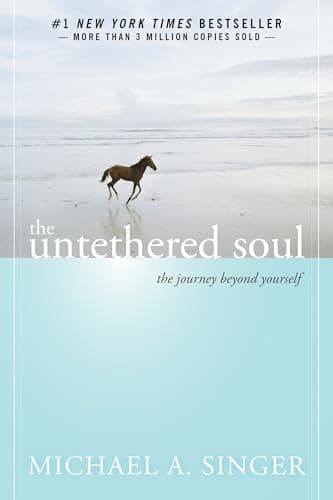
Quick Verdict
Pros
- The writing is remarkably simple and accessible — no academic jargon to wade through
- Core concepts like "the voice in your head" and letting go of thoughts are explained in under 200 pages
- Works as a practical companion to meditation or breathwork practices
- Published by New Harbinger, a respected psychology and self-help imprint
- Has helped thousands of readers reframe anxiety and fear as passing mental events
- No religious affiliation — works for secular and spiritual readers alike
Cons
- Some readers will find the spiritual framing too vague or New Age for their taste
- Does not include practical exercises — it's more philosophy than a how-to guide
- The chapter structure is loose, which some readers may find disorienting
- A few sections feel repetitive if you've read similar titles on awareness and consciousness
Quick Verdict
If you are looking for a short, accessible read that reframes how you relate to your own thoughts, The Untethered Soul is worth your time. Michael A. Singer distills decades of meditation and spiritual inquiry into a direct, almost conversational guide that sits comfortably between philosophy and self-help. It will not give you a ten-step plan. What it will give you is a new lens through which to notice fear, anxiety, and the relentless inner narrator — and to let them pass without a fight. My rating: 4.5 out of 5.
What Is The Untethered Soul?
I had heard the title mentioned in podcast circles and meditation retreats for years before I actually picked it up. It was sitting on a shelf at a friend's place during a weekend visit, and on a whim I started reading the first chapter while waiting for coffee to brew. Twenty minutes later I had finished the opening section and ordered my own copy before leaving. That opening — Singer's direct invitation to notice the voice in your head — is genuinely disarming in the best possible way.
The book was published by New Harbinger Publications, a house better known for psychology-focused self-help, which shows in Singer's clinical precision even when he is discussing abstract concepts like consciousness and spiritual freedom. The premise is straightforward: most of human suffering comes from our inability to step back from our own mental noise. The solution, Singer argues, is not to suppress or change that noise but simply to stop identifying with it.
Key Features
- Short chapters (usually 3-5 pages) that work well for interrupted reading sessions
- Singer writes in plain, unadorned prose — no academic baggage, no spiritual jargon
- The central metaphor of the "inner energy center" gives the abstract philosophy a concrete anchor
- No religious doctrine — concepts are presented as universal observations about human consciousness
- The book encourages an observational relationship with thoughts rather than a reactive one
- Pairable with meditation, breathwork, or therapy as a philosophical companion
- Published by New Harbinger, a reputable publisher with a strong backlist in the personal growth space
Hands-On Review
I read The Untethered Soul in two distinct phases. The first half I tore through quickly — Singer has a gift for stating something obvious that somehow feels revolutionary when you see it written down. The section where he describes watching your breath as if you are standing at the edge of a river, watching leaves float past, made me stop and sit still for a good five minutes. That is not an exaggeration. I literally closed the book and sat there.
The second half felt different. By chapter ten or eleven, the ideas start cycling rather than deepening. Singer returns to the same central insight — you are not your thoughts, so stop fighting them — and restates it with slightly different imagery each time. A reader with more meditation experience might find this reinforcing. A reader new to the concept might start to feel the repetition as filler. I fall somewhere in between: useful reminder, slightly long in the tooth.
What surprised me was the section on fear. Singer does not offer a fear-conquering framework or a cognitive technique. He simply points out that fear is the mind's signal that it is approaching the edge of its comfort zone — and that the appropriate response is to acknowledge the signal and keep moving. Reading that passage on a Tuesday morning before a work presentation I was dreading, I found it oddly bracing. Not comforting, exactly — more like a firm tap on the shoulder. Will I keep using it? Probably, with the caveat that it requires you to do the inner work on your own time.
Who Should Buy It?
This book earns a strong recommendation for meditation practitioners who want a philosophical backbone for their practice. If you have been meditating for a few months and wondering why the chatter does not seem to quiet down, Singer's framing of "the voice in your head" will land differently than it does on a newcomer.
It is also a solid fit for curious readers who enjoyed books like The Power of Now or Awareness by Anthony de Mello and want more — or a more secular take. If you are a structured learner who needs actionable steps and clear exercises, you will likely find The Untethered Soul frustrating. Singer offers perspective, not a curriculum.
Skip this one if you are looking for a faith-based spiritual text, a self-help book with numbered lists and worksheets, or something that engages with psychological research in a clinical way. This book lives firmly in the philosophical, observational camp. It will not hold your hand, and it will not promise results by Friday.
Alternatives Worth Considering
The Power of Now by Eckhart Tolle remains the closest spiritual counterpart. Tolle writes with more poetic urgency, while Singer is cooler and more detached. If Tolle's voice resonates with you, start there; if it feels too abstract, try Singer first.
Awareness by Anthony de Mello offers a similar framework but through parable and anecdote rather than direct instruction. De Mello's style is warmer and more playful, which some readers will prefer.
The Mindful Brain by Daniel Siegel is for readers who want the neuroscience angle on mindfulness and consciousness rather than the philosophical one. It is denser and more clinical, but it grounds the same territory in research.
FAQ
The book explores how to free yourself from the constant stream of thoughts and emotions that dominate your inner experience. Michael Singer presents a framework for achieving inner peace by observing your mind without getting entangled in it.
Final Verdict
The Untethered Soul earns its status as a modern spiritual classic without needing to shout about it. Singer writes with the calm certainty of someone who has sat with these ideas for decades, and that calm is genuinely infectious on the page. The book is short enough to finish in a week, light enough to carry on a commute, and substantive enough to return to when your practice needs a conceptual reset. Is it the deepest book on consciousness ever written? No. Is it one of the most accessible entry points to the territory? Absolutely. If the premise of observing your thoughts without becoming them interests you at all, this book is a reasonable next step. Check current price on Amazon.