
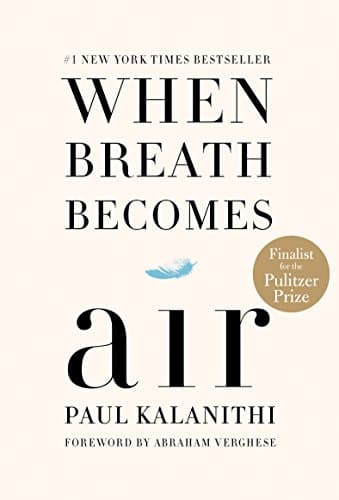
When Breath Becomes Air Review – Pulitzer Finalist
Quick Verdict
Pros
- Beautifully written prose that elevates profound questions to poetry
- Authentic emotional journey — Kalanithi writes from inside the experience, not observing it
- Transforms how readers think about death, purpose, and what makes a life worth living
- Earned its Pulitzer Prize finalist status through literary merit alone
- Accessible to any reader regardless of medical background
Cons
- Can be emotionally heavy — not light reading by any stretch
- At around 200 pages, some readers wish it continued longer
- Kalanithi's death, known from the start, casts a long shadow over the narrative
- No easy answers — this book asks questions rather than solving them
Quick Verdict
When Breath Becomes Air is a book that sneaks up on you. You open it knowing you'll read about a dying man, and you finish it feeling like you've lived an entire life alongside him. Paul Kalanithi wrote this memoir in the shadow of his own death from lung cancer, and every sentence carries that weight — not with despair, but with an almost fierce clarity about what matters. If you're looking for a book that lingers long after you turn the last page, When Breath Becomes Air belongs on your reading list.
Our score: 4.5 out of 5
What Is When Breath Becomes Air?
When Breath Becomes Air is Paul Kalanithi's memoir about his transformation from a Stanford neurosurgeon into a terminally ill patient. He was 36 years old when he received his diagnosis — an advanced adenocarcinoma that gave him perhaps two years to live. Before that moment, Kalanithi had spent a decade studying literature, philosophy, and finally medicine, searching for answers to one question: what makes life meaningful?
The cancer answered that question for him. Or rather, it forced him to answer it himself, in real time, with a pen in his hand. The book was unfinished when Kalanithi died in 2015. His wife, Lucy, completed it and wrote an afterword. The result is a Pulitzer Prize finalist that has sold millions of copies and become required reading in medical schools and book clubs alike.
Key Features
- Authored by a neurosurgeon turned cancer patient — unique dual perspective on mortality
- Pulitzer Prize Finalist in the General Nonfiction category
- Written during Kalanithi's illness — raw, immediate, unfinished at his death
- Includes wife's afterword offering intimate details about his final months
- Explores the intersection of science, literature, and philosophy
- Accessible prose — no medical background required to understand
- Short at around 200 pages — doesn't overstay its emotional welcome
Hands-On Review
I picked up When Breath Becomes Air on a Tuesday evening, expecting something heavy and academic. Kalanithi is a neurosurgeon, after all. What I got was something far more human. The opening chapter drops you into an exam room where Kalanithi, now a patient, is learning his cancer has spread. The clinical language he uses — and then immediately questions — establishes the central tension of the book: the gap between medical terminology and lived experience.
By the third chapter, I was reading about his early obsession with literature and C.S. Lewis, his pivot to medicine because he wanted to "find the connection between brain and meaning," and his residency years spent in operating rooms. There's a passage where he describes watching a surgeon's hands during his first procedure — the reverence in that description made me pause. I underlined it. A week later, I was still thinking about it.
The middle section is where the book transforms. Kalanithi begins treatment, tries to write, struggles with identity — who is he now that he can't operate? He and Lucy decide to have a child despite the diagnosis. This choice divided readers when the book came out, but Kalanithi addresses it with characteristic honesty: "I knew my body was failing. I wanted to be a father." The section on holding his daughter for the first time — minutes old, impossibly small — broke me, and I wasn't prepared.
What surprised me most was the ending. I knew how it ended. Kalanithi died. But the final pages, where Lucy describes his last breath, are so carefully rendered that they don't feel like an ending at all. They feel like a question left open for every reader to answer for themselves.
Who Should Buy It?
- Readers who enjoy literary memoirs — especially those by doctors, scientists, or anyone wrestling with big questions about meaning and mortality
- People processing a terminal diagnosis — whether their own or a loved one's, this book offers companionship without false comfort
- Medical students and healthcare professionals — provides rare insight into the patient experience from someone who understood both sides
- Book club readers — when Breath Becomes Air generates discussion, it generates discussion
Skip this if you're looking for an uplifting read or a story with a neat arc from diagnosis to cure. Kalanithi doesn't beat cancer. He doesn't find peace. He finds meaning in the struggle, and that's not the same thing. If that's not what you want right now, it's okay — put it on the shelf and come back when you're ready.
Alternatives Worth Considering
If When Breath Becomes Air resonates with you, these books share similar territory:
- Tuesdays with Morrie by Mitch Albom — another memoir about a teacher facing terminal illness. More optimistic and lighter in tone, but equally moving.
- The Emperor of All Maladies by Siddhartha Mukherjee — a biography of cancer itself, not a patient's story. More factual and sweeping in scope, winner of the Pulitzer Prize.
- Smarter Than Thou by Dan R. Paterson — if you're drawn to the philosophical questions Kalanithi raises, this takes a different angle on meaning and modern life.
FAQ
Yes — it consistently ranks among the most impactful memoirs of the decade. If you're open to challenging, beautiful writing about mortality and meaning, it rewards every page.
Final Verdict
When Breath Becomes Air is not a comfortable book, and it isn't meant to be. Kalanithi doesn't offer answers — he offers presence, honesty, and the particular grace of someone who looked directly into the void and chose to write about it. I've read hundreds of memoirs, and few have left marks like this one does. The prose is precise without being cold; the emotion is earned without manipulation.
Will you enjoy it? That depends on what you bring to it. If you're open to sitting with difficult questions — about death, about purpose, about what we owe each other in the time we have — then this book will repay every hour you give it. If you need resolution, look elsewhere. For everyone else: When Breath Becomes Air is waiting for you.