
Yellowface by R.F. Kuang Review — A Sharp, Uncomfortable Look at Literary Gatekeeping
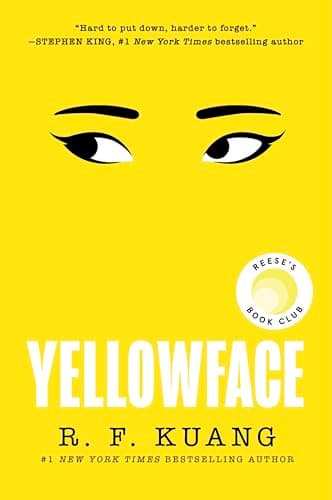
Quick Verdict
Pros
- R.F. Kuang's prose is razor-sharp — every line carries a subtext that rewards close reading
- The meta-commentary on the publishing industry is bracing and uncomfortably accurate
- A short, dense novel that you can finish in one sitting but think about for weeks
- The unreliable narrator mechanic is pulled off with real literary craft
- Kuang doesn't moralize — she lets the ugliness speak for itself
Cons
- The one-sidedness can feel preachy at times, especially in the middle act
- If you're not already invested in literary fiction discourse, large portions will feel inside-baseball
- Some readers may find the ending deliberately unsatisfying — and it is, on purpose
- The audiobook narration in some editions has been criticized for tonal mismatches
Quick Verdict
The Yellowface by R.F. Kuang is a slim, vicious little novel that refuses to let you look away. It asks one question with brutal efficiency: who gets to tell whose story? If you're at all plugged into the literary world — or if you've ever wondered why certain books get published and others gather digital dust — this one will make your skin crawl in the best possible way. Strong recommendation for readers of contemporary literary fiction, especially anyone who cares about who gets a seat at the publishing table.
What Is Yellowface?
Yellowface is a 2023 novel by R.F. Kuang, published by William Morrow, that drops you directly into the mind of June Hayward — a profoundly average white writer who watches her Chinese-American friend Athena Liu die in a freak accident, then promptly steals the manuscript Athena left behind. What follows is a masterclass in cognitive dissonance as June remakes Athena's brilliant war novel about Chinese laborers in WWI into her own "inspired by" project, climbing the literary ladder while the industry either looks the other way or actively helps her climb.
The genius of the novel is that it's not subtle — and it shouldn't be. Kuang wrote Yellowface with the pointed clarity of someone who has watched her own work be dismissed, translated "for her own good," and handed to white authors as a framework. This is her turning that mirror around and handing it to the reader, whether they're ready or not.
Key Features
- 256-page contemporary literary fiction, densely written — no padding, no filler
- First-person unreliable narration from a white protagonist who is aware of exactly what she's doing
- Explicit meta-commentary on the publishing industry's racial disparities without being preachy
- Short chapters that build relentless narrative momentum toward an ending that refuses catharsis
- R.F. Kuang's established voice — sharp, controlled, historically precise prose
- Originally published by William Morrow (HarperCollins) in May 2023
- Available in hardcover, paperback, ebook, and audiobook formats
Hands-On Review
I picked up Yellowface on a Sunday afternoon after seeing it mentioned for the third time in a single week on different literary podcasts. The cover — that muted yellow, almost sickly in certain light — felt appropriately uncomfortable before I'd even cracked the spine. By page 30 I had already set the book down twice to text a friend about a specific passage, which is my personal barometer for whether a novel is doing something right.
What struck me most, reading this in late 2023, was how prescient it felt. Kuang published Yellowface before the specific controversies it touches became dinner-table conversation, and yet it reads like she was live-commenting the moment. The scenes where June's editor talks about "making the book more accessible to mainstream audiences" — meaning white audiences — are so specific, so perfectly rendered, that I audibly groaned at one point. I had just read a quote from a real literary agent saying something nearly identical about a different book the week before. That's not coincidence. That's research and observation fused into fiction that cuts.
The narrator is genuinely difficult to spend time with, and that's entirely the point. June is not a villain in the pulpy sense — she's worse than that. She's a person who knows exactly what privilege she's wielding and uses it with a shrug and a perfectly reasonable internal justification. Watching her rationalize Athena's work as "my interpretation" while deleting Athena's name from drafts made my jaw tighten more than once. By the final third, when June starts showing signs of genuine anxiety about being "found out," the question shifts from will she be caught to something more uncomfortable: does it even matter if she's caught, given what the industry rewards?
Who Should Buy It?
Readers of contemporary literary fiction who want to be challenged, not comforted. Yellowface is not a relaxing read. It's a confrontational one. If you want your books to validate your existing worldview, this will annoy you. If you want books that make you argue with yourself, put it at the top of your list.
Anyone who works in or closely follows the publishing industry. Kuang clearly did her homework. The descriptions of manuscript submissions, literary awards, sensitivity readers, and the back-and-forth over "authentic voice" are painfully accurate. You'll recognize people you know.
fans of R.F. Kuang's earlier work — If you've read The Poppy War trilogy or Babel, Yellowface shows a different facet of Kuang's interests. It's quieter, more intimate, and more furious in a controlled way that suits the psychological thriller format.
Skip this if you want escapist fiction. Yellowface is rooted in the present, the real, and the infuriatingly mundane — the publishing world, the dinner party, the polite email. There are no dragons, no magic, no world-building to retreat into. The only escape is the ending, and Kuang doesn't give you a clean one.
Alternatives Worth Considering
Babel by R.F. Kuang — If you loved Yellowface and want more Kuang, Babel is historical fantasy that tackles colonialism and the politics of language with the same intellectual rigor, wrapped in a university setting that also critiques institutional complicity.
Such a Fun Age by Kiley Reid — A different angle on racial dynamics in professional settings, this time centering on a Black babysitter and the white families who claim to champion her. Less meta about the publishing industry but equally sharp on performative allyship.
The Plot Against America by Philip Roth — If you're drawn to speculative fiction that uses alternate history to comment on present anxieties, Roth's counterfactual about a Nazi-sympathetic president offers a different flavor of the same uncomfortable literary impulse.
FAQ
Yellowface follows June Hayward, a white author who appropriates the unpublished manuscript of her dead Chinese-American friend Athena Liu. The novel tracks her meteoric rise in publishing while exposing the industry's complicity in whose stories get told — and by whom.
Final Verdict
Yellowface by R.F. Kuang is not a perfect novel — its didactic edges show in places and the ending is deliberately, almost aggressively unsatisfying in a way that will frustrate readers expecting payoff. But that frustration is the point. The publishing industry's complicity in cultural theft doesn't resolve neatly, and neither does this book. What Kuang delivers instead is a precise, often painfully funny indictment of who gets believed, who gets published, and who gets erased — all wrapped in a propulsive, hard-to-put-down narrative. If you've ever wondered why the literary canon looks the way it does, this is essential reading. If it makes you a little angry in the process — good. That's the whole engine.