
A Little Life by Hanya Yanagihara – An Honest Reader's Review
Quick Verdict
Pros
- Yanagihara's prose is immersive and beautifully crafted, drawing readers into an unforgettable narrative
- The character development is deep and nuanced, particularly the portrayal of complex relationships
- Explores profound themes of friendship, loyalty, and the nature of happiness with intellectual honesty
- A novel that sparks meaningful conversations and stays with readers for years
- Rich, detailed portrayal of the creative and professional world in New York City
- Structurally ambitious—tells a complete story with emotional resonance
Cons
- The book's emotional intensity can feel relentless, with minimal moments of relief
- Some readers may find certain content (trauma, self-harm) depicted in ways that feel gratuitous rather than necessary
- Pacing issues in the middle sections—parts of the narrative slow considerably
- At over 700 pages, it's a significant time investment with no guarantee of emotional payoff
- The male relationships portrayed may feel idealized or difficult to relate to for some readers
- A final reveal that some readers found either profoundly moving or deeply frustrating
Quick Verdict
A Little Life by Hanya Yanagihara is not an easy novel, and it's not supposed to be. This book asks you to sit with discomfort, to witness suffering that sometimes feels unbearable, and to consider what we owe the people we love. In our A Little Life review, we'll help you decide if this literary heavyweight deserves a spot on your shelf.
Rating: 4.4/5 — A demanding but ultimately rewarding work for readers prepared for its emotional weight.
What Is A Little Life?
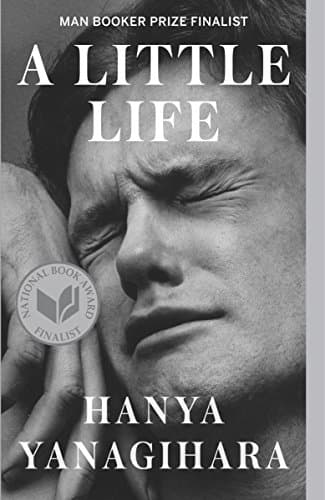
A Little Life, published in 2015 by Anchor Books, is Hanya Yanagihara's second novel. It follows four college friends—Jude St. Francis, Willem Ragnarsson, Malcolm Irvine, and Jean-Baptiste (JB) July—as they build lives in New York City over roughly two decades. The novel moves between their undergraduate years at a prestigious university and their adult lives as they pursue careers in law, medicine, art, and architecture.
The story's emotional core is Jude, a man of extraordinary intellect and professional success who is simultaneously consumed by damage he cannot or will not explain. The novel unfolds his history gradually, with fragments and revelations emerging through different characters' perspectives. It's a structure that requires patience but rewards it handsomely—each new detail recontextualizes everything you thought you understood about Jude's present behavior and the people orbiting his damage.
Key Features
- 720 pages of literary fiction exploring friendship, trauma, and redemption
- Four distinct male protagonists with interconnected but divergent lives
- Non-linear storytelling that reveals character through accumulated fragments
- Set across two decades in contemporary New York City
- Honest, unflinching treatment of abuse, mental health, and human resilience
- Prose style that shifts seamlessly between plain-spoken dialogue and elevated, almost lyrical narration
- Received critical acclaim including National Book Award finalist status
Hands-On Review
I picked up A Little Life on a recommendation from a friend who described it as "the most devastating book I've ever read." That framing worried me going in. Devastation for its own sake feels manipulative. What I found instead was something more complicated: a novel that earns its emotional punches through genuine craft and character investment.
Yanagihara's greatest achievement here is making you care about these men. By page 200, I was genuinely anxious about their futures. When JB makes a career-defining mistake, I felt embarrassed on his behalf. When Willem faces rejection, I remembered every time I'd put myself in similar vulnerable positions. The friendships feel specific rather than idealized—these men support each other, but they also disappoint each other, compete with each other, and occasionally betray each other in small, realistic ways.
What surprised me was how the novel's middle section almost lost me. Around pages 400-550, the narrative momentum slows considerably. Yanagihara seems more interested in rendering the texture of daily life—art openings, apartment dinners, the rhythms of medical and legal careers—than in advancing plot. I understood intellectually why this mattered, but emotionally I found myself impatient. Then a revelation arrives around page 560 that reframes everything, and suddenly those slow sections feel essential rather than indulgent.
The book's final act will divide readers. Some will find it transcendent; others will feel manipulated. Without spoilers, I can say that Yanagihara commits fully to her ending rather than pulling punches or offering false comfort. Whether you find that choice brave or cruel probably depends on what you wanted from the journey.
Who Should Buy It?
Readers who want literary fiction with emotional stakes: A Little Life asks something of its readers. If you want a novel that engages seriously with difficult questions about happiness, suffering, and love, this delivers.
People who value character-driven stories: Plot matters here, but character matters more. If you're the type who reads books for the people inside them, you'll find rich material.
Readers prepared for dark content: This isn't horror, but it deals with trauma, abuse, and self-harm in graphic, detail-rich ways. If you're in a vulnerable place or have specific triggers, please research further before committing.
Skip this if: You're looking for a hopeful, uplifting read. A Little Life is not bleak throughout—there are moments of joy, humor, and warmth—but it doesn't ultimately promise that suffering can be overcome or that happiness is guaranteed. If you need a book that offers emotional catharsis without cost, look elsewhere.
Also skip this if: You have limited reading time and need something faster-paced. At 720 pages with a deliberate narrative pace, this demands significant commitment.
Alternatives Worth Considering
The Goldfinch by Donna Tartt: If you want another lengthy literary novel about a traumatic event and its aftermath, Tartt's Pulitzer winner offers a different but similarly immersive experience with more plot momentum.
Normal People by Sally Rooney: For readers drawn to literary fiction about complex relationships but wanting something shorter (under 300 pages) and less emotionally punishing, Rooney's debut is a compelling alternative.
The House of the Spirits by Isabel Allende: If you appreciated the multi-decade scope and interweaving character fates in A Little Life, Allende's family saga offers similar ambition with a different cultural lens.
FAQ
A Little Life follows four friends—Jude, Willem, Malcolm, and JB—as they navigate life in New York City from college through middle age. The novel centers on Jude, a brilliant lawyer with a mysterious and traumatic past that gradually comes to light. It's a story about friendship, love, survival, and the limits of devotion.
Final Verdict
A Little Life is not a book I can recommend casually. It requires preparation, patience, and a willingness to sit with narratives that don't offer easy answers. But for readers ready to meet it on those terms, Yanagihara offers something increasingly rare: a novel that prioritizes emotional truth over emotional comfort, and that trusts its readers to handle complexity. The friendships at its center feel real—frustrating, beautiful, and perpetually incomplete, just like actual human connections. Whether the ending satisfies will depend entirely on what you brought to the journey. Our A Little Life review concludes: this is a novel worth reading carefully, perhaps slowly, and definitely with someone you trust to discuss it afterward.