
Atomic Habits Review 2024: Is James Clear's System Actually Worth Your Time?
Quick Verdict
Pros
- Clear, actionable four-step framework applicable to any habit
- Emphasizes systems over goals — a perspective many productivity books miss
- Includes practical tactics like habit stacking and environment design
- Written in accessible, conversational prose that avoids academic jargon
- Backed by real case studies from athletes, businesses, and everyday people
- The 1% improvement concept is genuinely motivating and memorable
Cons
- Some readers will recognize the core habit-loop concept from other sources
- Examples occasionally feel repetitive across chapters
- The optimistic tone underplays how difficult breaking deeply ingrained habits can be
- A few sections could be tightened — the book has natural padding
Quick Verdict
If you're looking for an Atomic Habits review that cuts past the hype: yes, this book largely earns its reputation. James Clear delivers a readable, genuinely useful system for building habits that stick — the four laws framework alone gives you a starting point on day one. I wouldn't call it revolutionary, but it's one of the most practical self-improvement books I've read in years. Buy Atomic Habits on Amazon if you want something you can actually use.
What Is the Atomic Habits?
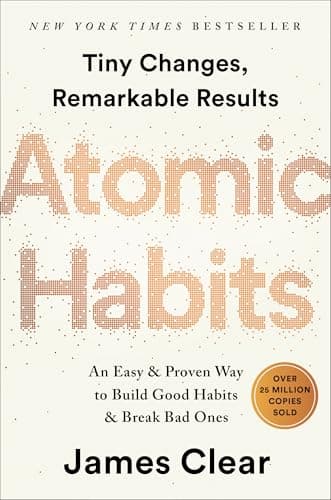
The Atomic Habits book by James Clear arrived in 2018 and quickly became one of Amazon's top-selling personal development titles. At its heart, the book argues that small, consistent actions compound over time — what Clear calls the "1% better every day" philosophy. Get marginally better at something each day for a year and you'll end up 37 times better by December. Skip days and let small habits slide, and the reverse is equally true.
Clear doesn't just sell motivation, though. He builds out a complete system: the four laws of behavior change (make it obvious, attractive, easy, satisfying), habit stacking, environment design, and the crucial distinction between goals and systems. The premise is that whoever you become is the result of the systems you live by — not the goals you set. Miss that nuance and you end up in the same spot every New Year's Eve, setting the same resolutions you abandoned by February.
Key Features
- Four Laws framework — clear four-step system for building habits (and inverting them to break bad ones)
- Habit stacking tactic — attach new habits to existing routines using a simple "after I… I will…" formula
- Environment design — engineer your surroundings so good habits are obvious and bad ones are hidden
- Identity-based habits — shift from "I want to run a marathon" to "I am a runner"
- Systems over goals — teaches why obsessing over outcomes misses the point
- The 1% compound rule — marginal gains add up in ways that feel almost invisible day to day
- Habit tracking — simple visual cue to maintain streaks and create satisfaction loops
Hands-On Review
I picked this up on a rainy Sunday morning when I was procrastinating on a work deadline — the kind of reader Clear probably has in mind. By noon I'd finished the first half and immediately reorganised my desk drawer to make my journal the first thing I see in the morning. That afternoon I tried habit stacking: after I pour my first coffee, I open the journal. It's been three weeks and I've skipped exactly one morning. That's more consistency than I've managed with any other "system."
What works here is the specificity. Each chapter gives you a tactic you can deploy immediately — habit stacking, temptation bundling, the two-minute rule (scale your habit down to two minutes when motivation dips). Clear doesn't linger in theory. He opens each section with a relatable scenario, explains the underlying principle, then hands you a tool. The habit loop concept (cue, craving, response, reward) isn't new, but Clear's four-step response to it is more structured than what I'd seen before.
The book is strongest when discussing systems. The chapter on environment design alone changed how I set up my workspace. Making the right choice the easy choice — putting the guitar where I can see it, hiding snacks in a cupboard I have to open — felt almost embarrassingly obvious in hindsight. I wish every productivity book had this much actionable content.
It's not perfect. The case studies, while interesting, repeat a similar pattern across chapters. You start to notice a rhythm: elite performer faced obstacle, applied habit principle, achieved results. Some readers will also find the relentlessly optimistic tone glosses over how hard it actually is to break entrenched bad habits. If you have ADHD or are dealing with addiction, this book gives you a framework, not a cure. That matters to say out loud.
Who Should Buy It?
- The serial goal-setter who hits their targets but reverts to old patterns within weeks — Clear's systems-first mindset addresses exactly this gap
- The habit-building beginner who's read about willpower and motivation but needs a concrete, repeatable framework to start with
- The overwhelmed professional who wants to make small, sustainable changes to daily routines without overhauling their entire life
- The reader returning to self-improvement after a long break, wanting something accessible and immediately applicable
Skip this if: you want deep psychological or neurological analysis — Clear keeps things accessible, not academic. If you prefer rigorous research and don't mind denser prose, Charles Duhigg's The Power of Habit might suit you better. And if you're looking for quick hacks rather than a genuine shift in how you think about behavior, you'll likely finish it and go back to the same patterns.
Alternatives Worth Considering
- The Power of Habit by Charles Duhigg — a stronger choice if you want the science behind habit loops and more detailed case studies from business and military contexts
- Tiny Habits by BJ Fogg — an alternative methodology with a different emphasis (Fogg's "B=MAP" formula and habit shrinking technique) that some readers find even more immediately actionable
- Deep Work by Cal Newport — if your goal is focused productivity rather than habit formation broadly, Newport's book targets a tighter problem with equal clarity
FAQ
The core idea is that tiny improvements — just 1% better each day — compound into remarkable results over time. Clear argues that focusing on systems (the processes that lead to outcomes) rather than goals is the key to lasting change.
Final Verdict
The Atomic Habits book earns its bestseller status not through flashy promises but through a genuinely usable framework. Clear's four laws give you a repeatable system for building any habit — from morning stretches to daily reading — without requiring willpower as your primary fuel. I was skeptical at first (how many "small changes, big results" books are there?), but the systems-over-goals argument and the habit stacking tactic shifted my thinking in ways that stuck.
It's not the deepest book on behavior change, and some chapters feel like they could have been essays. But for the reader who wants something they can open on Monday morning and start applying, it delivers. If that sounds like you, Atomic Habits is worth picking up — the bookmark you lose will be the least of the habits you gain.