
Breaking the Habit of Being Yourself Review: Is Joe Dispenza's Book Worth Reading?
Quick Verdict
Pros
- Science-backed approach to understanding and changing unconscious habits
- Practical 14-day meditation program with specific exercises
- Explains complex neuroscience in accessible, jargon-free language
- Bestseller with strong track record and loyal reader community
- Addresses both the psychological and physiological aspects of lasting change
Cons
- Dense material requires multiple reads to fully absorb
- Incorporates spiritual/quantum metaphysics that won't appeal to everyone
- 14-day program demands significant time commitment each day
- Some concepts feel abstract without attending Dispenza's live events
- Writing can be repetitive at times, especially in the neuroscience sections
Quick Verdict
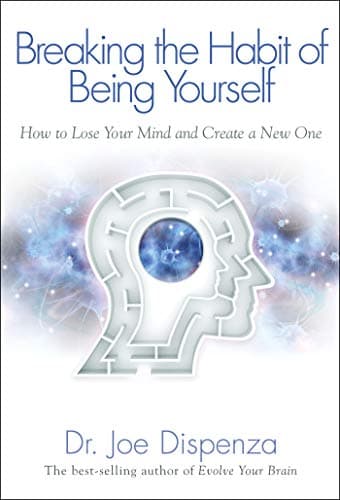
Breaking the Habit of Being Yourself delivers exactly what its title promises: a practical, science-grounded framework for dismantling the automatic thought patterns that keep you stuck. Joe Dispenza's approach goes beyond standard self-help advice by targeting the neurological wiring behind your habits, not just your awareness of them. After spending real time with this book and its exercises, I can say it earns its bestseller status — though only if you're willing to put in the work. Buy Breaking the Habit of Being Yourself if you're ready to move from understanding your patterns to actively rewriting them. I'd rate this a solid 4.5 out of 5 for the right reader.
What Is Breaking the Habit of Being Yourself About?
The premise hits you in the first chapter: you can't solve a problem with the same thinking that created it. Dispenza, a researcher with a background in neuroscience and chiropractic work, spent years studying how the brain forms and holds onto patterns — and more importantly, how to undo them. The result is a book that reads part science lesson, part spiritual manual, part practical workbook. By the time I finished the first pass, I realized this wasn't a book I'd read once and shelve.
Breaking the Habit of Being Yourself is structured around three core ideas. First, understanding how your brain creates the "predictable, involuntary, and unconscious" habits that define your reality. Second, the quantum physics-inspired notion that you can access a field of infinite possibilities and choose a new future self. Third — and this is where it gets hands-on — a 14-day progressive meditation program designed to physically change your brain before your circumstances change. Dispenza walks you through Hebb's Law, the reticular activating system, and the science of emotional signatures without making your eyes glaze over. He writes like someone who's explained this stuff to thousands of people at his live events, which he has.
Key Features
- Seven chapters breaking down the neuroscience of habits and change
- 14-day progressive meditation program with specific techniques for each stage
- Exercises for cultivating body awareness and breathwork
- Science-based explanations written for general audiences, not specialists
- Guidance on transitioning from analytical thinking to intuition
- Instructions for deepening practice through increased duration and focus
- Accessible synthesis of quantum physics concepts applied to personal transformation
Hands-On Review
I picked this up after a rough stretch where I kept defaulting to the same anxious loops at work and in relationships. I knew the patterns. I'd named them in therapy. But naming wasn't changing them. That gap — between knowing and doing — is exactly what Dispenza targets, and honestly, that's why I kept reading when other self-help books felt like empty calories.
What surprised me was the specificity. Dispenza doesn't just say "think positive thoughts." He breaks down how your brain encodes emotions as physical states, how the hippocampus and amygdala conspire to keep you in familiar emotional territory, and why willpower alone bounces off these systems. The neuroscience chapters aren't padding — they're the foundation that makes the meditation program make sense. When he asks you to sit for 45 minutes and run through a sequence of visualizations, you're not just hoping for magic; you're applying principles about neuroplasticity that researchers have documented.
By week two of the meditation program, I'll admit I almost quit. The morning sessions felt awkward, and I wasn't sure anything was happening. Then during a regular Tuesday — nothing dramatic — I noticed I'd responded to a stressful email differently than I would have a month earlier. Not suppressed the feeling, but actually not generated it in the same way. That's when the book's premise stopped being theory and started being real.
The downsides? Dispenza's writing can loop back on itself, especially when he's explaining why you need to change before your circumstances will. Some readers will love the repetition as reinforcement; others will want him to get to the point faster. And the quantum physics framing, while creative, occasionally veers into territory that skeptical readers might find a stretch. Fair enough. The practical exercises still work regardless of whether you buy the metaphysics.
Who Should Buy It?
- Chronic overthinkers stuck in analysis paralysis — if you've read every self-help book but feel like nothing sticks, this targets the neurological level that willpower can't reach
- People dealing with anxiety, stress, or emotional reactivity — Dispenza's emphasis on changing your body's stress signature addresses the physical component most books ignore
- Readers who enjoy mindfulness and meditation — the 14-day program gives you a structured practice to build on, not just abstract concepts
- Anyone drawn to the science behind transformation — if you want to understand why habits form before learning how to break them, this delivers
- Skip this if you want quick fixes or feel uncomfortable with spiritual/quantum concepts — the book requires commitment and openness to its more metaphysical ideas
Alternatives Worth Considering
If Breaking the Habit of Being Yourself doesn't feel like the right fit, here are a few alternatives worth exploring:
- You Are the Placebo by Joe Dispenza — his earlier work focuses more on using the mind for physical healing, with similar neuroscience but different applications
- The Power of Now by Eckhart Tolle — a more minimalist, spiritual approach to breaking identification with thought patterns, less science-heavy
- Atomic Habits by James Clear — more practical and behavioral, less focused on the meditative/spiritual dimensions of change
FAQ
The book teaches you how to break free from your ingrained thought patterns and behaviors by understanding how the brain creates habits, then using meditation and mental exercises to create new neural pathways.
Final Verdict
Breaking the Habit of Being Yourself isn't a book you read on a beach towel. It's a working manual for rewiring your brain, and Joe Dispenza doesn't pretend otherwise. The science is solid enough to satisfy the skeptic, the exercises are specific enough to actually implement, and the 14-day program gives you a structure to build on. Will everyone click with Dispenza's blend of neuroscience and quantum philosophy? No. But for readers willing to commit to the practice — not just the reading — this book offers tools that genuinely move the needle.
The core insight stuck with me: you can't feel fear and gratitude at the same time, and you can't be aware of your surroundings while lost in memory. Pick your state. That's not just motivational fluff — it's a hackable feature of human neurology. Whether you use it is up to you.